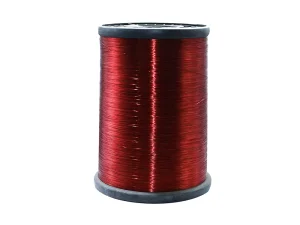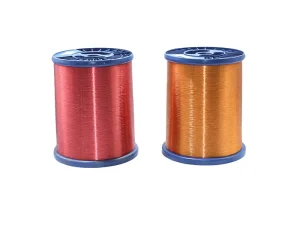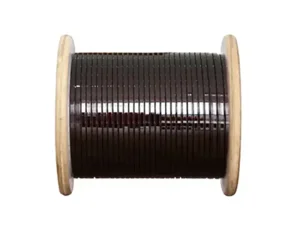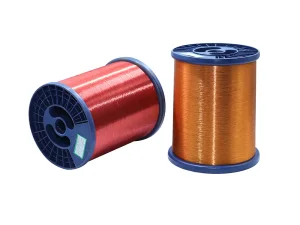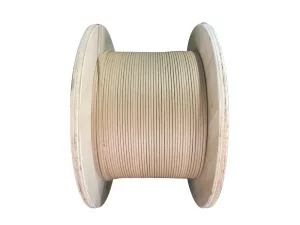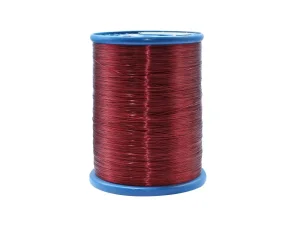
China Heat-Resistant 180 Degree Enameled Wire Suppliers & Factories

Pioneering High-Thermal Performance Class H Winding Solutions for Global Industrial Electrification & Automotive Systems

Thermal Class H (180°C) Insulation: The Structural Cornerstone of Modern Winding Wire

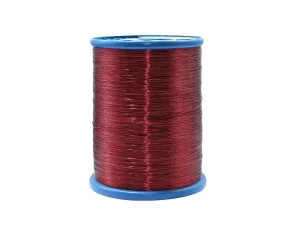
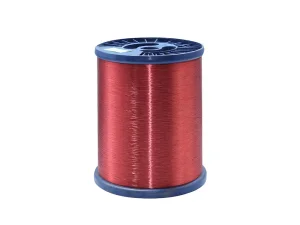
As the demand for energy-dense, high-efficiency electrical equipment rises, the selection of winding materials becomes critical. Enameled wires rated for Class H (180°C) thermal resistance serve as the baseline requirement for motors, generators, and transformers subjected to extreme environmental and thermal stresses. Unlike lower-grade options (such as Class B 130°C or Class F 155°C), 180-degree winding wire is coated with advanced polymeric films—primarily based on Polyesterimide (EIW) or modified polyurethane configurations—that can withstand continuous high operating temperatures without structural degradation or electrical breakdown.

Why Global Manufacturers Specify 180°C Rated Winding Wire

Choosing a thermal class rating of 180°C guarantees a crucial operating buffer. Under real-world conditions, transient overload situations or cooling system failures can cause local coil temperatures to spike. 180°C enameled wires prevent short circuits by maintaining their dielectric integrity at elevated temperatures. Key advantages include:

  • Thermal Stability: Retains high dielectric strength and chemical resistance even after thousands of hours at 180°C.
  • Optimized Form Factor: Allows designers to reduce the physical size of motors or transformers while raising the rated power density.
  • Flexibility & Windability: High mechanical resilience makes these wires ideal for automatic high-speed winding machines without risk of insulation cracking.
Thermal Class Base Resin Composition Dielectric Breakdown (Typical) Primary Applications
Class H (180°C) Polyesterimide (EIW) / PEW Overcoated ≥ 5.0 kV Industrial motors, EV traction systems, hermetic compressors
Class HC (200°C) Polyesterimide + Polyamide-imide (AIW) ≥ 7.5 kV High-voltage automotive, aerospace, heavy industrial generators
Class C (220°C) Polyimide (AIW/PIW) ≥ 9.0 kV Extreme-environment wind power, traction equipment

Localized Application Scenarios: Where Performance is Mandatory

180°C enameled copper and aluminum wires are applied in specialized environments where safety, weight optimization, and operating reliability cannot be compromised:

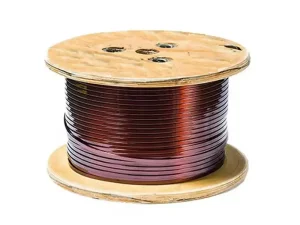
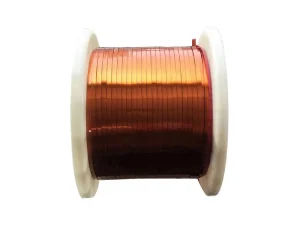
  • Industrial Automation & Sensors: In factory automation setups, solenoids, servo motors, and sensors run continuously. Enameled flat copper wire provides a high slot fill factor, reducing losses and heat generation.
  • Automotive & High-Voltage Traction: EV traction motor drivetrains require wire that withstands high transient surges and thermal cycles, paving the path to modern 800V high-voltage architectures.
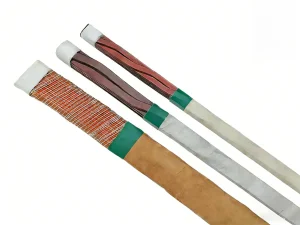
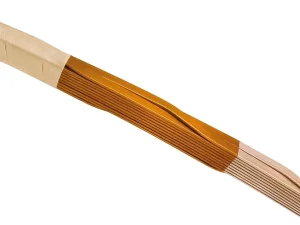
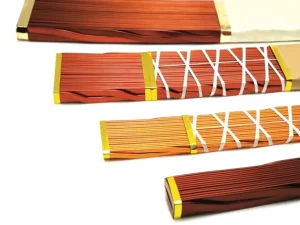
  • Power Transformers & Utility Grid Systems: Paper-insulated continuously transposed conductors (CTC) reduce eddy current losses in large power systems, managing high currents while ensuring localized thermal safety.

Certified Compliance

Our raw materials and manufacturing lines strictly comply with IEC 60317, UL standards, RoHS, and REACH directives, assuring seamless integration in EU, North American, and Asian markets.

Proven Reliability

Every batch undergoes standard pinhole testing, dissipation factor tracking, high-temperature breakdown tests, and tensile performance verification before export.

Strategic Manufacturing Advantages: Suzou Daiming Electrical Materials

Operating a sprawling manufacturing infrastructure, Suzhou Daiming Electrical Materials Co., Ltd. stands as a key partner for global OEMs seeking reliable enameled conductor supply lines. Our facility balances scaled manufacturing capacity with stringent product tolerances to deliver high-performance, cost-effective magnet wire products.

Advanced Production Lines

Equipped with 30 state-of-the-art production lines, we support simultaneous fabrication of enameled aluminum wire, copper wire, and copper-clad aluminum (CCA) options, ensuring quick lead times.

Tailored Specifications

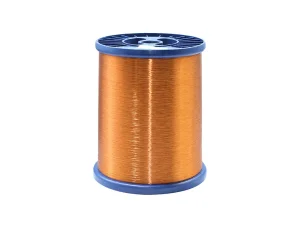
We provide exact dimensional tolerances. Customers specify copper, CCA, or aluminum bases with round or rectangular geometries, matched with polyurethane or polyesterimide coatings.

Global Logistics & Export

With an export footprint spanning over 10 countries, we handle all trade logistics, regional customs filings, and supply security for multinational production schedules.

30+
Advanced Production Lines
258,333+
Sprawling Facility (SQ. FT)
10+
Cooperating Countries Globally

Material Synthesis: Comparing Copper, Aluminum, and Copper-Clad Aluminum (CCA)

Winding design involves trade-offs between electrical conductivity, mechanical load limits, cost stability, and weight constraints. Understanding the characteristics of each core conductor ensures optimal selection:

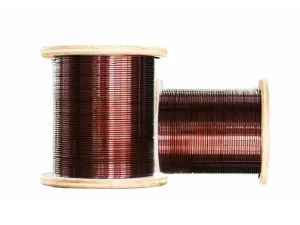
  • Enameled Copper Wire: Remains the industry gold standard for conductivity. It provides the highest efficiency, minimizes resistance-based thermal losses, and allows for compact component sizes.
  • Enameled Aluminum Wire: Offers a major weight reduction (approx. 60% lighter than copper for the same length). It provides a cost-effective alternative for systems where weight is critical, such as automotive or aviation applications.
  • Copper-Clad Aluminum (CCA): A hybrid solution featuring an aluminum core bonded to an outer copper sleeve. It balances cost-effectiveness with performance, showing prominent advantages amid copper price volatility.

Manufacturing Processes & Quality Checks

We implement strict quality assurance steps at every stage of the production cycle:

  1. Pre-drawing Inspection: Verifies purity levels and checks for surface defects on the input copper/aluminum wire rod.
  2. Precision Wire Drawing: Draws the raw wire through natural and synthetic diamond dies to achieve tight tolerances.
  3. In-Line Annealing: Eliminates work-hardening stress to restore target ductility and elongation.
  4. Multi-pass Enameling: Applies polymer coatings in thin, uniform layers, curing each layer in automated vertical ovens.
  5. Final Quality Audit: Evaluates springback angle, pinholes, breakdown voltage, and adherence to thermal class specs.

Global Winding Wire Market Megatrends

Adapting to high-voltage trends, environmental targets, and evolving engineering requirements.

The 800V High-Voltage EV Shift

With electric vehicle architectures moving from 400V to 800V systems to enable fast charging, insulation faces higher electric fields and partial discharge risk. Premium 180°C and 200°C enameled wires are engineered to mitigate corona-induced aging in next-generation drivetrains.

Resource and Weight Optimization

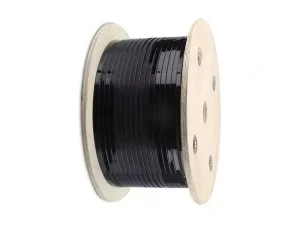
To maximize energy efficiency, designers rely on flat and rectangular wire profiles instead of traditional round wires. This increases slot fill factors to over 70%, reducing space requirements and temperature rise.

Eco-friendly & Clean Production

Global demand requires compliance with strict environmental directives. Our production facilities use advanced solvent recovery systems and catalytic combustors, reducing overall VOC emissions and supporting carbon neutrality targets.

Technical FAQ & Procurement Support

Get answers to critical design questions from our application engineering team.

What is the difference between Class F (155°C) and Class H (180°C) enameled wire?
The difference lies in thermal performance over time. Class H wire uses advanced coatings, such as modified polyesterimide, that allow it to operate safely at 180°C for at least 20,000 hours. Class F wire is rated for a maximum continuous temperature of 155°C before thermal aging compromises the polymer film.
When should we choose Copper-Clad Aluminum (CCA) over Pure Copper wire?
CCA is best suited for weight-critical or cost-sensitive high-frequency coils, such as high-frequency transformers or lighter solenoids. When copper prices fluctuate, CCA helps stabilize production costs. For space-constrained motors requiring maximum slot efficiency, pure copper remains the standard choice.
How does Continuously Transposed Conductor (CTC) wire improve transformer efficiency?
CTC consists of multiple individual enameled strands arranged in a specific transposed pattern. This transposition ensures each strand experiences the same average magnetic field, reducing eddy current losses and localized heating in high-power substation transformers.
What international test certifications accompany Suzou Daiming shipments?
Every shipment includes quality reports covering wire dimensions, elongation, pinhole count, breakdown voltage, and heat shock performance, showing full compliance with UL, IEC 60317, RoHS, and REACH standards.