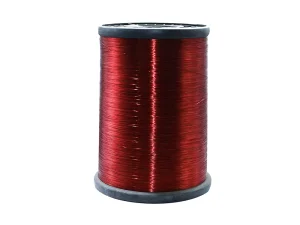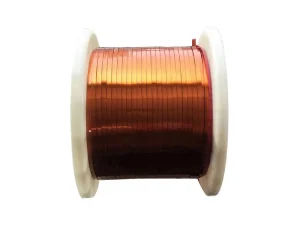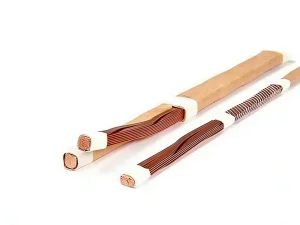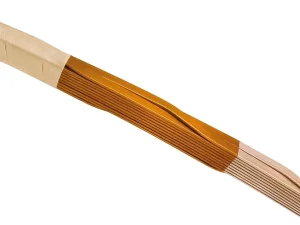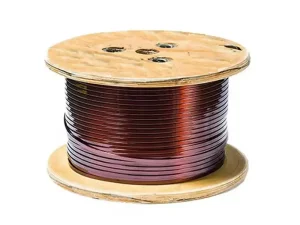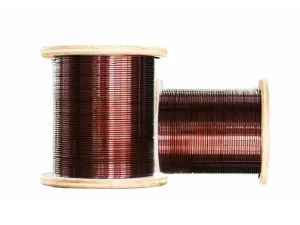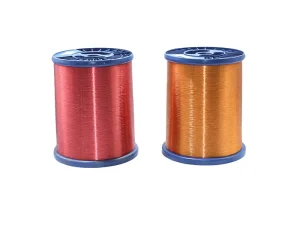
Explore our premium product line manufactured under rigorous international quality controls, designed for heavy-duty industrial automation, automotive electrification, and high-efficiency transformers.
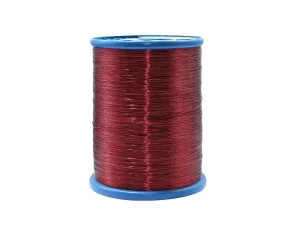
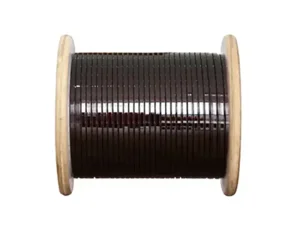
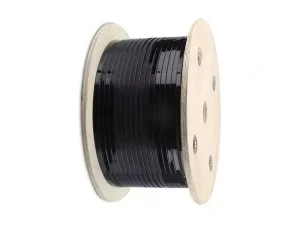
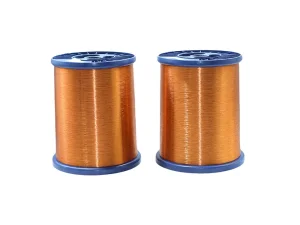
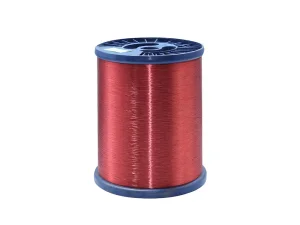
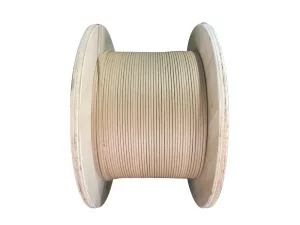
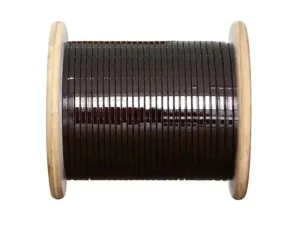
In high-frequency transformers, power supply units, and automotive traction motors, the reliability of winding terminations is paramount. Enameled wire soldering represents a highly specialized metallurgical bonding process where the insulating polymer coating must be reliably penetrated, dissolved, or chemically stripped to allow clean copper or aluminum contact with lead wires.
Understanding the thermal breakdown dynamics of insulating films is critical for selecting the right soldering method. Polyurethane coatings, categorized as Class 130 (B) and Class 155 (F) (often referred to as UEW), possess self-soldering properties. When immersed in a molten tin solder bath heated to 360°C – 410°C, the polyurethane film depolymerizes within 1 to 3 seconds, releasing non-corrosive byproducts and allowing the copper core to be tinned instantly without mechanical or chemical stripping.
Conversely, high-temperature formulations such as Polyesterimide (EIW, Class 180), Polyamide-imide (AIW, Class 220), and Polyimide (PI, Class 240) exhibit exceptional thermal endurance but do not self-solder. Attempting to solder these coatings directly results in thermal charring rather than depolymerization, leading to cold solder joints or insulation residues that disrupt electrical continuity. Terminating Class 180 to Class 220 enameled wires requires advanced mechanical stripping, specialized chemical salts, or laser ablation before thermal soldering.
Soldering enameled aluminum wire presents unique metallurgical challenges compared to copper. Aluminum forms a persistent, instantaneous oxide layer (Al2O3) when exposed to air. To achieve a reliable solder bond:
Located in the heart of China's advanced manufacturing corridor, Suzhou Daiming Electrical Materials Co., Ltd., has engineered a highly integrated supply chain that ensures price stability, exceptional quality, and rapid global delivery.
We source raw copper cathodes and 99.99% high-purity aluminum ingots directly from premium domestic smelters. This allows us to guarantee structural wire ductility and superior surface finishes prior to polymer coating.
Our coatings are designed to withstand high mechanical stresses during automatic winding. This results in uniform enamel thicknesses, high breakdown voltages, and robust insulation properties under severe heat and pressure.
From raw material verification to continuous monitoring of springback angles, thermal shock resistance, and pinhole density, every batch is fully traceable and certified for shipment.
Our manufacturing facility provides a wide variety of wire designs to meet the precise technical requirements of engineering teams worldwide. The table below details the performance characteristics of our standard magnet wires:
| Insulation Class | Polymer Coating Type | Base Material Options | Thermal Index (°C) | Direct Solderability | Primary Applications |
|---|---|---|---|---|---|
| Class 130 (B) | Polyurethane (UEW) | Copper / Aluminum / CCA | 130°C | Yes, at 360°C - 380°C | Small relays, ignition coils, solenoid valves |
| Class 155 (F) | Polyurethane (UEW) | Copper / Aluminum / CCA | 155°C | Yes, at 380°C - 400°C | Automotive sensors, power adapters, micro-motors |
| Class 180 (H) | Polyesterimide (EIW) | Copper / Aluminum | 180°C | Requires mechanical stripping | High-speed industrial motors, dry-type transformers |
| Class 200 (K) | Polyesterimide + Polyamide-imide | Copper / Flat Aluminum | 200°C | Requires mechanical/laser stripping | Hermetic compressors, heavy-duty industrial pumps |
| Class 220 (R) | Polyamide-imide (AIW) | Copper / Flat Aluminum | 220°C | Requires laser ablation | 800V EV traction motors, wind turbine generators |
Our electromagnetic wires are engineered to meet the demands of major industrial sectors across North America, Europe, and the Asia-Pacific region. As international regulations push for higher efficiency standards (IE3/IE4/IE5 for motors), procurement teams face unique design challenges.
Designed for heavy-duty electric motors and oil-filled distribution transformers. Utilizing Continuously Transposed Conductors (CTC), we minimize eddy current losses in high-capacity electrical grids, empowering major regional utility networks.
Our polyurethane-coated self-soldering enameled copper wires enable high-speed automated winding for household appliance motors, power converters, and high-frequency communication switchgear.
Precise dimensional tolerance control ensures that our ultra-fine enameled wires can be wound into highly compact sensor coils, actuators, and miniature solenoids for robotics and aerospace applications.
The global shift towards renewable energy requires highly efficient electromagnetic components. Suzhou Daiming supplies high-tension, corona-resistant enameled wires designed for inverter-fed motors, wind turbine alternators, and solar power inverters. Our products deliver the thermal resilience and insulation integrity required to operate under high-voltage transients without premature dielectric breakdown.
We address the critical engineering and procurement questions that technical managers consider when sourcing enameled wires.
Stay updated on our latest product innovations, global shipments, and insights on the future of electromagnetic wire technologies.
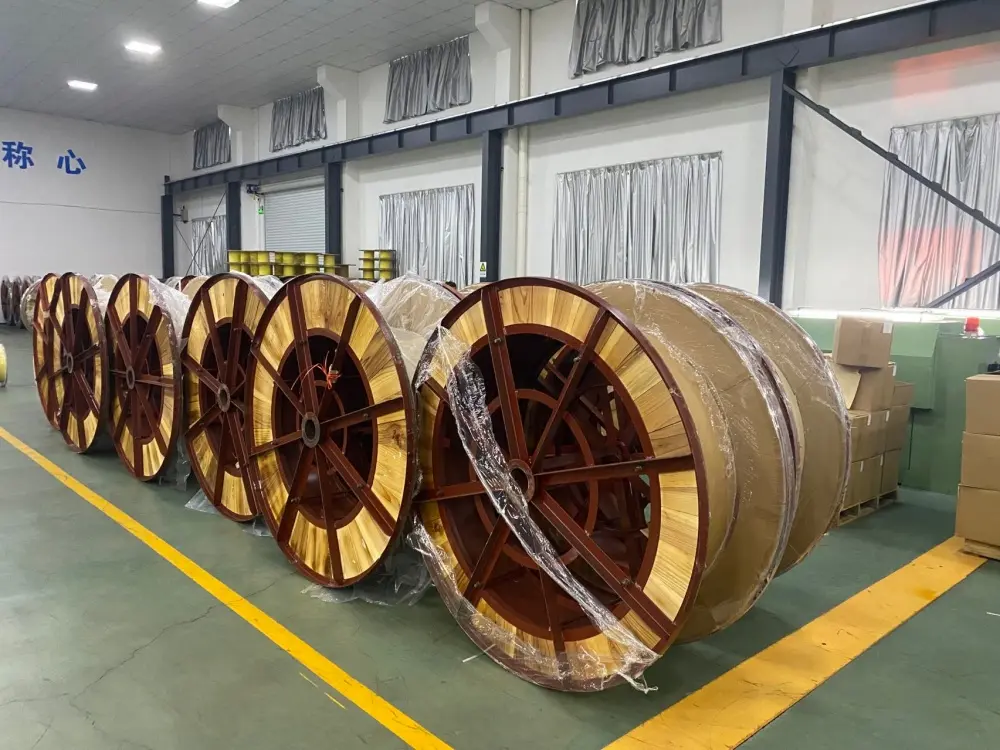
New Overseas Shipment News | High-quality CTC Continuous Transposed Conductors exported to Turkey to support high-capacity electrical grid upgrades across the region.
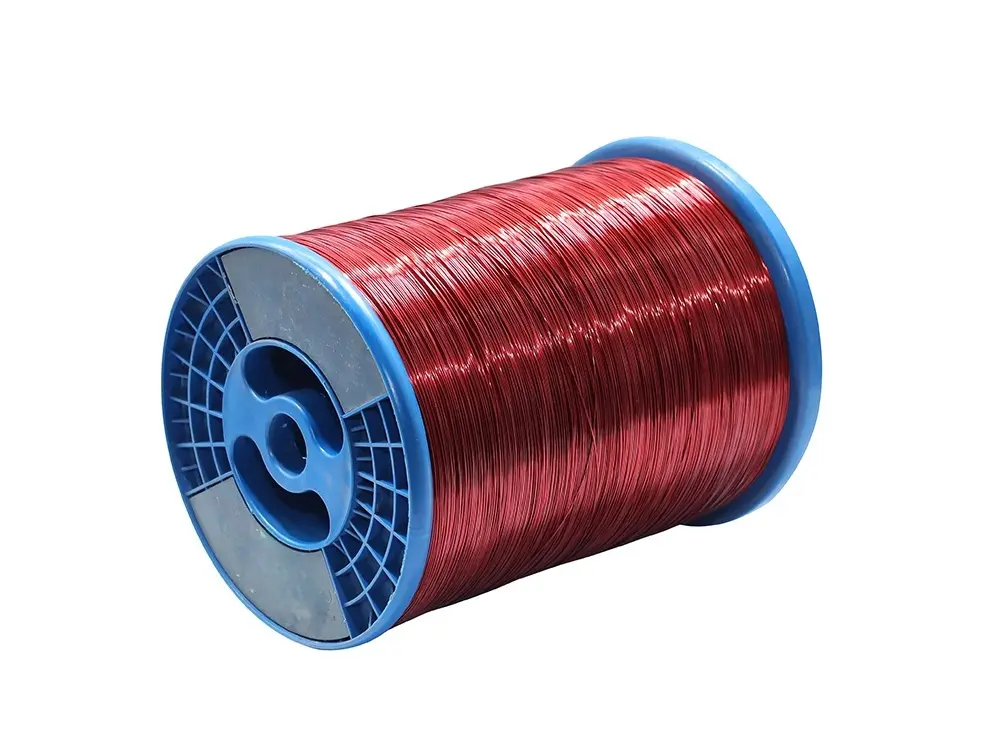
With the rapid development of new energy and high-end manufacturing in 2026, managing material costs is crucial. Discover how our enameled aluminum wire solutions provide a lightweight, cost-effective option.
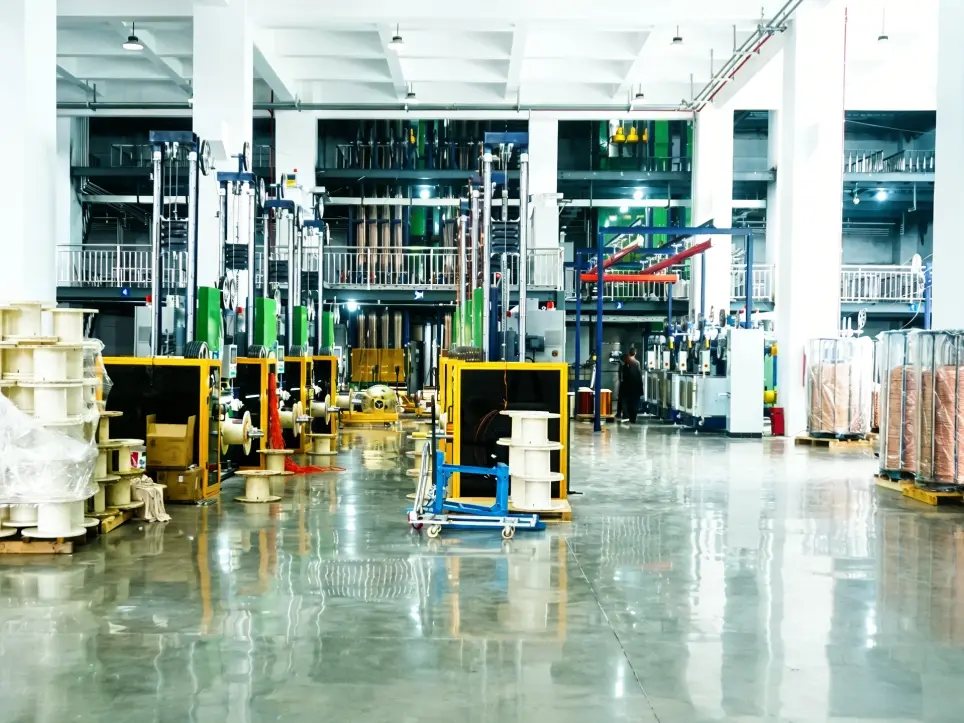
As raw material prices fluctuate, copper-clad aluminum enameled wire has become a preferred choice for manufacturers looking to reduce material costs without sacrificing electrical connectivity.
Our factory provides a comprehensive selection of wire cross-sections and high-performance insulation layers to support diverse industrial winding requirements.