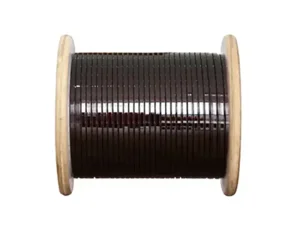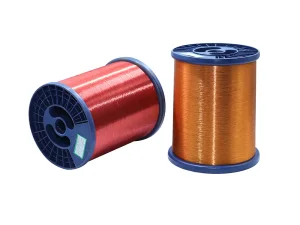
Engineered to exceed critical power transmission thresholds. Explore our primary selection of industrial-grade windings.
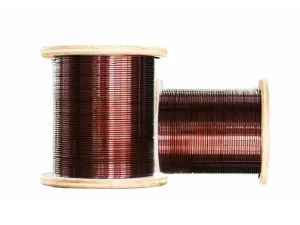
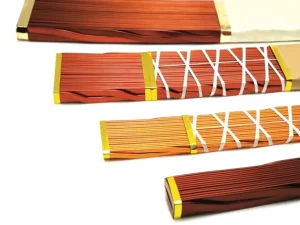
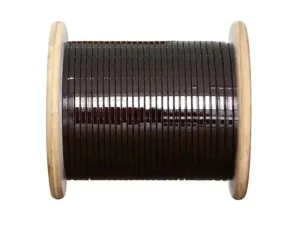
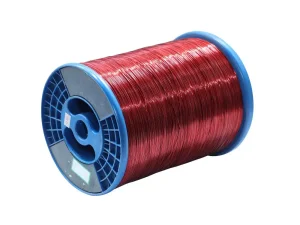
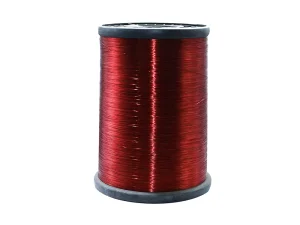
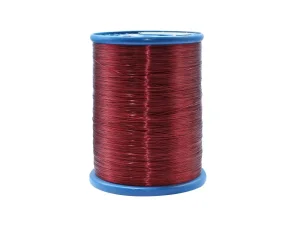
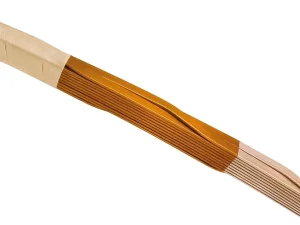
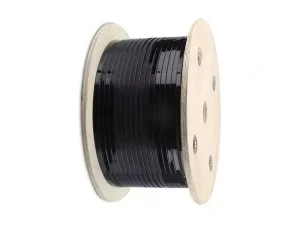
In electrical power generation, transmission, and heavy industrial instrumentation, the selection of winding materials defines system efficiency, thermal tolerance, and operational lifespan. Among these components, paper covered (often referred to within global procurement channels as "paper plated") copper wire stands as the baseline insulation topology for high-voltage power transformers, inductors, and specialized grid infrastructure.
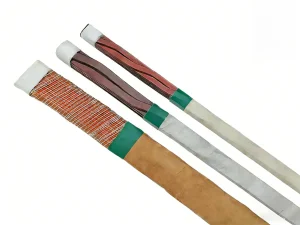
The configuration relies on wrap-insulating flat or round oxygen-free copper conductors with high-density electrical kraft paper, creped paper, or synthetic aramid sheets. This paper barrier functions as both a mechanical spacer and a dielectric cushion. Under oil immersion inside large power transformers, the cellulose fibers absorb the dielectric oil, creating a composite insulation barrier capable of withstanding extreme dynamic stress during short circuits, and maintaining electrical isolation under thousands of kilovolts.
The chemical integrity of cellulose and upgraded aramid structures dictates the thermal degradation pathway. Under IEEE and IEC standards, thermal aging is modeled using DP (Degree of Polymerization) monitoring. Selecting premium paper-insulated materials preserves insulation mechanical tensile strength even after decades of continuous heat cycles.
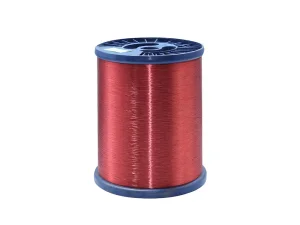
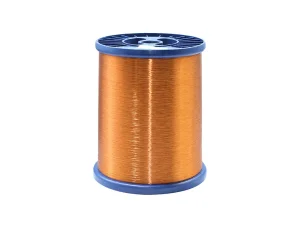
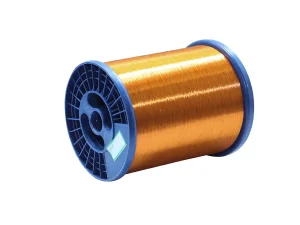
Suzhou Daiming Electrical Materials Co., Ltd. is a specialized manufacturer of high-performance winding wires, including enameled aluminum wire, enameled copper wire, copper-clad aluminum (CCA) enameled wire, and Continuously Transposed Conductors (CTC). Our production output is engineered to comply with IEC, NEMA, and JIS standards.
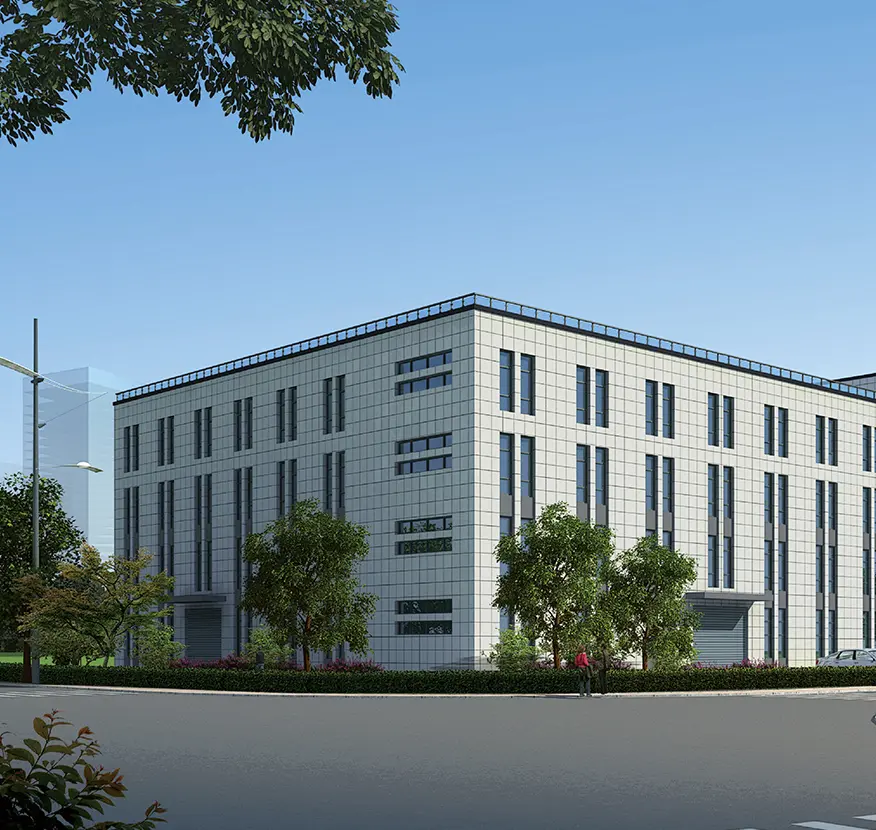
Our industrial complex is located in Suzhou, China, covering an expansive facility footprint optimized for heavy production. Our production workflows leverage inline drawing, continuous annealing, precision tension paper-lapping, and closed-loop laser monitoring. This ensures that every millimeter of copper or aluminum meets strict dimensional and tolerance requirements.
Evaluating the structural shift in high-voltage component supply chains highlights that Chinese manufacturers provide significant advantages beyond low production costs. These advantages include technical integration, supply chain resilience, and processing precision.
First, the raw material logistics are highly integrated. China houses the world's most advanced continuous extrusion and copper cathode processing centers. By drawing 99.999% oxygen-free copper rods in-house, factories like Suzhou Daiming control mechanical properties and resistivity metrics before paper or enamel wrapping. This inline integration minimizes oxygen contamination, protecting against copper embrittlement and maintaining conductivity above 101% IACS.
Second, the deployment of multi-head electronic tension paper-lapping machines is critical. Old-school mechanical gears cannot prevent thin kraft paper from micro-tearing or folding under dynamic tension variations. Modern Chinese production configurations employ digital tension arrays that adjust wrapping loads in real-time, delivering uniform helical angles with overlapping ratios of up to 50% without micro-voids or air pockets.
Uniform insulation wraps and high-performance enamel coatings eliminate dielectric breakdowns during high thermal loads.
Specially formulated aramid and kraft paper wraps preserve mechanical strength and resist abrasion under high physical pressure.
Available in a broad range of wire diameters, aspect ratios, and insulation styles to meet custom electrical winding specs.
Where paper-wrapped and CTC solutions are deployed in global energy and utility grid infrastructures.
Essential for utility transformers stepping down voltages from 220kV transmission systems to urban grids.
Provides insulation for heavy-duty EV charging station power blocks and onboard magnetic components.
Powers heavy industrial induction motors, generators, and electric arc furnace transformers.
Deployed in offshore wind turbine generator windings and solar farm power step-up arrays.
Procuring winding wires for long-life industrial assets requires evaluating technical performance parameters beyond basic unit costs. Buyers must focus on raw material standards and precise processing properties:
A. Copper and Aluminum Purity Level: Low-cost suppliers often use secondary recycled copper scraps, introducing trace metal impurities (such as arsenic, iron, and lead) that increase electrical resistance and heating losses. High-performance projects require Oxygen-Free (OFE) copper conforming to ASTM B170 or Grade C10100, which has an electrical conductivity rating of at least 101% IACS.
B. CTC Construction Specifications: For large-capacity distribution transformers, standard rectangular wire struggles with winding losses and heat dissipation. Using Continuously Transposed Conductors (CTC) with paper or mesh wrapping reduces eddy-current losses. CTC strands are transposed systematically to equalize their magnetic field exposure, making them a preferred configuration for modern power systems.
C. Advanced Paper Insulation Wrapping: High-density kraft paper offers an excellent balance of dielectric strength, tensile toughness, and cost efficiency. When temperatures exceed Class A limits (105°C), upgrading to aramid-based Nomex insulation protects performance up to Class H (180°C), making it suitable for compact, high-load transformers.
Answers to technical and commercial questions about paper-plated and wrapped winding products.
Additional custom profile copper and aluminum conductors engineered for specialized magnetic applications.