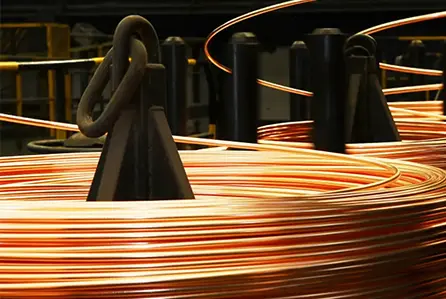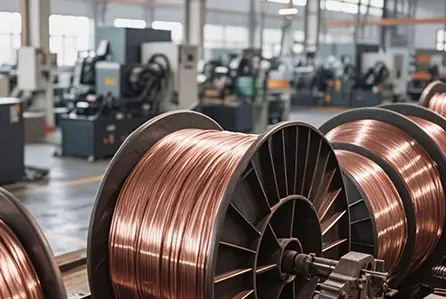
Explore our premium product portfolio featuring standard and highly specialized enameled conductors for high-frequency electrical machinery.
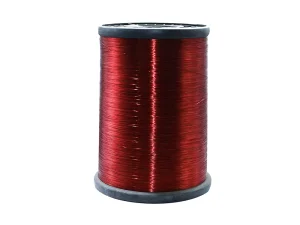
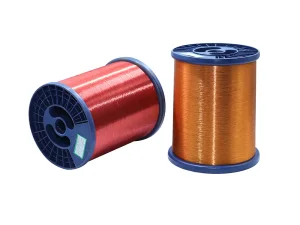
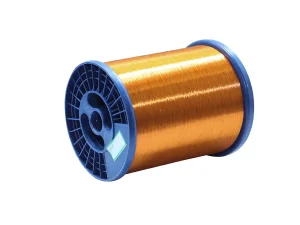
A comprehensive study on market transition, material innovations, and the global macroeconomic shift toward optimized winding wires.
The global industrial landscape is witnessing a structural transformation in electromagnetic coil manufacturing. Enameled aluminum wire, once considered a secondary alternative to copper, has now emerged as a core standard across industries such as automotive powertrains, high-voltage transformers, green power generation, and consumer electronics. Under pressure from global decarbonization initiatives, engineers are optimizing designs to balance conductivity, weight, and component longevity. Enameled aluminum wire stands out due to its high density, specific weight reduction, and superior thermal properties.
From a macroeconomic standpoint, raw material price fluctuations have accelerated this metal substitution process. Copper remains highly sensitive to geopolitical challenges and global demand spikes, driving procurement managers to establish reliable partnerships with high-capacity enameled aluminum wire factories. Pure EC (Electrical Conductor) grade aluminum has a density approximately 30% that of copper, enabling substantial weight reduction in mobile electric fields, including electric vehicles (EVs), aviation generators, and handheld power tool motors. Lightweight winding solutions lower the moment of inertia in rotating components, improving system dynamics and reducing energy consumption.
Using aluminum instead of copper reduces coil weight by 50% while maintaining equivalent electrical performance when cross-sections are optimized.
Aluminum's market stability provides global equipment manufacturers with predictable material costs, minimizing the financial risks of copper price spikes.
Modern thin-film polymer coatings, such as EIW (Polyesterimide) and AIW (Polyamide-imide), allow continuous operation at 200°C and 220°C.
Established as a specialized manufacturer of high-precision winding wires, Suzhou Daiming Electrical Materials Co., Ltd. operates a state-of-the-art facility designed to serve demanding industrial markets. We control the entire production process from raw material selection to continuous multi-pass drawing and inline extrusion coating.
Our industrial plant spans a massive 258,333.33 ft², providing the structural capacity needed to scale high-performance production lines. Equipped with 30 advanced production lines, our facility maintains tight control over roundness, flat alignment, insulation film concentricity, and dielectric properties. This production capacity enables a reliable supply of Class 130 to Class 220 enameled wires to support global energy infrastructure upgrades and high-performance motor manufacturing.

A deep dive into polymer insulations, thermal properties, and structural forms for industrial applications.
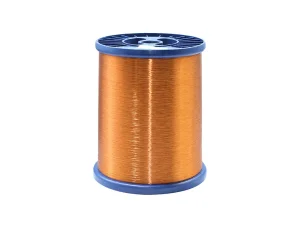
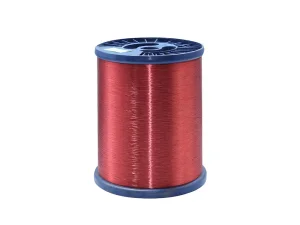
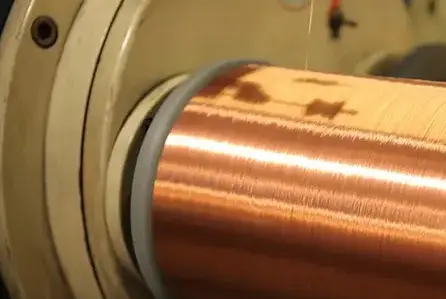
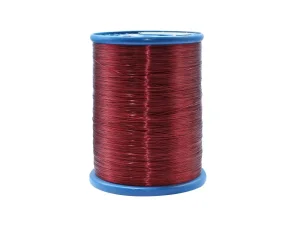
Selecting the appropriate enameled wire configuration requires understanding insulation chemistry, thermal classification, and physical geometries. Copper and aluminum wire manufacturing relies on liquid enameled resins applied in multiple micro-coats and cured in high-temperature vertical ovens. The resulting film provides mechanical toughness, scratch resistance, and high breakdown voltage.
| Insulation Class Code | Base Polymer Chemical Compound | Thermal Index (°C) | Core Application Advantages |
|---|---|---|---|
| PEW (Polyester) | Modified Polyester Resin | Class 130 / 155 | Excellent dielectric strength and mechanical flexibility; standard choice for general-purpose electric coils. |
| UEW (Polyurethane) | Polyurethane Blend | Class 155 / 180 | Directly solderable without mechanical stripping; simplifies manufacturing processes for relays and small motor coils. |
| EIW (Polyesterimide) | Polyesterimide Resin | Class 180 / 200 | High thermal stability, strong resistance to chemical solvents, and robust overload capacity for industrial machinery. |
| AIW (Polyamide-imide) | Polyamide-imide (PAI) | Class 220 | Excellent heat shock resistance and chemical durability; ideal for severe environments like EV traction motors. |
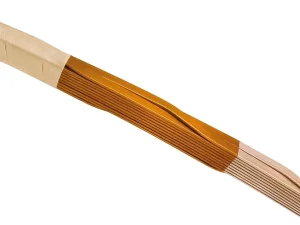
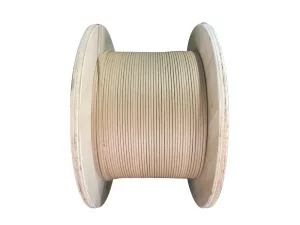
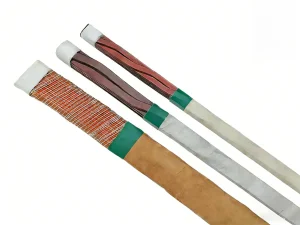
| CTC (Transposed) | Paper / Synthetic Wrap Grid | System Dependent | Optimized transposed layout; reduces eddy-current losses in large-scale power grid transformers. |
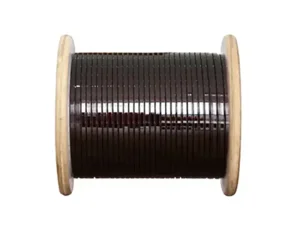
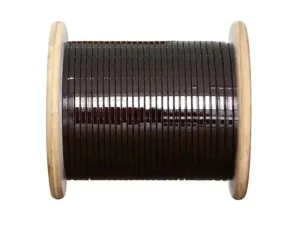
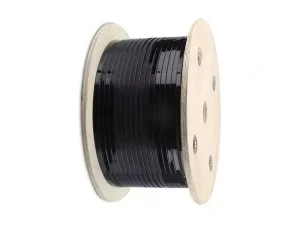
The choice between flat (rectangular) and round wire formats directly impacts winding density and heat dissipation. Enameled flat aluminum wire offers a higher slot fill factor (up to 80-85% compared to round wire's 55-60%). Minimizing air gaps in the motor slot improves heat dissipation and magnetic flux density, allowing designers to build smaller, more efficient electric motors and high-voltage grid systems.
Engineered for high performance, thermal durability, and consistency in demanding applications.

Each spool of wire undergoes rigorous inline laser checks and pinhole testing to ensure film continuity and insulation integrity.

Featuring high-adhesion paint film with high scratch resistance and flexibility, preventing cracking under mechanical stress.

We offer custom configurations tailored to your application, adjusting wire diameters, flat aspect ratios, and thermal insulation grades.

With 30 production lines, we guarantee consistent lead times and steady product output to keep your manufacturing lines running.

Designed for high efficiency, our low-loss winding conductors support energy savings in next-generation electric machinery.
Deploying specialized enameled conductors to maximize efficiency and reliability in global power systems.
In Motors and Transformers, the transition to high-frequency operation exposes conventional winding systems to higher stress. Using our enameled aluminum wire in distribution transformers helps stabilize power networks. It provides the same conductivity as copper but with a larger conductor surface area, which helps reduce current crowding (skin effect) during high-frequency harmonics.
In Electronics and Home Appliances, design requirements focus on cost-efficiency and lightweight construction. Microwave ovens, air conditioner compressors, and washing machine motors use enameled aluminum wire to reduce weight and overall manufacturing costs, making consumer goods more affordable without compromising performance.
In Industrial Automation and Sensors, precision is critical. Low-weight coils allow actuators, servo motors, and electromagnetic sensors to accelerate faster and consume less energy, improving dynamic response times in automated assembly lines.
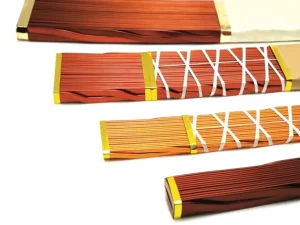
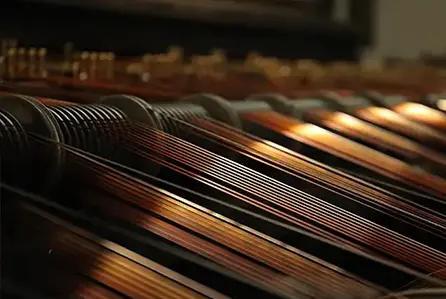
For Power and Energy Equipment, such as utility-scale wind generators and heavy-duty grid installations, Continuously Transposed Conductors (CTC) and paper-covered flat aluminum wires are used to withstand electromagnetic forces during short-circuit events. The high-tension wound profiles prevent deformation under mechanical stress, ensuring long-term grid reliability.
Key market drivers shaping the future of advanced electromagnetic windings.
The global winding wire industry is evolving to support high-efficiency, high-voltage systems. The shift toward 800V architectures in electric vehicles is driving demand for advanced enameled wires with superior dielectric properties. Conventional enameled wire can suffer from partial discharge under high voltage, leading to premature insulation failure. We address this with polymer blends that resist corona discharge, preventing breakdown under high-voltage loads.
Another major trend is the growing use of Copper-Clad Aluminum (CCA) enameled wire, which combines the surface conductivity of copper with the lightweight properties of aluminum. CCA is widely used in high-frequency signal coils, RF cables, and special transformers. Because high-frequency currents travel primarily along the outer layer of the conductor (the skin effect), the copper cladding ensures high conductivity, while the aluminum core reduces weight and material costs.
Sustainability is also a key factor driving manufacturing improvements. Process technologies now focus on reducing volatile organic compound (VOC) emissions from enamel solvents during curing. Modern extrusion lines use closed-loop thermal systems that incinerate solvent vapors to pre-heat the ovens, reducing energy consumption and carbon emissions.
Updates on technology breakthroughs, global shipments, and changing industry standards.
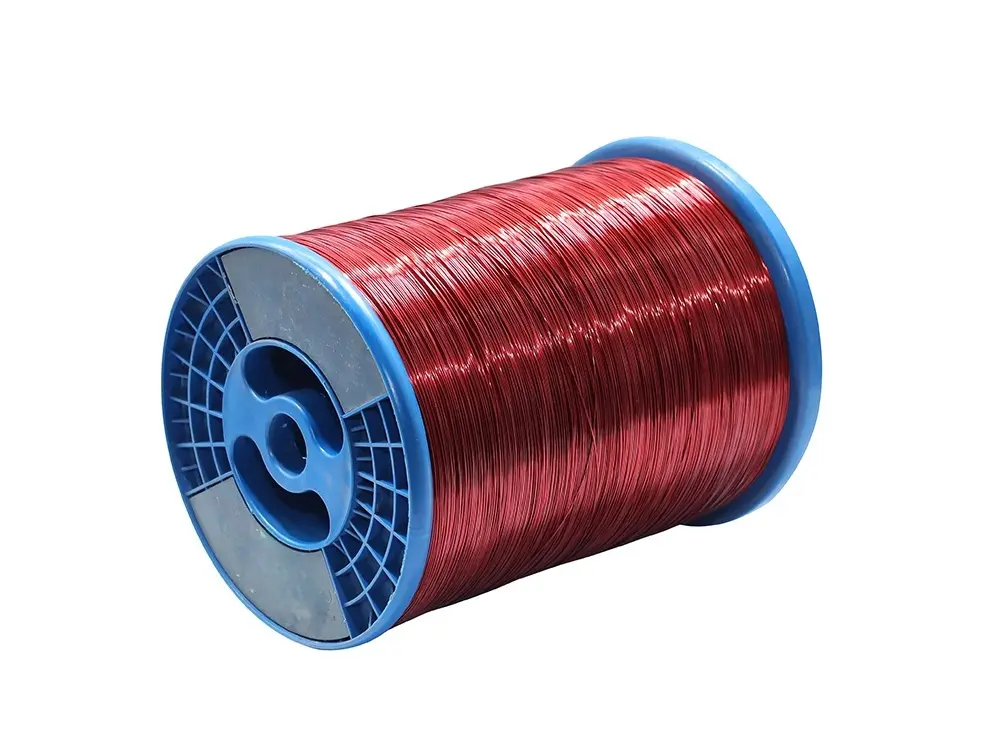
As global industries optimize cost structures in 2026, enameled aluminum wire has become a primary choice for high-efficiency motors.
Read Full Report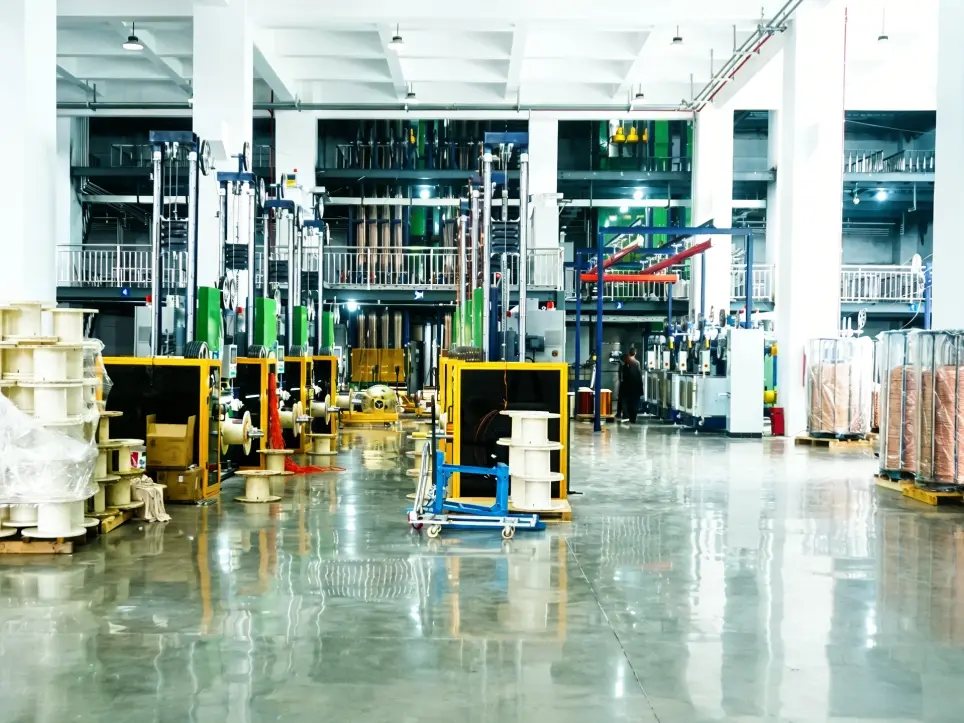
With copper price volatility, Copper-Clad Aluminum (CCA) wire offers a cost-effective alternative for consumer electronics.
Read Full Report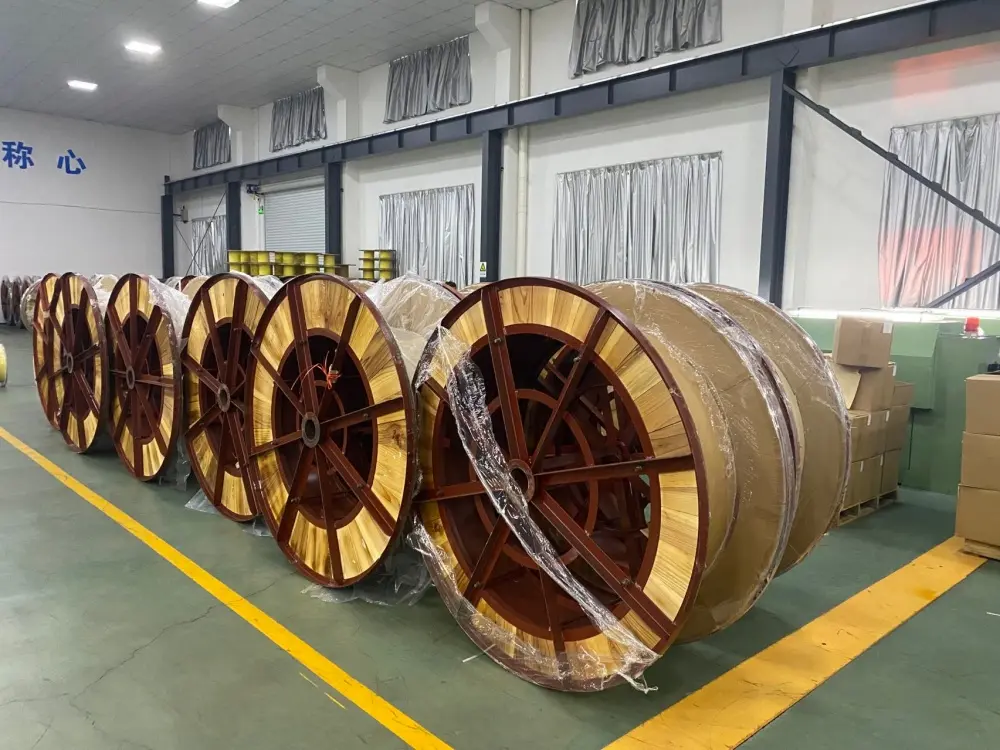
Daiming has completed a shipment of premium Continuously Transposed Conductors (CTC) to Turkey to support regional power grid development.
Read Full ReportAn in-depth analysis of the technical and insulation requirements for next-generation electric vehicle drivetrains.
Read Full ReportKey quality standards, testing parameters, and compliance checklists for sourcing wire supplies.
Procurement directors must evaluate several performance indicators to ensure long-term reliability and compatibility with automated winding equipment. Purchasing based on price alone can lead to higher scrap rates, broken lines, and field failures.
1. Dimensional Tolerance and Concentricity: Variation in conductor diameter or thin insulation layers can lead to voltage breakdown. The insulation film must be applied uniformly around the conductor core. In rectangular or flat wires, consistent thickness at the corners is critical, as thin spots are vulnerable to electrical failure. We monitor concentricity using inline laser gauges during production.
2. Mechanical Properties (Elongation and Springback): Enameled aluminum wire behaves differently than copper under tension. Due to its lower tensile strength, winding tension must be carefully controlled to prevent stretching. The springback angle measures how much the wire resists deformation; a low, consistent springback is necessary to achieve tight, uniform coils on high-speed winding machines.
3. Electrical Testing (Breakdown Voltage and Pinhole Count): High-voltage applications require testing dielectric breakdown voltage in line with standards like IEC 60317, NEMA MW 1000, or JIS C 3203. Pinhole testing (using a salt solution bath) detects microscopic defects in the enamel film over a given length of wire. Minimizing pinholes prevents short circuits between adjacent turns in the coil.
4. Chemical and Thermal Stress Resistance: The cured enamel must resist common industrial solvents, impregnating varnishes, and potting resins. It must also withstand thermal overload without cracking or softening. Thermal endurance is verified by testing heat shock resistance at temperatures above the wire's thermal rating.
Technical answers to common questions about selecting, processing, and deploying enameled wires.
High-reliability winding wires and transposed conductors manufactured for global electrical systems.