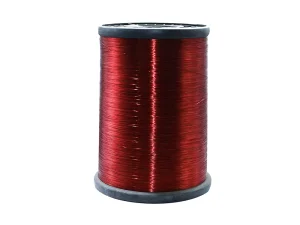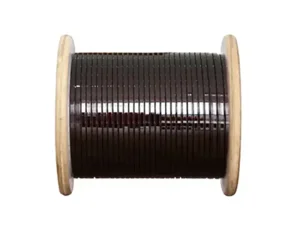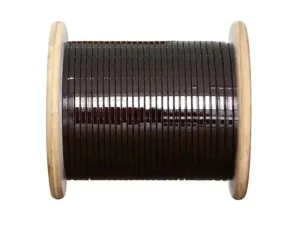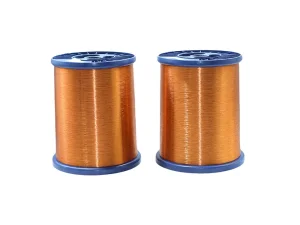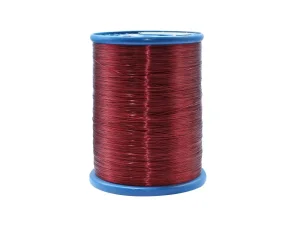
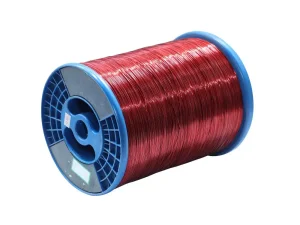
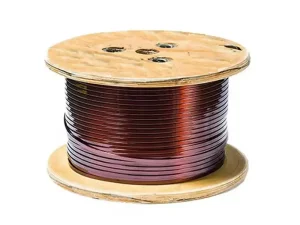
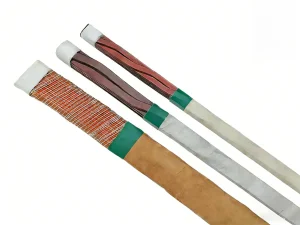
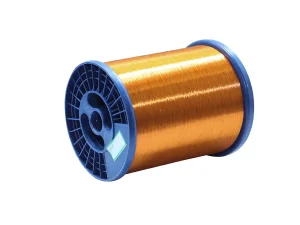
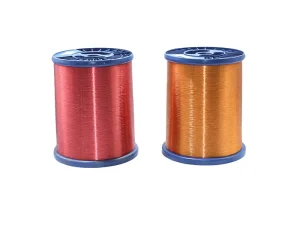
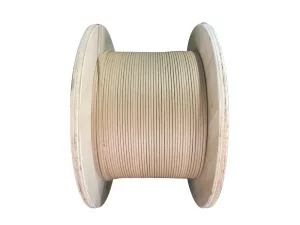
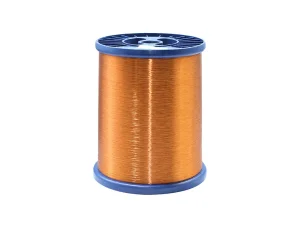
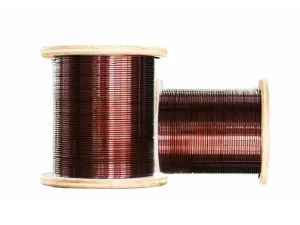
In modern industrial electrical infrastructure, the selection of winding materials defines the operational limits of generators, motors, and high-voltage transmission grids. The evolution of insulation layers has shifted from basic varnish coatings to high-performance composite configurations. Polyester Covered Copper Cable stands at the intersection of thermal resilience and mechanical protection. Polyester film wrapping, combined with advanced copper conductors, provides an exceptional dielectric barrier capable of sustaining prolonged electrical stress without failure.
Traditional enamel wires rely on thin chemical coatings which can experience micro-cracks under severe mechanical vibrations or high thermal cycles. On the other hand, Polyester covered (film insulated) cables establish a continuous, uniform, and physical polymer sheath that wraps securely around the conductor core. This physical layer cushions the copper core from frictional wear and delivers superior breakdown voltage levels exceeding 5kV, making it an indispensable asset in modern electrical grid infrastructure.
The core advantage of using polyester-covered configurations is their mechanical robustness. Polyester films exhibit high tensile strength, high tear resistance, and outstanding chemical immunity against acids, industrial solvents, and varnishes. This ensures that during high-tension motor winding processes, the insulation remains entirely intact, eliminating the risk of inter-turn short circuits.
Additionally, the thermal properties of polyester insulation permit continuous operations at Class B (130°C), Class F (155°C), and Class H (180°C) limits, with specialized custom runs meeting the Class C (220°C) benchmark. This accommodates the massive heat dissipation profiles of electric vehicle traction motors and grid-level transformers.
| Conductor Material | Oxygen-free high conductivity copper (99.99%) |
| Thermal Class | 130°C, 155°C, 180°C, 220°C |
| Dielectric Strength | > 5.0 kV |
| Standard Compliance | IEC 60317, NEMA MW-1000, GB/T 7673 |
As a premier engineering-oriented manufacturer of high-quality enameled wires and covered conductors, Suzhou Daiming Electrical Materials Co., Ltd. integrates advanced physical metallurgy with polymer extrusion technologies. We deliver tailored conductor solutions to heavy industry, energy grids, and transportation sectors worldwide.
Each spool undergoes automated optical sorting, inline micro-defect identification, and high-voltage spark testing to confirm complete outer sheath continuity. Our quality lab validates elongation, thermal shock resistance, and spring-back angle parameters before dispatch.
Through proprietary drawing dies and custom insulation formulation, we engineer conductor options targeting specific tolerances, custom profiles (rectangular, square, or flat), and unique thermal constraints for custom motors.
Maintains strict concentricity throughout the roll, eliminating potential voltage leakage points and ensuring maximum winding efficiency in high-frequency applications.
Exhibits minimal thermal expansion and resists mechanical deformation under severe winding pressures and extreme centrifugal forces.
Custom production ranges accommodate ultra-fine round wires up to massive rectangular conductor profiles, meeting high-capacity energy requirements.
Leveraging a localized industrial cluster in Jiangsu, China, we guarantee consistent raw material access, stabilizing pricing and delivery timelines.
Fully certified under standard environmental frameworks, eliminating lead and toxic solvents to fulfill corporate environmental directives.
Polyester covered copper cables and specialized enameled wires from Daiming are engineered to support demanding technical ecosystems. As energy grids move toward decentralized generation and high-voltage transmission, the requirements placed on insulation systems have intensified. Our products address several key domains:
In power grid distribution, Continuously Transposed Conductors (CTC) and paper-covered flat copper wires minimize eddy current losses, mitigating thermal buildup in massive sub-station transformers.
As the automotive sector transitions to 800V architectures, corona discharges degrade traditional insulation. Our high-grade enameled flat copper wires provide corona resistance, increasing the operational lifespan of traction motors.
For high-frequency servos, actuators, and industrial robotic arms, our wires withstand constant vibration, mechanical flexure, and repetitive stress without insulation cracking.
Wind turbine generators require high-performance conductors capable of handling rapid load shifts. Our polyester covered lines provide thermal stability and safeguard against transient over-voltages.
The manufacturing infrastructure at Suzhou Daiming is built around digital process control. Operating 30 advanced extrusion and enameling lines, our production facility features real-time monitoring of wire drawing tension, insulation thickness, and curing temperatures. This level of oversight ensures consistent dimensional accuracy across entire production runs.
By using oxygen-free copper rods as our primary material, we guarantee a copper purity rating exceeding 99.99%. This minimizes electrical resistance and optimizes power transfer efficiency. The application of the polyester layer utilizes high-speed wrapping heads that maintain uniform tension, preventing gaps or overlaps that could compromise dielectric strength. The wire is then passed through multi-stage drying ovens to cure the protective varnish, ensuring optimal adhesion and flexibility.
Every shipment of Polyester Covered Copper Cable leaves our factory with a comprehensive Quality Test Certificate (TC). In our testing facilities, sample spools from each batch are subjected to high-pot dielectric tests, peel tests, and thermal aging assessments to verify compliance with international standards.
As industries target net-zero emissions, efficiency requirements for electrical machinery have increased. The next generation of polyester-covered cables will feature composite insulation structures, including nano-clays and advanced polymers, to improve thermal dissipation. This allows motors to run hotter and deliver higher power outputs within smaller envelopes.
Furthermore, to support high-frequency operating conditions found in modern inverter-driven motors, our R&D is focused on reducing skin effect losses through customized transposed structures. By utilizing finer, insulated strands wrapped in a high-strength polyester matrix, we help clients minimize high-frequency AC resistance, driving efficiency gains across industrial applications.