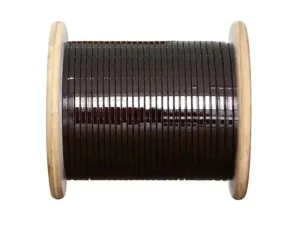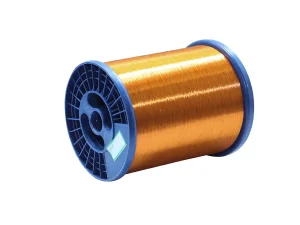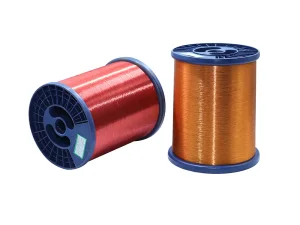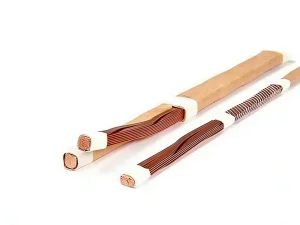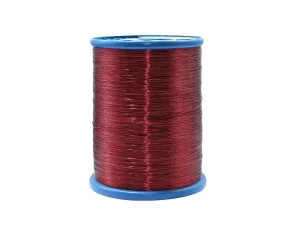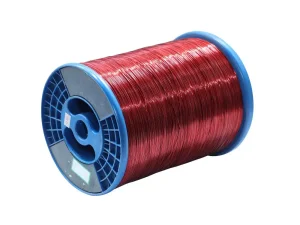
Explore our core selection of high-temperature insulated enameled wires designed for extreme operating environments.
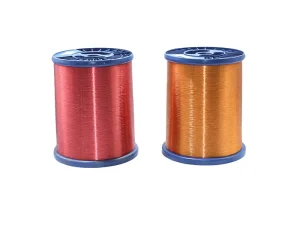
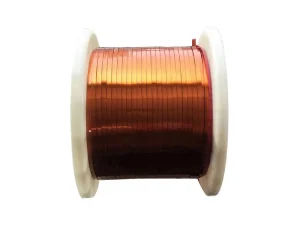
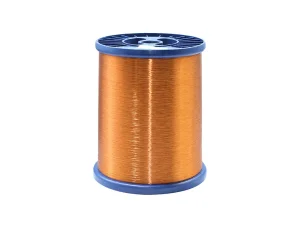
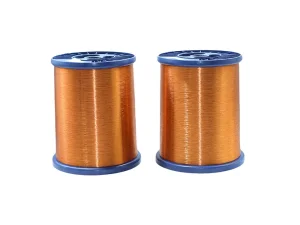
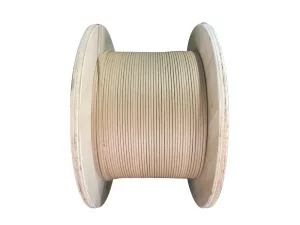
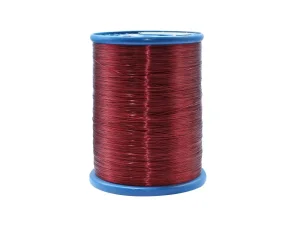
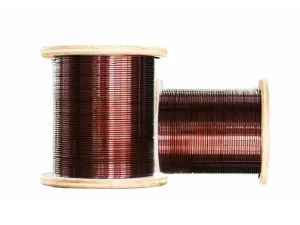
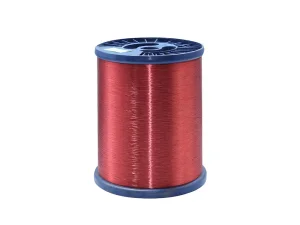
Understanding the chemistry behind Class 220/240 high-performance enameled magnet wires.
Polyamide-imide (PAI) represents a polymer matrix combining the robust thermal stability of polyimides with the exceptional structural flexibility of polyamides. Synthesized through the condensation of trimellitic anhydride (TMA) and diisocyanates, the resulting amide-imide linkages build an intense intermolecular network via hydrogen bonding. This unique chemistry gives PAI magnet wire an extraordinary thermal index rating of up to 240°C.
When applied as a dual-coat system over a primary Polyesterimide (PEI) basecoat, PAI acts as a critical topcoat layer. The composite insulation layer exhibits superb dielectric strength, phenomenal mechanical surface toughness, and resistance to aggressive industrial solvents, lubricants, and refrigerants (such as R-134a and R-1234yf).
While standard polyesterimide-coated wire begins showing mechanical creep and thermal degradation at 200°C, PAI (AIW) wire maintains its structural integrity and dielectric capability at continuous operational temperatures exceeding 220°C, making it the default option for harsh environments.
PAI exhibits outstanding resistance to aggressive chemical attack, showing zero breakdown when tested against standard ASTM solvents, hydrocarbon oils, and synthetic transmission fluids common in modern electric vehicle transmissions.

The global transition from 400V to 800V electrical architectures in electric vehicle (EV) drivetrains relies heavily on Silicon Carbide (SiC) inverters. These fast-switching semiconductors generate high dV/dt transient voltage spikes, leading to extreme electrical stress and partial discharge (corona) phenomena that can rapidly degrade conventional wire insulation.
Our Corona-Resistant Polyamide-Imide Enamelled Wire features metal oxide nanoparticles dispersed uniformly within the polymer layer. This structure deflects high-voltage electrical fields and dramatically elevates the Partial Discharge Inception Voltage (PDIV), prolonging the motor's lifespan under high-frequency switching harmonics.
Maintains active dielectric performance under high-speed pulse widths.
Excellent elongation properties protect the paint layer during tight CNC bends.
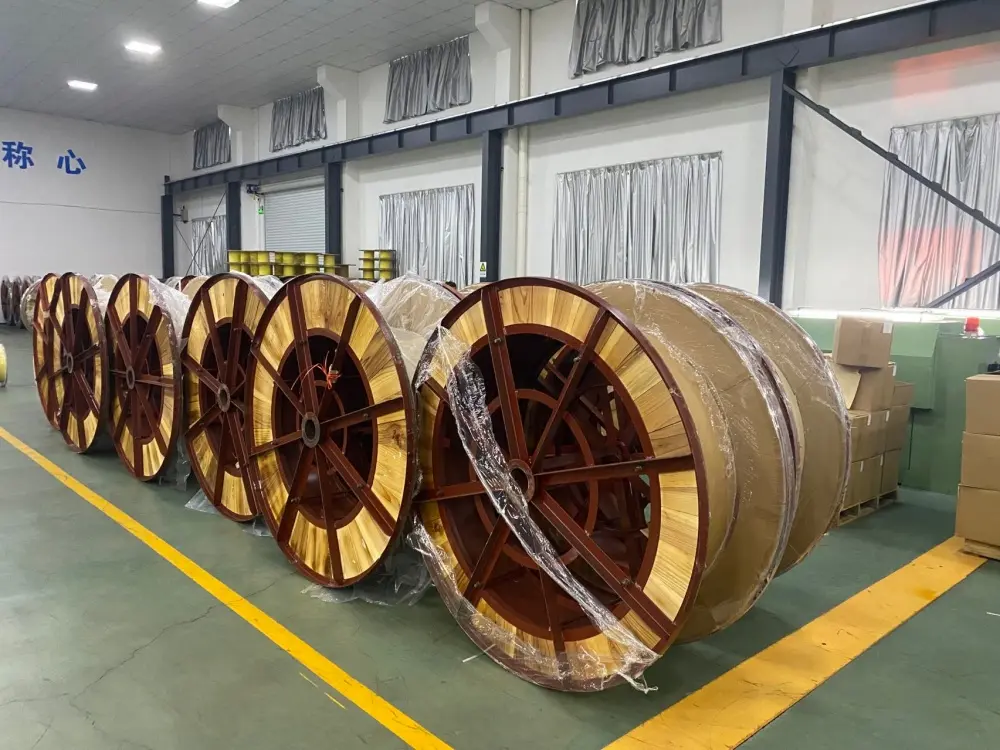
Inside Suzhou Daiming Electrical Materials Co., Ltd.'s intelligent production environment.
We operate 30 continuous high-speed drawing-annealing-enameling lines that process wire inline from rod input to spool. This synchronization reduces wire exposure to ambient oxygen, eliminating microscopic scaling and ensuring uniform adhesion of the PAI varnish layer.
Integrated dual-axis laser diameter micrometers measure the wire at multiple points per millisecond during production. Automated adjustments ensure strict adherence to NEMA, JIS, and IEC dimensional limits down to ±0.001 mm tolerances.
High-voltage inline spark testers monitor 100% of production for dielectric anomalies. Samples undergo regular saline pinhole checks, heat shock, springiness, and unilateral scrape tests to confirm stable field performance.
Balancing high material performance with mechanical resilience for long-term field stability.

Strict process controls yield consistent film density and clean concentricity profiles.

Our wires maintain strong mechanical strength and flexibility under cyclic thermal loads.

We supply bespoke wire profiles and thicknesses matching your slot-fill designs.

High production capacity protects your schedules against raw material fluctuations.

Low VOC processing and RoHS compliance support green manufacturing initiatives.
Our enameled wires provide high-reliability insulation solutions across primary industrial markets.
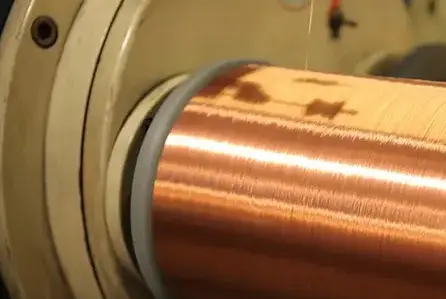
Delivering high fill factor and dielectric capability for industrial and high-frequency power transformers.
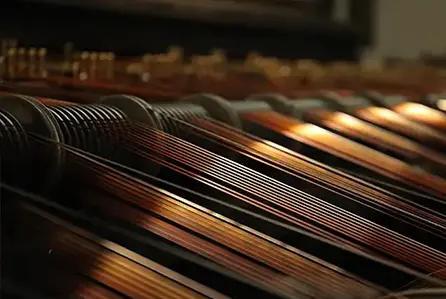
Providing compact, temperature-resistant wind designs for major home appliances and high-frequency electronics.
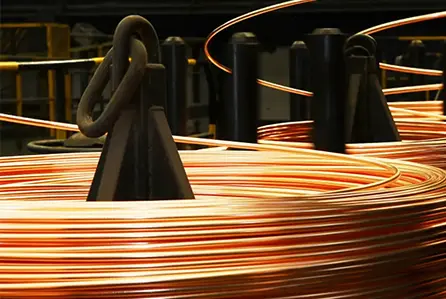
Ensuring clean signal transmission and chemical resistance in heavy industrial actuators and sensors.

Supporting wind turbines, solar inverter chokes, and large power grids with specialized heavy-gauge conductor designs.
For global procurement offices, supply chain transparency and regulatory compliance are essential safety factors. Suzhou Daiming maintains strict manufacturing systems fully certified under international protocols.
All our PAI and composite magnet wires meet international industry standards, ensuring easy integration into high-voltage systems. Every shipment is accompanied by complete inspection logs detailing raw copper purity, chemical coat layers, and actual electrical performance.
Designed to exceed IEC 60317 and NEMA MW 35-C requirements.
Free from restricted heavy metals and hazardous processing chemicals.
| Copper Purity: | ≥ 99.99% (Oxygen-Free) |
| Wire Profiles: | Round, Rectangular, Hairpin |
| Size Range: | 0.05 mm - 6.00 mm (Custom) |
| Build Types: | Grade 1, 2, 3 (Heavy Build) |
Keep up with the latest updates from Suzhou Daiming and shifts in the global magnet wire market.
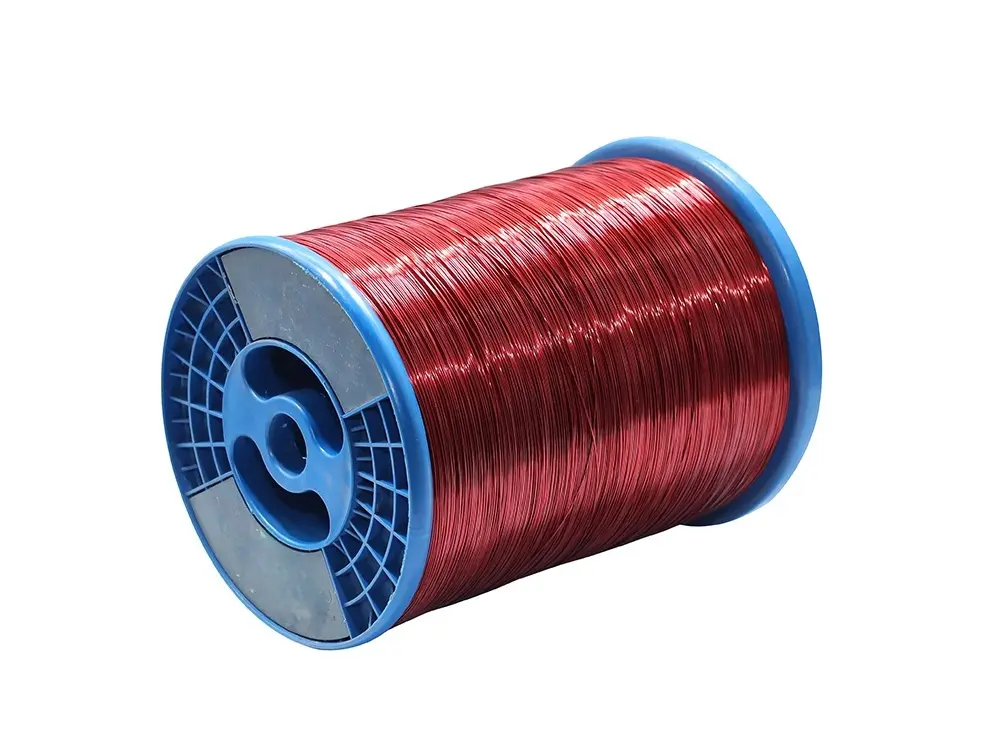
With the rapid development of new energy and high-end manufacturing in 2026, cost control and quality assurance have become focal points for production managers worldwide...
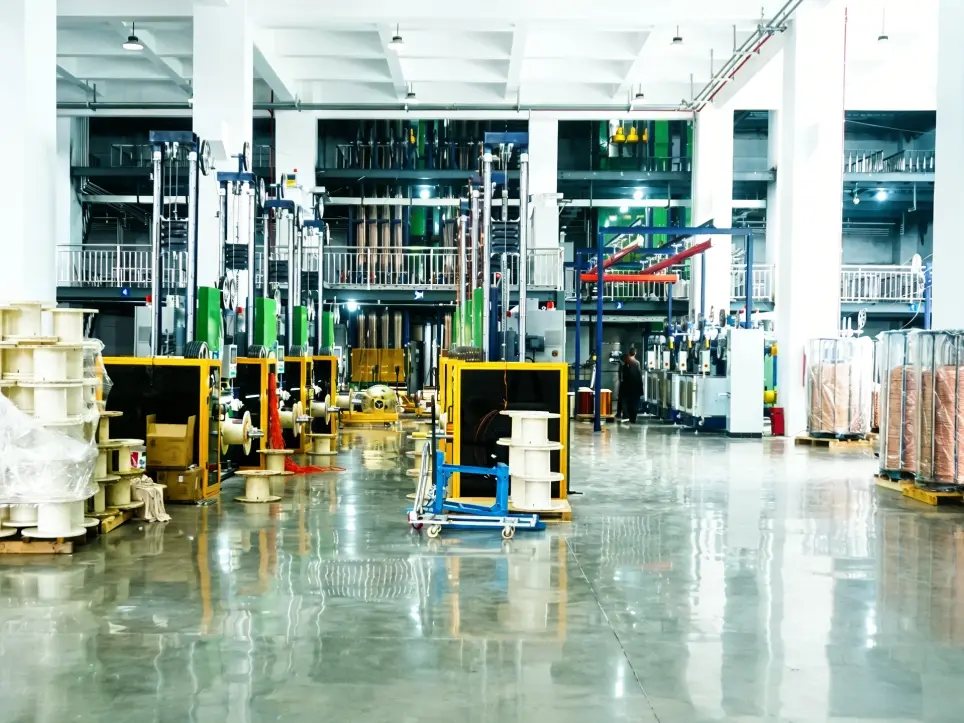
Faced with operational challenges caused by raw material price fluctuations, copper-clad aluminum enameled wire has emerged as a reliable design solution for cost-reduction initiatives...
New Overseas Shipment News | High-quality CTC Continuous Transposed Conductors Exported to Turkey, providing strong support for regional power grid transmission updates...
Find answers to common questions about selecting and applying PAI (AIW) enameled wire.
Polyamide-imide (PAI) wire offers a higher thermal index (Class 220 or 240) than PEI (Class 180 or 200). PAI possesses superior mechanical surface strength, higher scrape resistance, and far better resistance to solvents and aggressive chemical environments. This makes PAI the standard specification for topcoats in demanding high-temperature environments.
800V EV motors use Silicon Carbide (SiC) inverters that generate rapid, high-voltage switching pulses. These cause partial discharge (corona) that quickly degrades regular insulation. PAI dual-layer enameled wire, especially with corona-resistant additives, provides a high Partial Discharge Inception Voltage (PDIV), protecting the motor from insulation failure.
No, Class 220/240 PAI insulation is highly cross-linked and chemically stable, meaning it does not melt under standard soldering temperatures. The coating must be mechanically stripped or chemically removed before termination. For direct soldering, Polyester or Polyurethane (UEW) wires are recommended, though they offer lower thermal ratings.
Flat wire offers a higher space factor in the stator slot (up to 80% compared to 50% for round wire). This increases copper density, which reduces power losses, improves thermal dissipation, and enables more compact electric motor designs.
We run real-time inline monitoring systems on our 30 drawing-enameling lines. Using automated laser sizing, high-voltage spark testing, and laboratory batch testing for flexibility and heat shock, we ensure every spool complies with IEC and NEMA magnet wire specifications.
Discover our specialized wire variants, from high-conductivity alloys to transposed conductors.