Discover our range of advanced winding solutions, manufactured to strict IEC, NEMA, and ASTM standards.
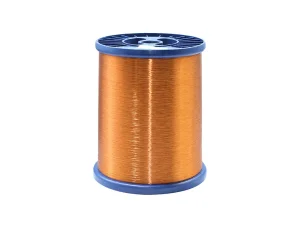
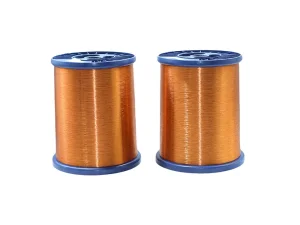
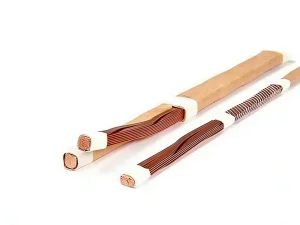
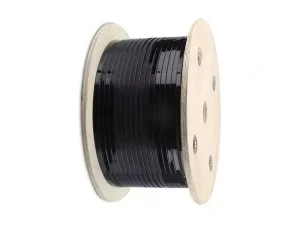
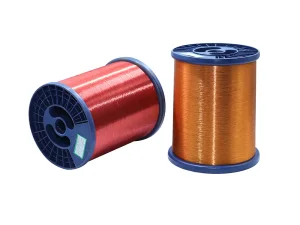
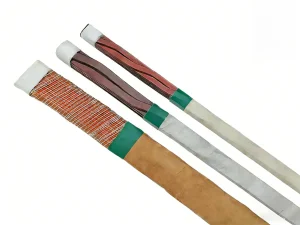
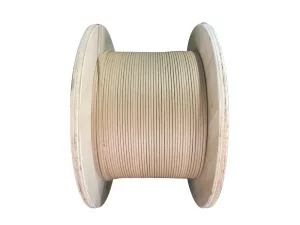
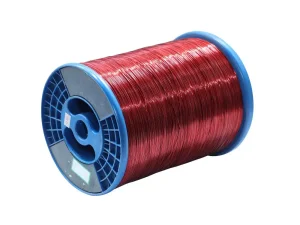
In the rapidly transforming landscape of global power transmission, heavy industrial automation, and high-performance electric powertrains, the choice of raw conductor materials determines system efficiency, lifespan, and thermal limits. While enameled magnet wire is the gold standard for compact high-density coils, non-enameled (bare) and paper-covered copper wires along with Continuously Transposed Conductors (CTC) form the structural backbone of heavy utility power systems, oil-filled distribution transformers, and large-scale generators.
As global power grids modernize to accommodate renewable energy feeds from utility-scale wind and solar installations, transformers must handle larger power loads with increased harmonic currents. This has driven the industry toward highly specialized raw conductor geometries. Non-enameled high-conductivity copper serves as the primary substrate. For ultra-high voltage (UHV) systems, these substrates are combined with cellulose-based papers, Nomex, or high-performance aramid wraps rather than traditional enamel varnish to handle heavy mechanical load pressures and long-term oil-immersion conditions without thermal breakdown.
Utility-scale transformer operations require raw conductor systems that minimize load losses under continuous cyclic stresses, demanding oxygen-free high-conductivity (OFHC) copper substrates.
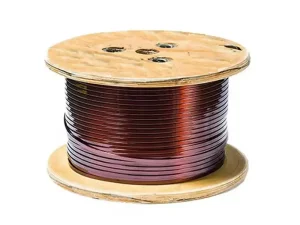
Next-generation automotive charging and high-voltage grid stations utilize high-aspect-ratio rectangular profiles to optimize spatial fill factor and heat dissipation pathways.
Deep-sea transformer systems and industrial generator rotors require specialized bare copper profiles configured to endure harsh mechanical vibrations and chemical exposure.
At Suzhou Daiming, we leverage precision-driven continuous casting and extrusion lines to produce non-enameled copper wire with chemical purity exceeding 99.99% (Oxygen-Free High-Conductivity TU1/TU2 and Electrolytic Tough Pitch ETP). This level of purity is vital for keeping electrical resistivity at its absolute theoretical limit. Lower grade copper with trace oxygen levels can suffer from hydrogen embrittlement during annealing steps, jeopardizing the structural integrity of large transformer coils.
| Conductor Type | Material Composition | Typical Insulation | Thermal Class / Limit | Key Standard Compliance |
|---|---|---|---|---|
| Non-Enameled Bare Copper | TU1 / TU2 Oxygen-Free (Cu-OF) | None (Bare Conductor) | Subject to surrounding media | ASTM B170, BS EN 1977 |
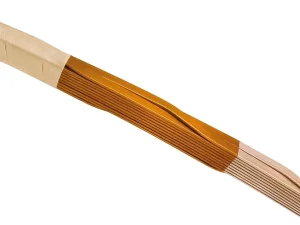
| Paper Covered Flat Copper | ETP (Cu-ETP) / Oxygen-Free | Kraft, Dennison, or Crepe Paper | 90°C to 105°C (in oil) | IEC 60317-27, GB/T 7673 |
| Continuously Transposed Conductor (CTC) | PVA/PVB/PEI Enameled Strands | Polyester Mesh or Paper wrap | 120°C to 180°C | IEC 60851, Custom Utility Specs |
| Glass Fiber Wrapped Copper | High-Purity Copper Substrate | Double Glass Fiber / Epoxy Film | 155°C to 200°C | NEMA MW 41-C, IEC 60317-31 |
For heavy winding operations, the mechanical tempering of the non-enameled copper wire must be tightly controlled. We supply copper profiles in fully annealed (soft), semi-hard, and hard states. Soft-tempered copper is essential to limit rebound spring-back during dense transformer core winding, preventing mechanical damage to external paper insulation layers and keeping structural geometries tight.
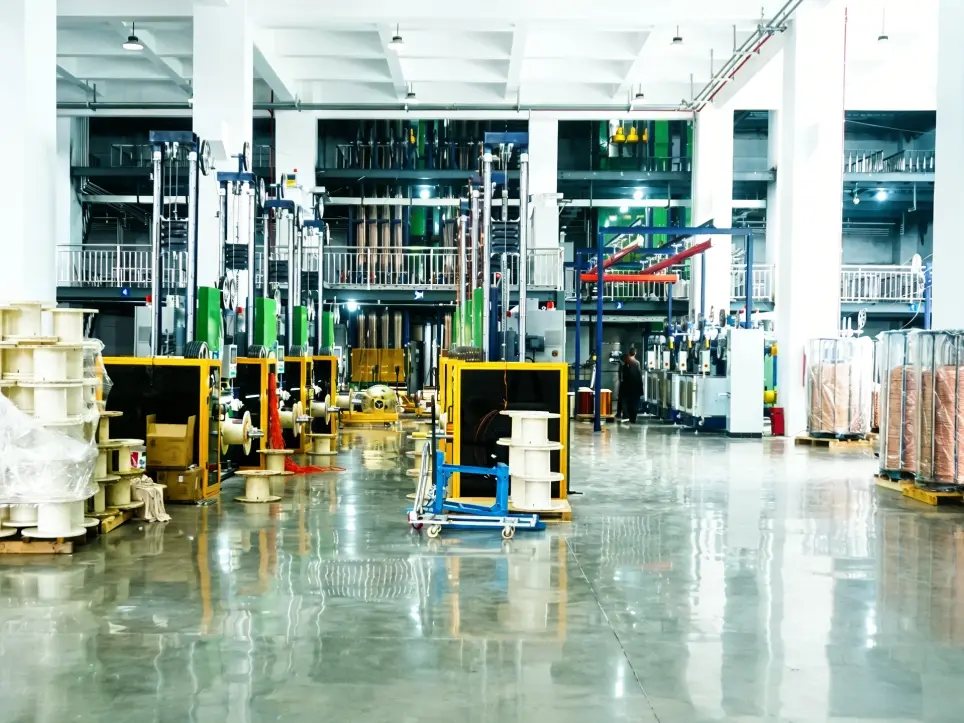
Suzhou Daiming Electrical Materials Co., Ltd., is a leading manufacturer of high-quality enameled and specialized winding wires: enameled aluminum wires, enameled copper wires, and enameled copper-clad aluminum wires. Situated on a sprawling 258,333.33 ft² site, our advanced production facility houses 30 state-of-the-art production lines.
This robust infrastructure enables us to maintain a stable and high-volume output, ensuring consistent supply to meet global market demands. With strict quality control at every stage, from raw material inspection to final product testing, we uphold the highest industry standards, guaranteeing the durability and performance of our enameled and non-enameled winding products.

We provide structural systems covering multiple conductor substrates and insulation coatings tailored for specific voltage and thermal profiles.
Each batch of wire undergo strict physical, chemical, and electrical checks to guarantee field performance.
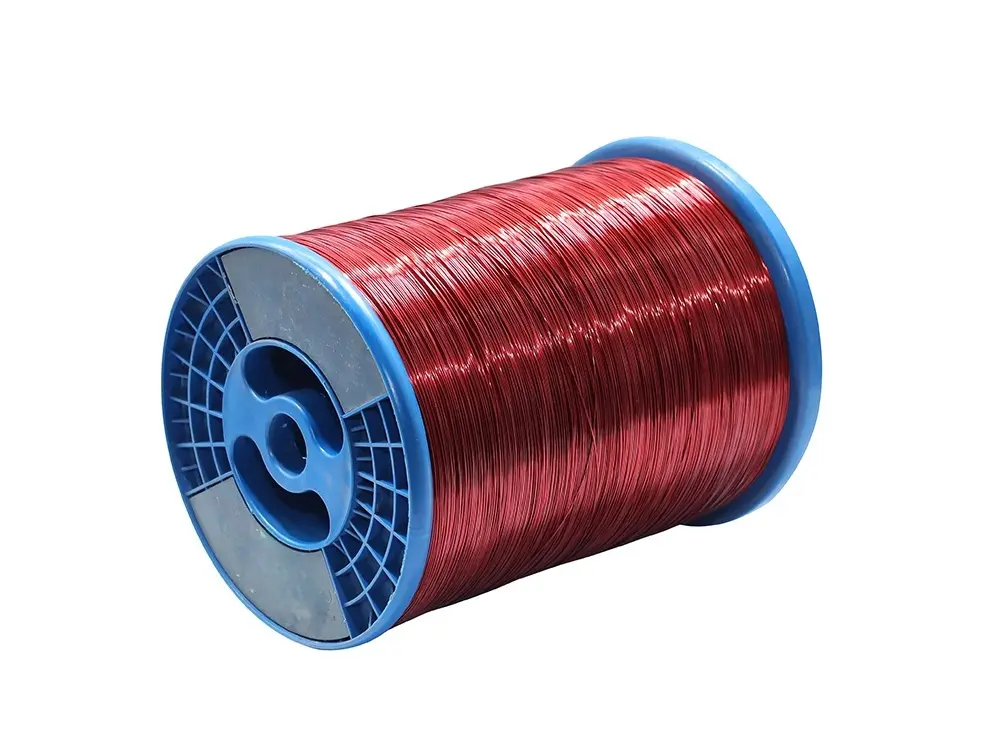
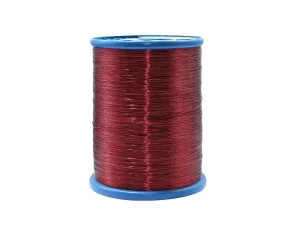
Each roll of enameled wire has undergone rigorous process and quality inspection to ensure stable performance.
The enameled wire we produce has a uniform and dense paint film, strong adhesion, scratch resistance, and good flexibility.
Professional support from custom wire diameter specifications to thermal indexes, matching your design constraints.
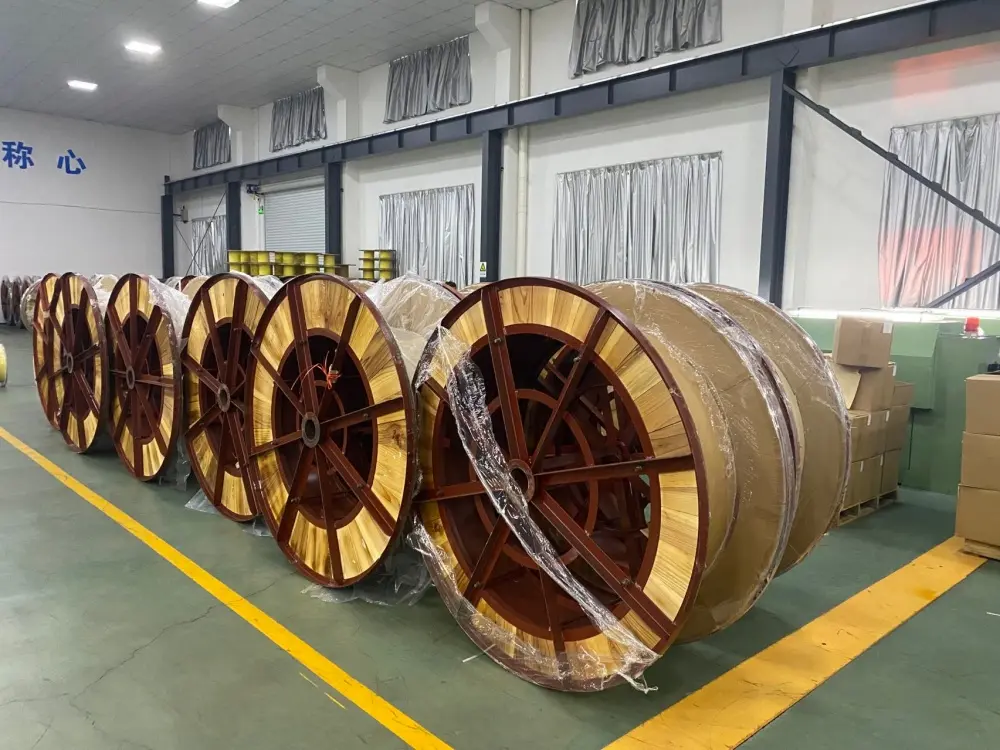
With strong production capacity and a complete supply chain system, we ensure on-time delivery across global borders.
Our wires are used in core areas such as high-efficiency, energy-saving motors and utility-scale green electrical grids.
Our heavy-duty enameled and bare copper systems are deployed in demanding fields worldwide.
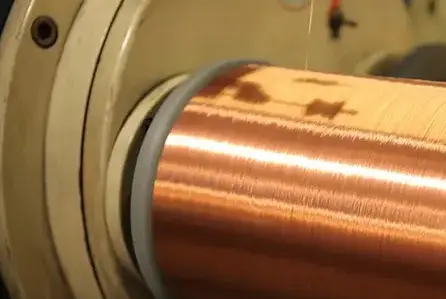
Designed to handle extreme voltage spikes and protect against dielectric breakdowns in oil-filled transformers.
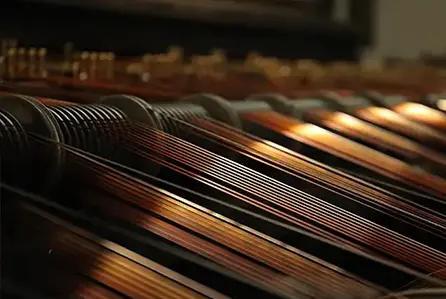
Consistent dimensions and high purity ensure reliability and space optimization in consumer electronic devices.
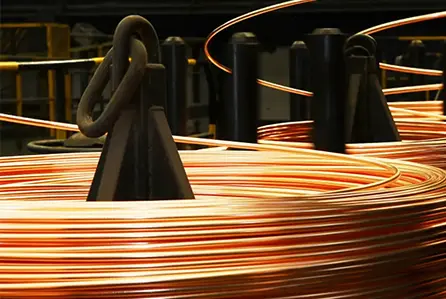
Precision wire gauges deliver predictable signals and mechanical stability in demanding factory environments.
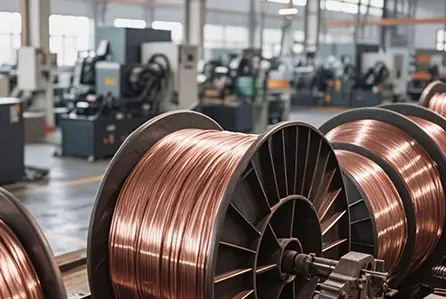
Engineered to support high current loads and dynamic thermal expansion in large power generator systems.
The global electrical manufacturing landscape is undergoing a major shift, driven by two key trends: the rise of 800V electric vehicle architectures and the expansion of Ultra-High Voltage (UHV) DC power transmission grids. These applications push winding conductors to their physical limits, subjecting them to higher heat levels, high-frequency harmonics, and rapid voltage spikes.
In high-frequency applications, alternating current flows primarily along the outer skin of the conductor—a phenomenon known as the skin effect. Standard solid copper wire experiences high resistance under these conditions. To combat this, Continuously Transposed Conductors (CTC) divide the current path among many small, insulated, rectangular strands. These strands are systematically transposed along the length of the conductor. By equalizing current distribution, CTC reduces winding loss in heavy-duty grid transformers and prevents hot spots that can degrade cellulose insulation over time.
For non-enameled copper wire destined for high-voltage transformer designs, paper wrapping technology is shifting toward synthetic hybrids. Traditional thermally upgraded kraft paper performs well up to 105°C, but modern compact substation designs demand running temperatures of 120°C and higher. Wrapping bare, non-enameled copper in high-temperature aromatic polyamide (Nomex) paper allows transformers to run hotter. This design shift yields smaller, lighter transformers that can handle sudden power surges without insulation breakdown.
Modern EV traction motors are transitioning from standard round-wire windings to rectangular "hairpin" designs. Using flat, enameled or semi-insulated copper wire allows for a higher slot fill factor (often exceeding 70%), which boosts motor torque density. However, this design places greater electrical stress on the wire. Addressing this requires precise profile dimensions, smooth corner radii, and defect-free insulation layers to resist partial discharge and corona effects under high-voltage switching.
Find answers to common engineering, structural, and procurement questions regarding our enameled and specialty copper wires.
Explore additional high-grade industrial copper and aluminum conductor configurations ready for shipping.
Keep up with the latest shipment updates, technical trends, and product innovations at Suzhou Daiming.