Explore our core engineering-grade enameled wires and custom continuously transposed conductors designed to meet severe industrial environmental standards.
The global electrification paradigm is undergoing a massive architectural shift. From electric vehicles (EVs) adopting 800V high-voltage platforms to the massive grid integration of renewable energy and AI-driven hyper-scale datacenters, the demands on magnet wire insulation have reached unprecedented heights. Modern enameled covered wires are no longer just basic electrical conductors; they are highly engineered component structures designed to withstand complex electromagnetic, thermal, and mechanical stresses.
Key industry developments include the transition of automotive traction motor stators from traditional round winding wires to enameled flat wire (hairpin technology). Flat wires provide a significantly higher slot fill factor (often exceeding 70% compared to round wire's 45-50%), drastically reducing thermal resistance and DC losses while allowing for exceptionally compact and lightweight motor housing designs. In power grids, the focus has shifted toward reducing eddy current losses in ultra-high voltage (UHV) transformers. This is accomplished using Continuously Transposed Conductors (CTC), which optimize spatial current distribution and prevent hot-spots within high-capacity transmission equipment.
Furthermore, raw material pricing dynamics have pushed global sourcing teams to redesign winding configurations. For instance, the high cost of copper has accelerated the adoption of Copper-Clad Aluminum (CCA) Enameled Wires. By offering the electrical conductance pathways of copper along the skin envelope and the lightweight, low-mass properties of aluminum in the core, CCA wires are proving to be highly cost-effective in high-frequency signal coils, weight-sensitive automotive sensors, and high-frequency inductors.
B2B procurement agents, transformer engineers, and manufacturing plants face critical challenges when choosing wholesale enameled covered wire suppliers. The main concerns include dielectric insulation stability, thermal overload protection, mechanical bend tolerance during high-speed winding, and strict dimensional accuracy. A single defect in an enamel coating layer can result in turn-to-turn short circuits, causing high-voltage transformer explosions or catastrophic automotive motor failures.
Precise enamel layer concentricity prevents localized voltage breakdowns in high-frequency applications.
Advanced polymers like Polyesterimide (EIW) and Polyamide-imide (AIW) guarantee thermal ratings up to 220°C.
Excellent stretchability and high bend resistance prevent cracking during high-tension automatic coil winding.
To meet these high-level technical expectations, wholesale supply agreements must guarantee adherence to international standards including IEC 60317, NEMA MW 1000, and JIS C 3203. Global manufacturers must also show verifiable test records for critical metrics. These include pinhole counts under electrical load, scratch resistance (using automatic scrape testers), heat shock stability, springback angle, and breakdown voltage levels.
Suzhou Daiming Electrical Materials Co., Ltd. is a leading manufacturer specializing in high-performance enameled aluminum wires, enameled copper wires, and copper-clad aluminum enameled wires. By combining advanced chemical engineering with state-of-the-art wire-drawing systems, we supply critical components to over 10 cooperating countries globally.
Our manufacturing process utilizes integrated drawing and enameling lines. This design maintains strict control over conductor sizing while preventing oxidation prior to enamel application. From incoming raw material verification to advanced offline testing systems, we maintain quality standards that satisfy demanding industrial transformer and automotive system applications.

The production of enameled magnet wire involves drawing raw electrolytic copper rods (99.99% purity) or high-grade electrical aluminum rods down to exact diameters. After drawing, the wire undergoes continuous inline annealing to restore ductility and remove mechanical stress. Next, multiple layers of liquid polymeric resin are applied and cured in vertical or horizontal enameling ovens. This process requires precise control of temperature, viscosity, and curing time.
Selecting the correct polymer insulation depends on the target application:
When designing transformers or inductors, raw material characteristics play a vital role. Enameled Copper Wire provides excellent electrical and thermal conductivity, making it the preferred choice for high-efficiency motors. Enameled Aluminum Wire, while having lower conductivity than copper, offers a significant weight reduction (roughly 60% lighter) and a lower cost structure, making it highly suitable for large power distribution transformers. Copper Clad Aluminum (CCA) sits between the two options. It utilizes the skin effect to carry high-frequency currents along its copper exterior while reducing weight and material costs through its aluminum core.
Our enameled wires and transposed conductors are implemented in high-demand industrial sectors worldwide. The following application scenarios demonstrate how our products perform under demanding engineering requirements:
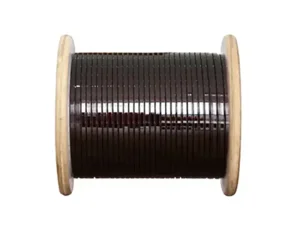
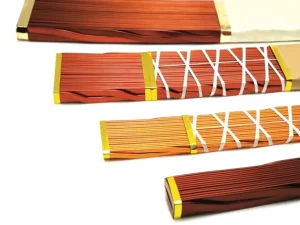
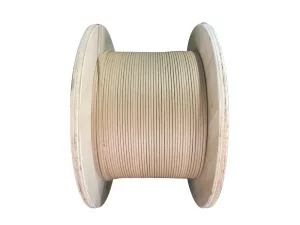
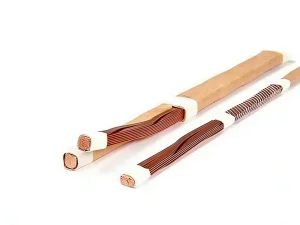
We supply continuously transposed conductors (CTC) wrapped in specialized insulating papers. These are designed to reduce electrical losses and improve windability in high-capacity grid upgrades.
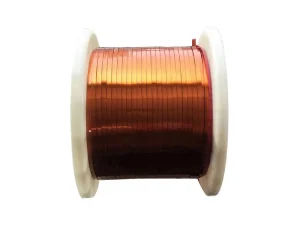
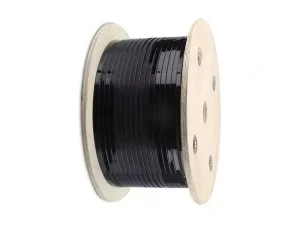
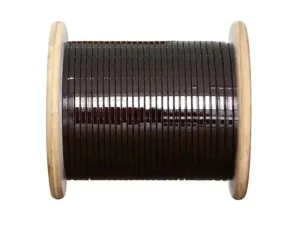
Our Class 220 Polyamide-imide enameled flat copper wires are built for high dielectric and thermal stress environments, such as EV traction motors and onboard charging units.
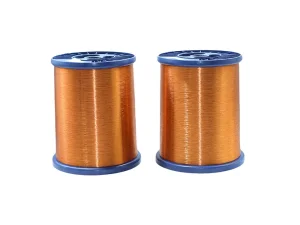
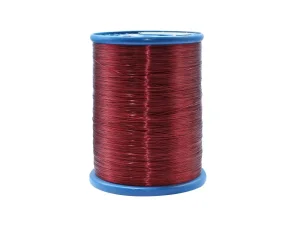
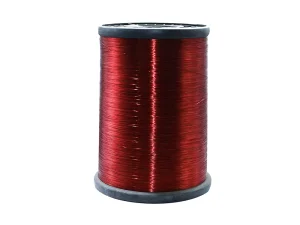
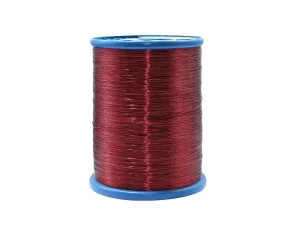
Providing high-precision enameled aluminum and CCA wires for compressors, ventilation fans, and micro-motors, offering a balance of performance and material cost efficiency.
Global Project Spotlight: Turkey Eurasian Power Grid Upgrade
In 2026, Suzhou Daiming Electrical Materials successfully shipped a high-volume order of Continuously Transposed Conductors (CTC) to Turkey. This project involved high mechanical strength and paper-insulated transposition configurations. These conductors were designed to support Turkey's electrical grid expansion, helping to reduce transformer heat generation and transmission losses.
Technical answers to common questions about selecting, processing, and sourcing enameled covered wires.
Polyurethane (UEW) features self-soldering properties, allowing for direct soldering without stripping the enamel coat. Polyesterimide (PEW/EIW) cannot be self-soldered but offers higher thermal resistance (typically 180°C or higher), along with superior chemical and scratch resistance.
CTC consists of multiple individual enameled flat wires arranged in a transposed grid layout. This configuration reduces eddy current losses at high load limits, prevents hot-spot formation, and offers high mechanical resistance against short-circuit forces compared to standard wound conductors.
Due to the skin effect, high-frequency currents flow primarily along the outer copper layer of the conductor. This allows CCA to deliver electrical performance comparable to solid copper wire, while reducing weight and overall material costs.
We supply wires ranging from Class 130 (for general electronics) up to Class 220 (Polyesterimide coated with Polyamide-imide). This range ensures reliable performance in demanding high-temperature environments, including EV traction motors and heavy-duty industrial pumps.
Yes. We provide custom sizing for both round wire diameters and flat wire dimensions, tailored to your slot designs and winding equipment requirements.
Each batch undergoes rigorous tests, including breakdown voltage testing, thermal shock evaluation, pinhole detection, adhesion/flexibility checks, and scrape resistance testing to verify quality before shipment.
Partner with Suzhou Daiming for certified quality, consistent supply chain reliability, and technical support. Request a quote or order custom samples for your specific design requirements.
Submit RFQ / Contact EngineersBrowse our technical product line, featuring high-temperature insulation coatings and advanced composite materials.