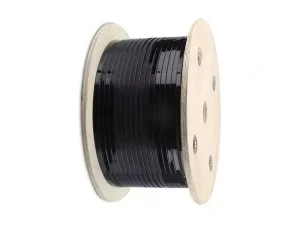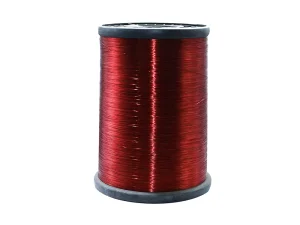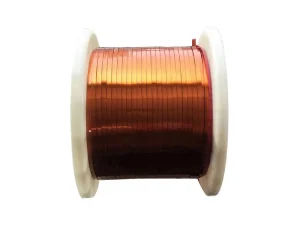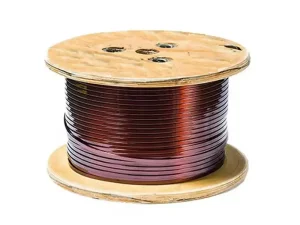
Engineered to deliver exceptional thermal endurance, reliable dielectric properties, and strict compliance with IEC, NEMA, and JIS standards.
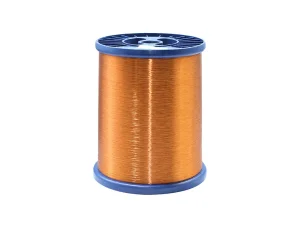
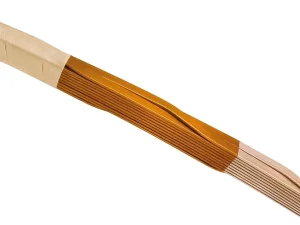
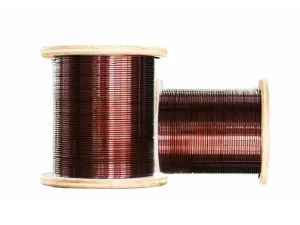
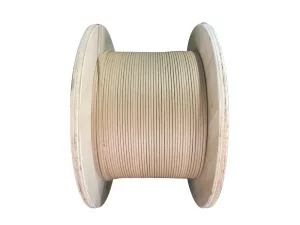
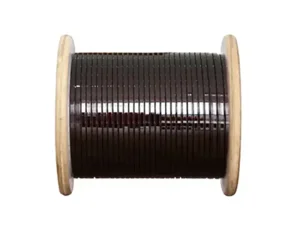
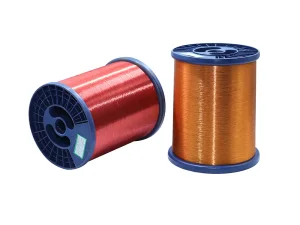
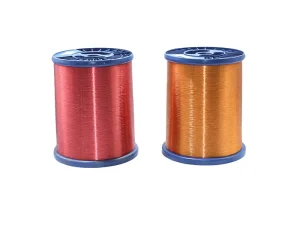
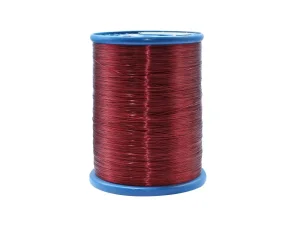
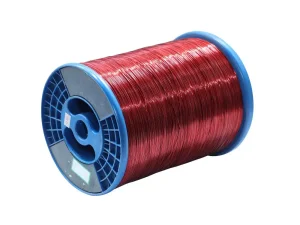
In modern industrial electromagnetics, the demands placed on magnet wires have escalated beyond traditional limits. Polyimide coated wire (also known as PI or Kapton-type coated wire) represents the pinnacle of magnet wire engineering, offering high thermal stability, unmatched dielectric performance, and long-term chemical resistance. Operating in environments that would cause standard enamel coatings to rapidly degrade, polyimide coatings maintain physical and structural integrity at continuous operating temperatures exceeding 220°C to 240°C.
Global demand for these specialized components has surged, driven primarily by the transition toward high-voltage architectures in transportation, renewable energy, and precision robotics. This whitepaper analyzes the current commercial landscape, evaluates China's manufacturing efficiencies, and outlines key technical specifications essential for procurement officers and engineering directors globally.
As industries seek greater efficiency and compact form factors, electrical devices are increasingly engineered to run at higher power densities. This shift causes elevated internal operating temperatures. Conventional Class 155 (F) and Class 180 (H) insulated wires are no longer sufficient for systems where localized temperatures spike above 200°C.
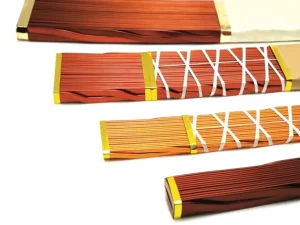
Polyimide insulated conductors offer exceptional thermal endurance, making them indispensable in heavy industrial machinery, railway traction systems, aerospace avionics, and high-frequency military communications. The international market is undergoing a transition where polyimide coated flat wire is rapidly replacing standard round wires in high-power applications to optimize space factor, heat dissipation, and magnetic efficiency.
China has consolidated its position as a primary global hub for high-performance magnet wire production. By combining localized raw-material access, fully integrated supply chains, and large-scale precision automation, Chinese factories consistently deliver world-class technical specs at competitive cost-performance ratios.
Selecting the right magnet wire requires an understanding of polymer chemistry and its performance under extreme stresses. The table below compares Polyimide (PI) coated wires with standard polyesterimide (PEI) and polyamide-imide (PAI) overcoated wires.
| Performance Parameters | Polyimide (PI) Insulated | Polyesterimide / Polyamide-imide (EI/AIW) | Polyurethane (UEW) | |
|---|---|---|---|---|
| Thermal Class | 220°C - 240°C | 200°C - 220°C | 130°C - 155°C / 180°C | |
| Dielectric Breakdown | Excellent (> 8.5 kV) | Very Good (> 7.0 kV) | Good (> 5.0 kV) | |
| Chemical Resistance | Excellent (Hydrocarbons, Solvents) | Good | Moderate | Moderate |
| Corona Resistance | Outstanding | High | Poor | |
| Conductor Space Factor | Optimal (Flat Wire Configuration) | Good (Round / Flat) | Standard (Round) |
Polyimide coated wires are specified across high-demand sectors:
A trusted global manufacturer specializing in state-of-the-art enameled wire, Continuously Transposed Conductors (CTC), and specialized magnet wires.
Every single spool of enameled wire undergoes rigorous concentricity testing and breakdown voltage verification to ensure consistent, defect-free coatings.
Our formulations deliver exceptional scratch resistance, flexibility, and mechanical adhesion, ensuring the wire withstands tight automated winding stresses.
From micro-thin wires to heavy-gauge rectangular copper and aluminum conductors, we tailor dimensions and insulation thickness to your electrical specs.
With a 258,333 sq ft production facility and 30 state-of-the-art production lines, we support large-scale industrial projects with reliable delivery schedules.
Our ultra-low resistance CTC and high-temperature polyimide wires help reduce losses in green energy generation, solar arrays, and high-efficiency transformers.
Essential information regarding standards, selection criteria, and procurement processes for our high-temperature magnet wires.
Browse our full range of enameled, paper-covered, and transposed conductors engineered to meet the needs of international industrial networks.