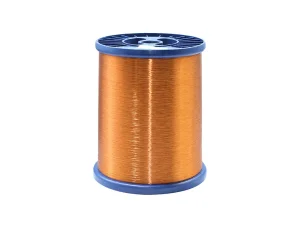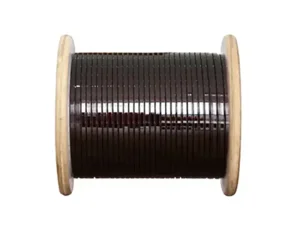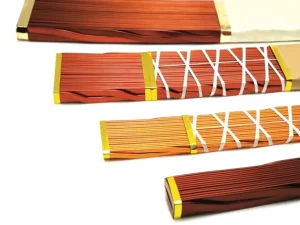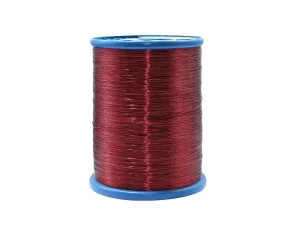
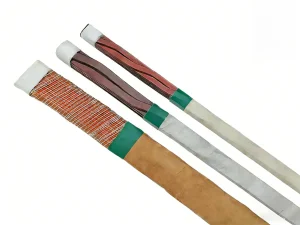
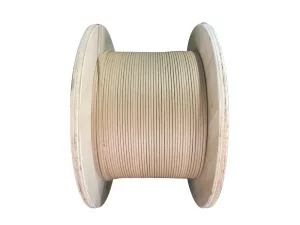
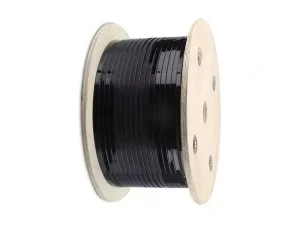
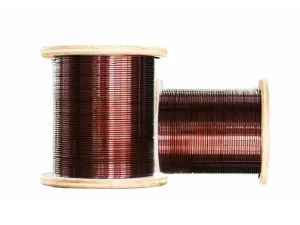
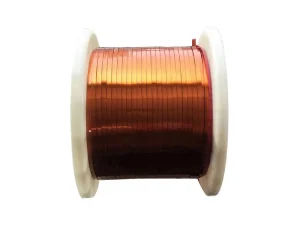
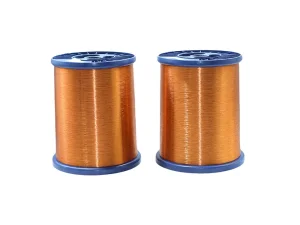
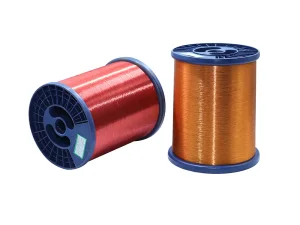
In the contemporary electrical manufacturing paradigm, Paper Coated Copper Cord (frequently designated within heavy industries as Paper Covered Rectangular Copper Wire or Continuously Transposed Conductor (CTC)) stands as the cornerstone for manufacturing high-capacity, oil-immersed power transformers, traction motors, and distribution networks. As international pressure mounts to upgrade ageing transmission lines and incorporate high-output renewable energy sites (offshore wind, solar arrays), the technical requirements placed upon magnet wire insulation systems have grown exponentially. High purity copper cores wrapped in precision Kraft paper provide the thermal stability, mechanical elasticity, and dielectric strength required to handle extreme electric fields and transient overvoltages.
"The shift toward Extra-High Voltage (EHV) and Ultra-High Voltage (UHV) transmission networks mandates a structural upgrade in winding wire durability. Modern paper-wrapped conductors are engineered to minimize dielectric losses while maximizing short-circuit mechanical resistance."
Industrial electrification requires specialized design approaches. Unlike standard synthetic coatings, paper wrapping acts as a flexible yet highly durable reservoir for transformer oil. This synergy creates a complex dielectric barrier that tolerates thermal expansion without cracking or losing electrical isolation. Major grid developers and industrial OEMs across Europe, North America, and the Asia-Pacific region are increasingly demanding thermally upgraded papers (such as cyanoethylated Kraft paper) that extend the operating lifespan of electrical assemblies under continuous peak loads.
Engineered wrapping with overlapping layer designs guarantees optimal resistance against high-voltage breakages, even during grid surges.
Designed for Class 105°C to 120°C limits, leveraging thermally upgraded Kraft papers to delay cellulose fiber degradation in hot oil.
Superior mechanical elasticity and high tensile strength minimize wear under continuous mechanical stress cycles.
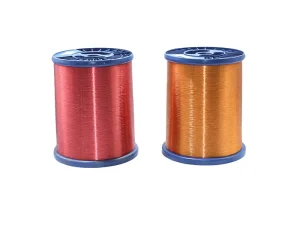
At Suzhou Daiming Electrical Materials Co., Ltd., customer needs dictate our engineering pipeline. Located on a sprawling 258,333.33 ft² state-of-the-art facility, our factory houses 30 advanced production lines. Specializing in high-performance enameled aluminum wires, enameled copper wires, and copper-clad aluminum enameled wires alongside our premium paper-covered flat conductor lines, we guarantee consistent supply and high-volume output.
By implementing strict quality controls from raw copper ingot selection, oxygen-free extrusion, precision drawing, to the wrapping and curing processes, Suzhou Daiming ensures that our products meet or exceed standards like IEC, NEMA, and GB. Our international export reach spans over 10 countries, delivering robust grid components to critical projects globally.
Understanding the micro-mechanisms of paper coated copper cord degradation is essential for electrical engineers designing heavy equipment. The primary copper base is typically processed through continuous extrusion conforming to ASTM B48 or IEC 60317-0-2, ensuring oxygen-free (OFC) parameters (oxygen content < 10 ppm, electrical conductivity ≥ 100% IACS). High-conductivity copper minimizes internal heating, directly reducing the cooling load on the surrounding transformer oil.
The insulation consists of multiple layers of Kraft paper, crepe paper, or Nomex® aramid paper. Nomex® is particularly favored in high-temperature applications up to Class 220°C, such as traction and wind-turbine transformers. The structural parameters of the paper wrap—such as overlap percentage, wrap angle, and paper density—must be controlled to ensure the cord can bend during winding without tearing the insulation layer.
| Insulation Type | Base Material | Thermal Class (°C) | Common Industrial Applications |
|---|---|---|---|
| Standard Kraft Paper | Unbleached Sulfate Cellulose | 105°C | Distribution Transformers, Small Power Units |
| Thermally Upgraded Kraft | Nitrogen/Chemical Modified Cellulose | 120°C | High-capacity Power Transformers, Grid Substations |
| Crepe Paper Wrap | Elasticized Kraft Fibers | 105°C | Lead connections, Complex Winding geometries |
| Aramid Paper (Nomex®) | Aromatic Polyamide Synthetic Fibers | 180°C - 220°C | Wind Turbines, Locomotive Traction, Dry-type Units |
Our research and development pipeline focuses on next-generation composite insulations. By merging thin polyimide films with highly porous natural cellulose paper, we can decrease overall insulation thickness (enabling smaller winding dimensions) while enhancing insulation resistance. This balance supports the current shift toward high-power density designs, where space optimization is critical.
Every reel passes through automated optical measurement systems to guarantee precise paper overlapping, avoiding thin spots and premature voltage breakdowns.
Optimized copper annealing techniques yield a conductor with excellent flexibility, permitting tight bends without micro-cracking the copper core.
Withstands localized overloads and extreme heat without structural collapse of the cellulose fibers, preventing carbonized short-circuits.
Tailored options, including dimensions, insulation layer thickness, and paper types, are engineered to match your specifications.
Industrial-scale power generation and transmission systems require customized wiring configurations. As a leading manufacturer, Suzhou Daiming supplies conductors designed to meet the demands of major industrial applications:
Used in large, oil-immersed transformers, induction motors, and distribution networks where high efficiency and thermal durability are critical for grid stability.
Critical for Continuously Transposed Conductor (CTC) assemblies in ultra-high voltage grids, reducing eddy-current losses in power transformers.
Supports precision machinery and heavy-duty generators in power plants, industrial smelters, and mining installations.
Our export shipments, including recent deliveries of Continuously Transposed Conductors (CTC) to key infrastructure projects in Turkey and other Eurasian countries, demonstrate our ability to meet international grid upgrade requirements.
Paper-wrapped conductors are designed primarily for oil-immersed transformers. The cellulose insulation absorbs dielectric fluids, forming a composite barrier with excellent resilience to thermal expansion, mechanical shock, and voltage spikes. In contrast, enameled wire is suited for dry-type configurations, smaller motors, and applications where space is limited but moisture protection is less critical.
The shift to 800V platforms in electric vehicles and heavy machinery increases electrical stress and the risk of partial discharge. This requires conductors with superior corona resistance and enhanced thermal dissipation. Manufacturers are using hybrid insulations, including high-grade enameled flat copper wires and specialized wrapped barriers, to ensure long-term performance under high voltage stresses.
High-quality manufacturers comply with IEC 60317-27, NEMA MW 31-C, and ASTM B48. These standards define the dimensions, tensile properties, purity of the copper core, dielectric breakdown limits, and moisture absorption characteristics of the insulation layers.
Cellulose is sensitive to moisture. Conductor reels should be stored in climate-controlled environments with protective shrink-wrap. Before immersion in transformer oil, the windings undergo a vacuum drying process to extract residual moisture, optimizing the dielectric performance of the system.