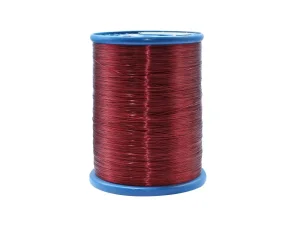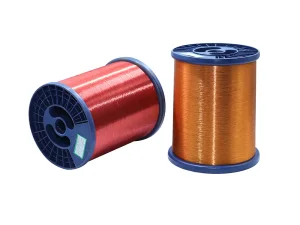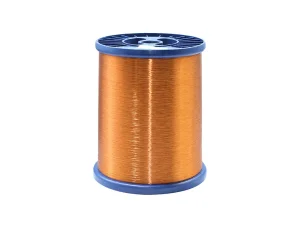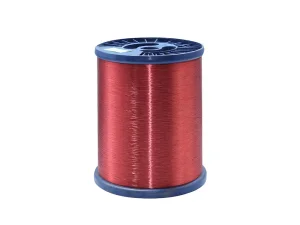
Explore our core enameled and covered wire products manufactured using high-grade polyurethane and polymer insulation formulas.
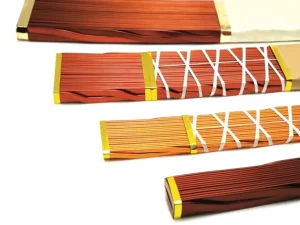
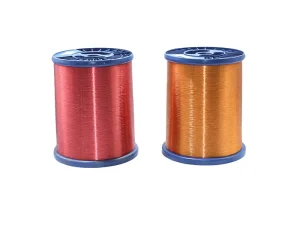
An in-depth analysis of polyurethane's vital role in contemporary grid modernization, electrification, and electronic miniaturization.
In the current global industrial grid and smart electronics ecosystem, insulating polymers dictate the thermal boundaries, mechanical efficiency, and lifespan of power equipment. Among these polymers, cable polyurethane (PU), thermoplastic polyurethane (TPU), and polyurethane wire enamels (UEW) occupy a dominant position. In wire manufacturing, polyurethane functions as a specialized insulation enamel applied through continuous coating and curing lines. Its primary competitive advantage lies in its molecular structure, which facilitates direct solderability (solderable enameled wire) without the need for mechanical or chemical stripping. This specific attribute eliminates manufacturing bottlenecks, driving down cost structures in high-throughput assembly plants worldwide.
The global cable polyurethane market is closely tied to the expansion of industrial automation, medical sensors, consumer micro-electronics, and the massive migration toward electric vehicle (EV) automotive grids. As global standards (including IEC 60317 and NEMA MW 1000) evolve, buyers require high thermal efficiency coupled with stable electrical characteristics. China, as a central hub of polyurethane synthesis and specialized conductor manufacturing, has successfully integrated raw polyurethane processing with state-of-the-art wire drawing and enameling technology. Factories like Suzhou Daiming Electrical Materials Co., Ltd. bridge this gap by producing premium conductor products that utilize polyurethane's unique performance parameters.
"Solderable polyurethane enameled wires (thermal classes ranging from 130°C to 180°C and Class 200/220) represent a key focus of modern industrial material science. By avoiding mechanical stripping, manufacturers protect the structural integrity of ultra-fine copper and aluminum conductors, ensuring zero physical micro-defects at terminations."
Regionally, European and North American buyers are accelerating their demand for higher-thermal-class polyurethane coatings to handle denser packing ratios in motors and transformers. Concurrently, Asian supply lines are shifting toward hybrid materials like Copper Clad Aluminum (CCA) coated with polyurethane, balancing electrical conductivity with weight reduction. For procurement managers, finding a manufacturer that integrates wire extrusion with custom polyurethane compound design is critical to ensuring stable, long-term performance under demanding operating conditions.
Select a product category to explore our specialized wire and conductor configurations engineered for diverse industrial applications.
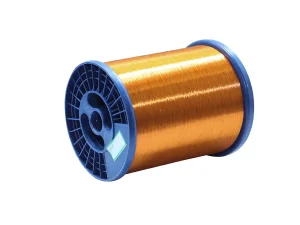
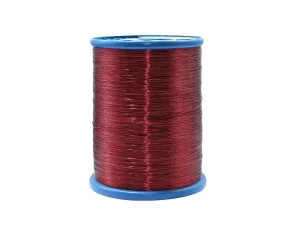
Our Enameled Aluminum Wire series offers a lightweight alternative to traditional copper winding wires. Insulated with modified polyurethane, polyester, or polyamide-imide varnishes, these wires feature high adhesion, excellent heat resistance, and reliable dielectric strength, making them ideal for high-efficiency motors and transformers.


Precision Engineering & Global Export of High-Quality Enameled Conductor Wires
Suzhou Daiming Electrical Materials Co., Ltd. is a leading manufacturer of high-quality enameled wires, including enameled aluminum wires, enameled copper wires, and enameled copper-clad aluminum wires. Situated on a sprawling 258,333.33 ft² site, our advanced production facility houses 30 state-of-the-art production lines. This robust infrastructure enables us to maintain a stable and high-volume output, ensuring a consistent supply to meet global market demands.
With strict quality control at every stage, from raw material inspection to final product testing, we uphold the highest industry standards, guaranteeing the durability and performance of our enameled wires. Our engineering team brings over ten years of industry experience, ensuring proficiency in product characteristics, international standards, and advanced manufacturing processes.
A rigorous engineering comparison of polymer coatings in high-frequency and high-thermal applications.
The selection of polyurethane as an insulation enamel requires an understanding of its formulation and performance compared to alternative resins like polyesterimide (EIW) and polyamide-imide (AIW). Under thermal load, polyurethane enamels (such as UEW/130, UEW/155, and UEW/180) act as a dielectric shield, preventing short circuits within transformer coils and motor stators.
| Insulation Resin Class | Thermal Index (°C) | Solderability Temp (°C) | Core Benefit | Primary Target Applications |
|---|---|---|---|---|
| Polyurethane (UEW) | 130 / 155 / 180 | 360 - 400 (Direct Solderable) | No chemical stripping needed | Relays, small motors, solenoid coils |
| Polyesterimide (EIW) | 180 / 200 | Requires mechanical strip | Superior thermal overload resistance | Heavy industrial motors, generators |
| Polyamide-imide (AIW) | 220 / 240 | Not solderable | Highest resistance to radiation & solvent wash | Aerospace, extreme industrial environments |
The chemistry of polyurethane wire enamel is based on the reaction between polyols (hydroxyl-containing components) and blocked polyisocyanates. When heated inside curing ovens, the blocking agent (typically a cresol or phenol derivative) decomposes, releasing the active isocyanate group to cross-link with the polyol resin. Under high temperatures (360°C to 400°C), this polymer undergoes thermal de-crosslinking, converting the polyurethane insulation back into volatile, non-conductive monomer fractions. This deblocking chemistry is what allows the wire to be directly soldered.
This self-stripping property is highly valuable for fine wire structures where mechanical abrasion could snap the conductor. However, at lower operating temperatures (below 155°C), the polyurethane network remains stable, providing reliable insulation resistance, low dielectric loss, and excellent moisture resistance. For applications requiring both solderability and high-voltage performance, choosing a modified polyurethane formulation is essential.
Why industrial engineers trust Daiming’s advanced wire enamel and processing technology.
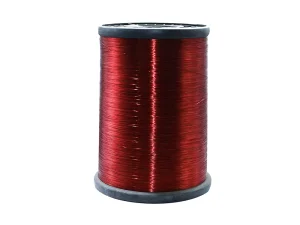
Each roll of our polyurethane enameled wire undergoes rigorous inline inspection to ensure paint film uniformity, high adhesion, scratch resistance, and excellent flexibility.
Our polyurethane insulation films are formulated to withstand high breakdown voltages, resisting thermal cut-through even under elevated ambient temperatures.
We provide tailor-made options for both wire diameters and insulation layer thicknesses, matching your exact electrical design requirements.
Operating 30 advanced production lines in Suzhou ensures high production output, reliable lead times, and seamless global logistics.
Our polyurethane-insulated wires are designed for high-efficiency motors, helping to lower energy consumption across smart grids and electric vehicle drivetrains.
How our polyurethane insulated conductors perform in demanding operating environments worldwide.
For high-efficiency motors and distribution transformers, the weight of the windings directly impacts energy conversion efficiency. Our polyurethane-coated aluminum and copper wires allow manufacturers to optimize slot fill factors. In high-frequency power transformers, the solderability of UEW wires enables fast automatic terminal processing.
Modern vehicles rely on dozens of sensors, actuators, and ignition systems. The high flexibility and environmental resistance of our modified polyurethane coatings prevent electrical failure caused by thermal cycling and engine vibrations.
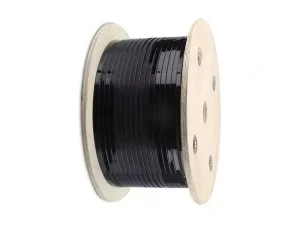
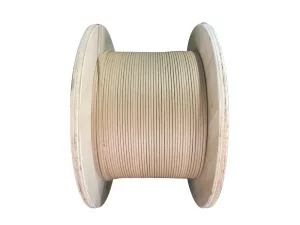
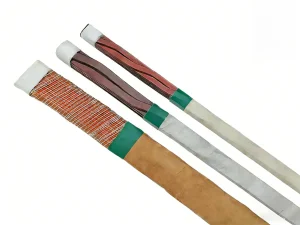
Industrial robots and high-voltage transmission lines require conductors with excellent flex life and minimal dielectric loss. Continuously Transposed Conductors (CTC) insulated with polyurethane or specialized papers reduce eddy current losses, helping to modernize grids in regions like the Middle East and Europe.
From compressor motors in air conditioners to voice coils in high-end audio systems, our polyurethane-insulated wires provide reliable dielectric strength in a compact form factor.
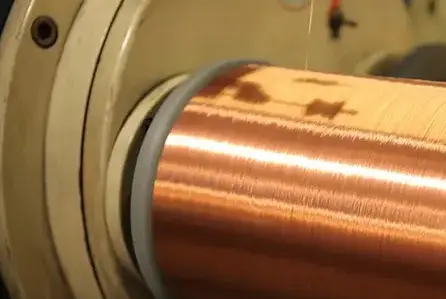
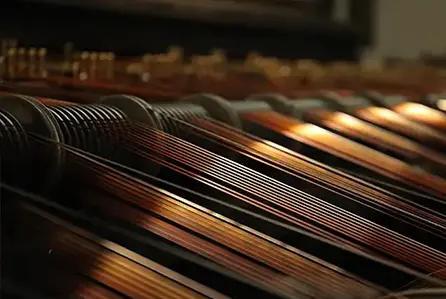
Exploring the next generation of wire insulation, focusing on eco-friendly materials and higher voltage performance.
The enameled wire industry is shifting toward more environmentally friendly chemistries and materials designed for higher voltages. Driven by regulations like REACH and RoHS, the development of solvent-free or water-borne polyurethane dispersions (PUDs) is key to reducing VOC emissions during curing. At the same time, the transition from 400V to 800V architectures in electric vehicle drivetrains requires insulation that can resist corona discharges without sacrificing solderability.
To meet these needs, chemical engineers are exploring nanostructured composite polyurethanes. By blending inorganic nanoparticles (such as silica, titania, or clay) into the polyurethane polymer matrix, they can improve both corona resistance and thermal conductivity. This helps dissipate heat from densely wound motor stators, improving efficiency and reliability.
Another area of development is self-bonding polyurethane wires. These wires feature an outer thermoplastic adhesive layer over the primary polyurethane insulation. When heated or treated with solvent during winding, this top layer melts and bonds the adjacent wire turns together. This eliminates the need for varnishing and impregnation steps, streamlining production while maintaining the self-stripping benefits of the underlying polyurethane insulation.
Expert answers to common technical and procurement questions about enameled wire applications.
The primary advantage of polyurethane (UEW) enameled wire is its direct solderability. During assembly, the wire can be soldered at temperatures between 360°C and 400°C without removing the insulation film first. Polyester (PEW) enameled wires cannot be soldered directly and require mechanical or chemical stripping to prevent insulation residue from contaminating the joint. Additionally, UEW wires maintain low dielectric loss at high frequencies, making them suitable for RF and high-frequency communication coils.
The move to 800V electrical systems in electric vehicles increases the risk of partial discharge and corona damage to insulation. Standard polyurethane wires can degrade under continuous high-voltage stress. To address this, manufacturers use modified formulations, such as Class 180 or Class 200/220 polyurethane, or apply secondary coats of polyamide-imide (PAI) over the polyurethane layer. This configuration balances the ease of direct soldering with the improved corona and chemical resistance needed for high-voltage environments.
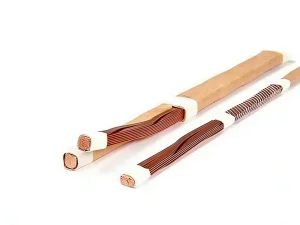
Continuously Transposed Conductor (CTC) consists of multiple enameled rectangular wires grouped and transposed to form a flat cable. Each individual strand is insulated with a thin, flexible polymer layer (such as polyvinyl formal or polyurethane) and wrapped in insulation paper. CTC is primarily used in large power transformers to minimize winding space and reduce losses caused by eddy currents.
Copper-Clad Aluminum (CCA) enameled wire features an aluminum core metallurgically bonded to an outer copper sleeve. This design combines the lightweight and cost advantages of aluminum with the high electrical conductivity and solderability of copper. It serves as a cost-effective alternative for high-frequency coils, automotive wiring harness systems, and lightweight motors where overall weight reduction is a key design goal.
Stay up to date with the latest developments in enameled wire manufacturing, international shipping, and insulation technology.
Our latest export shipment of high-performance Continuously Transposed Conductors (CTC) has departed for Turkey, supporting infrastructure upgrades across the Eurasian power grid.
Read Article →With fluctuating metal prices in 2026, enameled aluminum wire options offer a balanced solution for cost control and performance in large-scale transformer windings.
Read Article →As copper prices rise, enameled copper-clad aluminum wires serve as a practical alternative, offering high conductivity at a reduced weight and cost.
Read Article →Explore our selection of specialized enameled wires and custom insulated conductors for your next project.