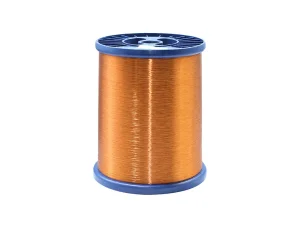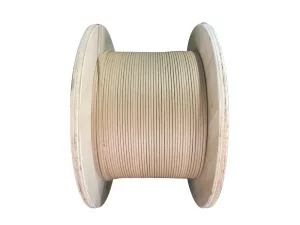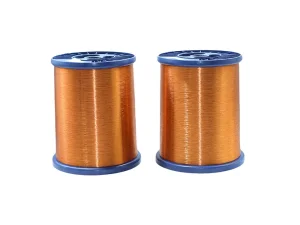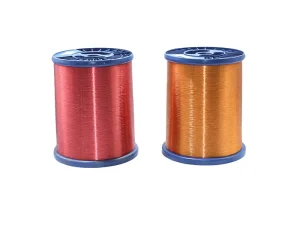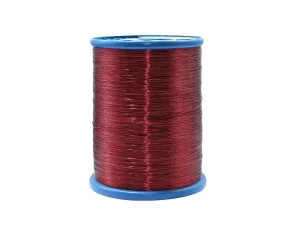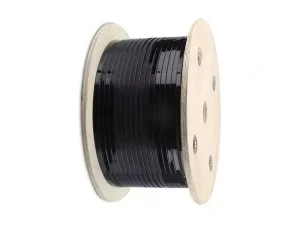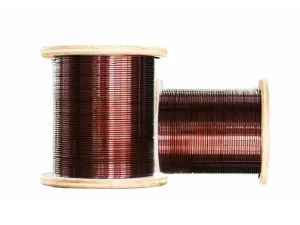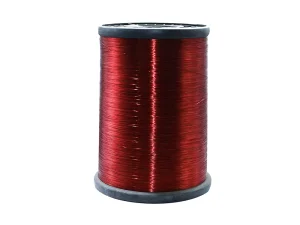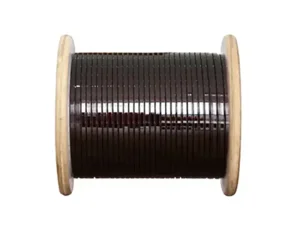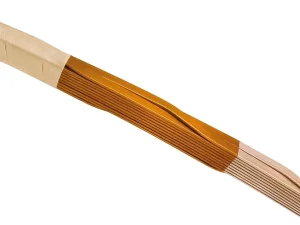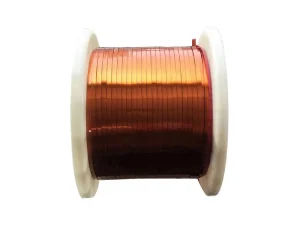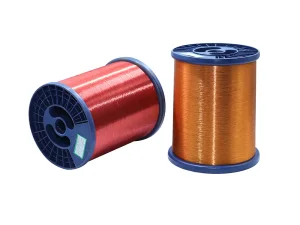
Explore our precision-engineered core products, manufactured to IEC, NEMA, and JIS standards.
In high-end manufacturing, polymer selection defines the thermal resistance, insulation reliability, and mechanical flexibility of wire assemblies. Polyurethane (PU) coated wires represent a dual-purpose paradigm. Whether applied as an insulation barrier on fine enameled copper and aluminum magnet wires or as an abrasion-resistant protection layer on braided picture wire, polyurethane polymers offer mechanical toughness and chemical resilience.
At Suzhou Daiming Electrical Materials Co., Ltd., our engineering division designs polyurethane-coated wire arrays that bridge the mechanical requirements of picture frames, heavy suspension cables, and high-frequency magnet coils. Polyurethane's chemistry yields optimal elastic limits, low friction coefficients, and high dielectric protection, positioning it ahead of standard nylon or bare metal wire technologies.
Polyurethane coatings are created via the reaction of polyols with organic diisocyanates, yielding urethane linkages (-NH-CO-O-). When applied as a microscopic insulation jacket (as in our Class 130, 155, and 180 UEW wires), these layers offer structural benefits:
Our engineering capabilities span multiple industries, providing reliable solutions from electrical power grids to architectural hanging hardware.
Polyurethane's dielectric constants and low dissipation factors make it suitable for high-frequency applications. Our 155 and 180 class UEW wires minimize eddy current losses in high-speed electric motors and power-dense automotive electronics.
For architectural display systems and picture framing, our polyurethane-coated multi-strand stainless steel and brass core wires offer reliable protection. The polyurethane sleeve prevents metal-on-metal abrasion, stops atmospheric oxidation, and protects installers' hands during rigging.
As automotive designs shift toward 800V architectures, corona discharge and heat management are key priorities. We supply customized polyurethane-imide hybrid coatings that endure thermal cycling under tight spaces.
Suzhou Daiming Electrical Materials Co., Ltd. operates a 258,333.33 ft² manufacturing facility containing 30 automated enameled wire lines. Our Factory 4.0 infrastructure integrates digital processing systems with physical quality checks to maintain batch-to-batch consistency for global distribution.
We source high-purity copper and aluminum rods to maintain electrical conductivity and mechanical tensile strength. Our automated laser sizing systems check wire diameters at speeds up to 1000m/min, monitoring film concentricity and avoiding surface imperfections.

Detailed engineering parameters comparing Polyurethane (UEW) with alternative polymer coatings.
| Polymer Type (Enameled Class) | Direct Soldering Temperature | Dielectric Constant (1kHz) | Flexibility (Elongation Rate) | UV & Moisture Stability | Primary Application Fields |
|---|---|---|---|---|---|
| Polyurethane (UEW / Class 130-180) | 370°C - 450°C (Self-Soldering) | 3.1 - 3.4 | Excellent (>30%) | High (Hydrolysis Resistant) | Relays, small motors, automotive coils, picture wires |
| Polyester (PEW / Class 155) | Requires Mechanical Scraping | 3.2 - 3.5 | Good (>25%) | Moderate (Sensitive to moisture) | Standard industrial motors, dry-type transformers |
| Polyesterimide (EIW / Class 180) | Not Self-Soldering | 3.3 - 3.6 | High (>28%) | High | Heavy-duty power tools, generator windings |
| Polyimide (AIW / Class 220) | Not Self-Soldering | 3.4 - 3.8 | Maximum (>35%) | Outstanding | Aerospace motors, military grade equipment, high-temp coils |
How Suzhou Daiming is developing next-generation polymer coatings for industrial applications.
We are developing bio-derived polyols to replace petroleum-based materials in our polyurethane coatings, helping global clients meet scope-3 carbon reduction targets without losing electrical properties.
As micro-electronic applications shrink in size, we are engineering sub-micron polyurethane coating methods that provide reliable dielectric protection even on extremely thin wire diameters.
We are testing modified polyurethane formulations enriched with inorganic nanoparticles. This structure resists partial discharge damage under high-frequency electrical pulses, which is crucial for modern electric vehicles.
Ensuring reliable supply chain tracking, regional regulatory compliance, and consistent delivery logistics.
Every batch of wire we produce complies with European and international environmental directives. Our facility is certified under RoHS 3.0, REACH, and UL (Underwriters Laboratories) safety standards, ensuring smooth customs clearance for North American and European markets.
We supply products in standardized spool sizes (PT-4, PT-10, PT-15, PT-25) as well as customized packaging configurations. Our winding techniques avoid tangles and maintain uniform tension during high-speed dereeling on automated assembly lines.
Based in the Suzhou industrial corridor close to Shanghai port, we offer fast container consolidation and sea-freight logistics. This location helps control global shipping costs and supports on-time delivery schedules.
Direct answers to common questions about polyurethane-coated wire processing and supply.
The classes specify the thermal index in degrees Celsius, representing the temperature at which the wire can operate continuously for 20,000 hours. Class 130 operates at 130°C, Class 155 at 155°C, and Class 180 at 180°C. Higher thermal classes use modified polyurethane resins to resist thermal degradation without losing the wire's self-soldering properties.
No, our polyurethane-coated wires are formulated for direct self-soldering. The coating layer depolymerizes and acts as a flux when dipped in a solder bath heated to 375°C - 450°C, allowing the solder to bond directly with the underlying copper or aluminum.
Polyurethane offers higher resistance to abrasion, cuts, and tearing than PVC, and resists moisture degradation better than nylon. It stays flexible across a wide temperature range, does not crack with age, and keeps moisture from reaching the steel or brass core to prevent corrosion.
We use continuous inline laser monitors to measure wire diameter and roundness during production. Additionally, we run physical tests on every production batch to verify dielectric breakdown voltage, check for coating pinholes, measure adhesion (via twist tests), and confirm thermal shock resistance.
Our standard MOQ for stock specifications is 500kg. For customized dimensions, custom alloy compositions, or specific spool configurations, the MOQ typically ranges from 1 to 3 metric tons. Standard production lead times are 15 to 25 days from order confirmation to port delivery.
Explore our technical-grade enameled wires and conductors for industrial motor systems.