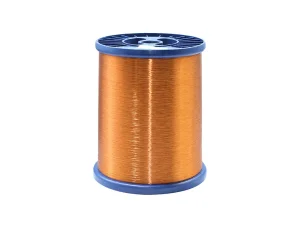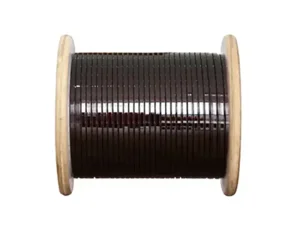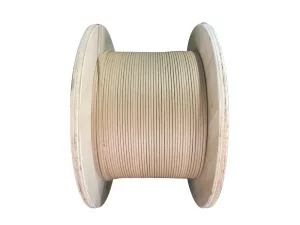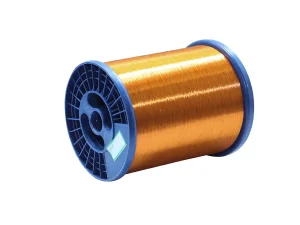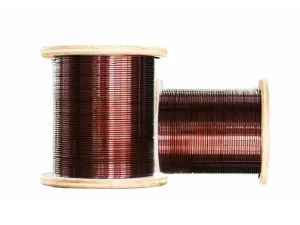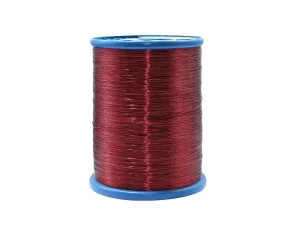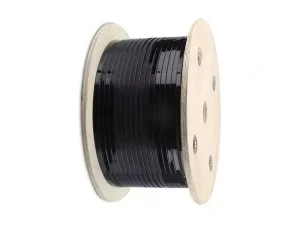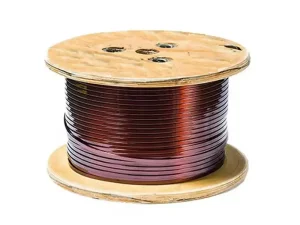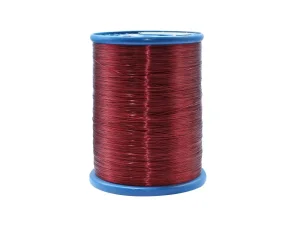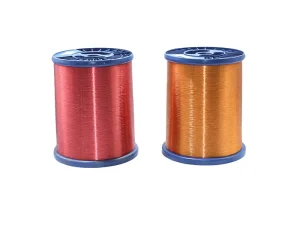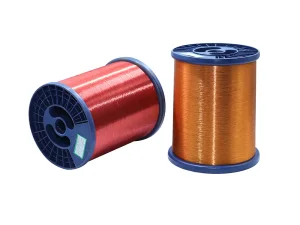
Explore our core enameled copper and aluminum wires manufactured to exact international standards for high-stress electrical deployments.
As the global energy paradigm rapidly shifts toward sustainable sources, solar power generation stands at the forefront of this industrial revolution. Photovoltaic (PV) plants require component architectures capable of resisting high environmental stress, intense electrical loads, and severe thermal cycles over long operational lifespans. Among these crucial components, magnet wire is vital to power transformation. Specifically, the implementation of 0.2-10 mm enameled wire, with a focus on fine round aluminum wire configurations, has emerged as a cornerstone technology for modern high-frequency solar panel inverters, microinverters, tracking system motors, and electrical grid interconnects.
The engineering selection of fine round aluminum wire within the 0.2 mm to 10 mm diameter range is dictated by clear electrical and mechanical principles. Photovoltaic electricity generation involves fluctuating direct current (DC) signals converted into stable alternating currents (AC). This conversion is executed via inverters that operate at escalating switching frequencies. High switching frequencies induce the skin effect, where current density tends to concentrate on the conductor's outer layer. By using fine round structures (typically on the thinner end of the 0.2-10 mm spectrum), design engineers mitigate skin-effect losses, ensuring optimal power throughput and thermal efficiency.
The insulation system of enameled wire, or magnet wire, is crucial for preserving system integrity under challenging solar field operations. Typical insulation systems are structured into distinct thermal classes (ranging from Class 130 to Class 220) using various polymer coatings:
Suzhou Daiming Electrical Materials Co., Ltd. is a leading manufacturer of high-quality enameled wires, including enameled aluminum wires, enameled copper wires, and enameled copper-clad aluminum wires. Situated on a sprawling 258,333.33 ft² site, our advanced production facility houses 30 state-of-the-art production lines. This robust infrastructure enables us to maintain a stable, high-volume output to meet global market demands. With strict quality control from raw material inspection to final testing, we uphold the highest industry standards to guarantee the durability and performance of our enameled wires.

How state-of-the-art manufacturing facilities in China leverage vertical integration and technical expertise to deliver unmatched global supply chain value.
Our Chinese factories utilize continuous inline drawing and annealing technologies. This eliminates structural micro-defects in the aluminum core, guaranteeing highly uniform tensile strength and elongation metrics crucial for high-speed automated winding processes.
Real-time, closed-loop laser diameter sensors inspect every millimeter of wire during production. This ensures the diameter stays within tight limits (+/- 0.002 mm for fine wires), preventing power leakage and local hot spots during operation.
Adhering to ISO 9001 and ISO 14001, every batch of EC-grade raw aluminum ingot is fully traceable. Detailed physical tests, including pinhole counts, heat shock resistance, and breakdown voltage assays, accompany every shipment.
Selecting the optimal wire material is a balancing act between material cost, conductivity, mass weight, and mechanical stress profiles. In solar applications, particularly utility-scale projects where weight affects the tracker structural design and cost, enameled aluminum wire offers unique advantages. Below is a detailed technical comparative matrix outlining key parameters of our 0.2-10 mm range.
| Technical Metric | Enameled Aluminum Wire (0.2-10 mm) | Enameled Copper Wire | System Level Engineering Impact |
|---|---|---|---|
| Density (g/cm³) | 2.70 | 8.89 | Aluminum reduces total transformer/inverter coil weight by up to 50%. |
| Conductivity (IACS %) | 61% to 62.5% | 100% | Compensated for by slightly increasing wire cross-section area. |
| Coefficient of Thermal Expansion (10⁻⁶/K) | 23.1 | 16.5 | Must be designed for in terminal lugs to prevent creep deformation. |
| Thermal Classes Available | Class 130, 155, 180, 200, 220 | Class 130, 155, 180, 200, 220 | Directly impacts maximum winding temperature limits under load. |
| Pinhole Rating (per 6m length) | Zero (standard high-spec) | Zero (standard high-spec) | Eliminates internal arcing hazards in high-voltage PV fields. |
| Cost to Performance Ratio | Highly cost-stable | Prone to LME market volatility | Enables predictable budgeting for large-scale solar projects. |
Through our team of industry experts (with over ten years of industry experience, proficient in product characteristics, international standards, and process flows), Suzhou Daiming guarantees that every roll of enameled wire has undergone rigorous processing and quality inspections. The resulting wire features a uniform and dense paint film, strong adhesion, high scratch resistance, and excellent flexibility.
Our enameled wires provide electrical stability in core industrial systems, from solar arrays to smart grids.
High-frequency solar step-up transformers rely on 0.2-10 mm enameled aluminum wire to manage rapid voltage spikes while keeping component weight manageable.
Solar trackers adjust panels toward the sun. Precision-wound fine enameled wire ensures motors remain compact, highly efficient, and highly weather-resistant.
Harmonic filtering inductors smooth power fluctuations before grid feed-in. Enameled flat and round wires offer low-loss performance under steady thermal loads.
BESS (Battery Energy Storage Systems) require DC-DC converters where Class 220 enameled conductors prevent system failure under heavy cycling.
The solar energy industry is moving toward higher operational voltages. Historically, 600V DC and 1000V DC systems predominated global PV architecture. Today, utility-scale developers are transitioning to 1500V DC systems, and electric vehicle infrastructures are shifting to 800V systems. Higher system voltages reduce resistive transmission losses and cut down cabling costs. However, they place severe electrical stress on the enameled insulation layers of magnetic components.
This high-voltage trend drives innovation in polymer insulation materials. Corona discharge, which causes rapid insulation breakdown in high-voltage fields, must be prevented. Advanced enameled wires use nano-composite insulation systems containing inorganic particles to disperse electrical charge, preventing localized corona erosion. As a leading manufacturer, Suzhou Daiming is optimizing its product range to deliver corona-resistant, high-temperature round and flat wires designed specifically for these setups.
For high-power distribution transformers, particularly at grid-connection points, the use of Continuously Transposed Conductors (CTC) is growing. CTC systems consist of individual flat enameled wires bundled together, with their relative physical positions systematically swapped. This design dramatically minimizes eddy current losses while improving the mechanical strength of transformer winding structures under short-circuit events.
Combining raw material purity, strict insulation coating application, and robust mechanical structures.
Each roll of enameled wire undergoes rigorous process and quality inspection to ensure stable, uniform thickness and void-free insulation coverage.
The enameled wire we produce features a uniform, dense paint film with strong adhesion, scratch resistance, and excellent flexibility under dynamic winding stress.
We provide comprehensive support beyond standard specifications. We customize wire diameter, temperature rating, and color matching to align with your design requirements.
With strong production capacity and a complete supply chain system, we ensure on-time delivery to support your continuous manufacturing lines.
Our enameled wires are utilized in high-efficiency, energy-saving motors and green power systems, driving global decarbonization efforts.
When purchasing 0.2-10 mm enameled wire for solar panels and magnetic components, global procurement managers must evaluate several technical criteria to ensure long-term reliability and compatibility with automated winding systems:
Expert answers to common engineering, procurement, and application questions.
Select from our high-performance enameled conductors below, designed for energy-efficient transformers, industrial motors, and electrical applications.