Self-Adhesive Enamelled Wire offers a practical way to simplify coil winding. Its outer adhesive layer bonds adjacent turns when activated by heat or a compatible solvent. This can reduce reliance on separate bobbins, tapes, or varnishes in suitable designs. The result may be a compact, stable winding. Useful in small spaces.
The choice still depends on the application. A designer should check conductor size, insulation class, activation method, bonding strength, and operating temperature against the coil’s actual conditions. For example, a tightly wound sensor coil may need consistent bonding, while a larger motor winding may prioritize thermal performance and repairability. Test samples matter. A datasheet alone cannot reveal every handling issue.
A verified industry quotation would strengthen this introduction, but no source article or expert reference was provided. To avoid inventing an attribution, insert a sourced statement here: “[Verified expert name] said, ‘[Exact quotation about Self-Adhesive Enamelled Wire].’” That detail deserves checking before publication. This article explores where Self-Adhesive Enamelled Wire can help, what trade-offs it introduces, and which questions engineers should ask suppliers. The material is useful, not universal; its performance depends on the complete winding process, not just the wire specification.
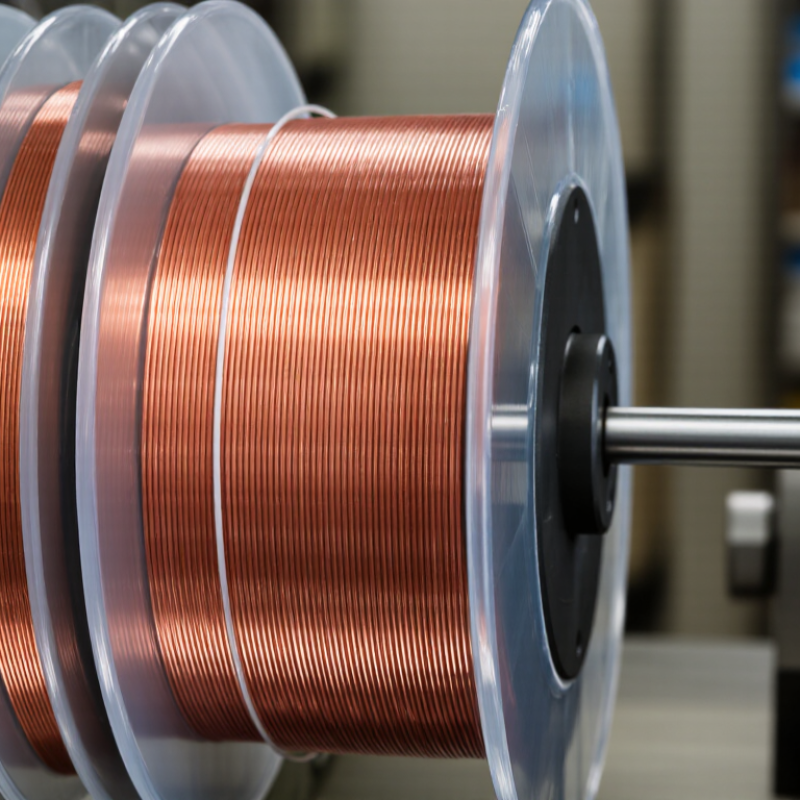
What Is Self-Adhesive Enamelled Wire?
Self-adhesive enamelled wire is a winding wire with a thin electrical insulation coating and an additional bondable outer layer. The conductor is usually copper or aluminium. Unlike ordinary enamelled wire, its outer layer can soften or cure under heat, solvent, or another specified process, joining adjacent turns into a firmer coil. The enamel remains essential: the bonding layer does not replace electrical insulation.
That bond matters. It can help a coil retain its shape without a separate bobbin or adhesive, which is useful in compact motors, transformers, and inductors. Not just insulation. Bonding chemistry, activation temperature, and wire dimensions vary by grade; the right choice depends on the coil design and manufacturing process. A neat-looking winding is not proof of reliable bonding, so check process conditions and test the finished coil.
The scale of motor applications is substantial: the International Energy Agency’s 2011 report, Energy-Efficiency Policy Opportunities for Electric Motor-Driven Systems, estimates that motor-driven systems use about 45% of global electricity. Standards in the IEC 60317 series specify requirements for many winding-wire types, while product datasheets clarify grade-specific properties. These references help, but they do not make every self-bonding wire interchangeable. Heat, pressure, and winding tension can change the result. That detail is easy to overlook.
How Does Its Self-Bonding Mechanism Work?
Why Choose Self Adhesive Enamelled Wire?
How Does Its Self-Bonding Mechanism Work?
Self-adhesive enamelled wire has an insulating enamel layer and an additional bonding layer. That outer layer helps hold neighboring turns together after activation. It can make compact coils more stable and reduce the need for separate adhesives or supports. The insulation still matters: bonding does not replace the wire’s electrical rating.
During winding, the bonding layer remains workable. Heat, a compatible solvent, or both can activate it, depending on the wire’s formulation. With heat activation, for example, a controlled oven warms the coil until the coating softens and bonds adjacent turns. Cooling lets the layer set. The result is a more rigid winding, though the exact process varies. That detail matters. Activation temperature and time must match the product specification; too little may leave turns loose, while too much can damage insulation. It is easy to underestimate that window.
Tips: Check the wire’s data sheet before choosing an activation method. Test a small coil first, and inspect the turns after cooling. A neat-looking winding is not proof of a reliable bond.
What Are Its Key Properties and Advantages?
Self-adhesive enamelled wire combines electrical insulation with a bondable outer coating. The base enamel separates adjacent turns, while the outer layer can soften under heat or a suitable solvent and join neighboring windings. Exact activation conditions vary by grade, so the technical data sheet matters. It stays neat. In a coil, bonding can reduce the need for separate tapes or varnish and help keep turns in place during handling.
Useful properties include a compact winding profile, consistent insulation, and greater mechanical stability after bonding. These features can support smaller coils in speakers, sensors, relays, and compact motors. Tightly packed turns may use space more efficiently, although cooling needs and coil design affect the result.
There is a trade-off.
Bonding adds a process step, and uneven heating may leave some turns weakly attached or damage insulation. Check the rated temperature, wire diameter, bonding method, and electrical requirements before production. A small trial winding helps reveal how much heat the particular coil needs. Even experienced operators can misjudge that.
Where Is Self-Adhesive Enamelled Wire Used?
Why Choose Self-Adhesive Enamelled Wire?
Where Is Self-Adhesive Enamelled Wire Used?
Self-adhesive enamelled wire is useful when a coil must hold its shape in limited space. Its bonding layer can secure adjacent turns when activated by heat or a suitable solvent, depending on the wire’s specification. This can reduce reliance on bobbins or added varnish in some designs. Space matters.
You’ll find it in compact inductors, small transformers, relay coils, sensors, and electric motors. It is also used in loudspeaker voice coils, where controlled winding geometry helps maintain consistent movement. In production, neat, stable coils can simplify handling and assembly. Fit matters.
The right choice depends on the operating temperature, winding method, and activation process. A wire that bonds well in one setup may not perform the same way in another. Engineers should check insulation and thermal ratings, then test sample coils under real operating conditions. This step is easy to overlook. Self-adhesive wire is not a universal shortcut; some applications still need extra support or impregnation.
Why Choose Self-Adhesive Enamelled Wire? Where Is It Used?
| Application |
Why Self-Adhesive Enamelled Wire Is Used |
How the Bonding Works |
Practical Considerations |
| Compact coils and inductors |
Bonded turns can help a coil retain its shape, which is useful where space is limited or the winding must remain stable. |
A bonding layer on the wire softens under specified heat or solvent conditions and adheres adjacent turns together. |
Choose a wire and bonding method compatible with the winding process, operating temperature, and required electrical insulation. |
| Small motors and actuators |
Turn-to-turn bonding can reduce winding movement and help the coil withstand vibration during operation. |
Heat, solvent, or a combination of both activates the self-bonding layer, depending on the wire construction. |
Confirm thermal class, mechanical demands, and compatibility with the motor’s impregnation or assembly process. |
| Voice coils and miniature transducers |
Self-bonding can support a lightweight, accurately shaped winding without relying solely on a separate coil former. |
The turns are wound to the required geometry and then bonded using the process recommended for the wire. |
Control winding tension and activation conditions to maintain the intended coil dimensions and performance. |
| Relays and solenoids |
A stable winding can help keep turns in position in compact electromagnetic assemblies. |
The bonding layer joins contacting wire surfaces after suitable heat or solvent activation. |
Check coil temperature, voltage requirements, and insulation-system compatibility for the finished device. |
| High-frequency coils and specialized windings |
Bonding may help preserve a closely controlled winding shape in designs where coil geometry matters. |
Bonding consolidates the winding; it does not replace the need to select an appropriate conductor and insulation system. |
Evaluate electrical losses, winding layout, operating frequency, and the complete application design. |
| Prototypes and custom-shaped coils |
Self-bonding can simplify forming and securing some custom windings, depending on the design and production method. |
The winding is shaped first, then the bonding layer is activated under controlled conditions. |
Test the process on sample windings before production, since bond strength and shape retention depend on materials and processing. |
Self-adhesive enamelled wire is also known as self-bonding magnet wire. Its bonding layer helps secure adjacent turns when activated by a suitable process; it does not eliminate the need to verify electrical insulation, temperature rating, and application-specific performance.
What Factors Guide Its Selection?
Why Choose Self Adhesive Enamelled Wire?
What Factors Guide Its Selection?
Selection should begin with the coil’s electrical and thermal requirements. Check the conductor diameter, insulation thickness, operating temperature, and voltage rating. These affect current capacity, winding space, and insulation performance. A tightly wound miniature coil may need a thinner coating, while a hotter application may require a higher thermal class. The right choice depends on the whole design, not one specification.
Consider how the bonding layer will be activated. Heat, solvent, and other approved processes can produce different results, so confirm compatibility with your winding equipment and production method. Also assess winding tension and the coil’s shape. Poorly controlled tension can damage insulation or create uneven bonding. Small sample coils are useful. They can reveal issues before a full production run, though testing takes time.
Tips: Review the wire’s technical data sheet and verify its stated temperature and bonding conditions. Test a sample using your actual winding process. Record the results, including coil shape and bond strength. If performance is inconsistent, revisit the process settings; the wire may not be the only factor.
Conclusion
Self-Adhesive Enamelled Wire is insulated winding wire with a bonding layer that can join adjacent turns when activated by heat, solvent, or another specified process. This self-bonding mechanism helps coils hold their shape without relying on separate materials or extensive mechanical support. Its useful properties may include compact construction, good dimensional stability, and efficient use of winding space, while performance depends on the insulation and bonding system chosen.
The wire is used in applications such as compact coils, sensors, and small electrical or electronic components where secure, space-saving windings are important. Selecting the right type involves considering operating temperature, electrical requirements, coil geometry, winding conditions, and the method available to activate the bonding layer. Matching these factors to the intended application can support reliable assembly and consistent performance.