Electric motors are being asked to do more in smaller, lighter, and more demanding designs. The International Energy Agency reports that nearly 14 million electric cars were sold worldwide in 2023, about 18% of all car sales (Global EV Outlook 2024). That figure does not prove demand for any single wire type. It does show why manufacturers keep examining motor materials and production steps.
Direct-Weldable Enamelled Wire is designed to support electrical connections without a separate enamel-stripping operation at the weld point. In suitable designs, that can simplify coil termination and reduce handling around fine copper conductors. Less rework matters. Yet performance depends on the enamel system, conductor size, welding method, and process controls. A wire that works well with one welding setup may not behave the same way on another line.
The technical details deserve attention. IEC 60317 defines requirements for particular types of winding wire, but buyers still need to confirm the applicable specification and test conditions with their supplier. Ask for data on solderability or weldability, insulation integrity, thermal class, and consistency between production batches. Then test the wire on the actual equipment, using representative coils. It is tempting to treat fewer process steps as an automatic gain. That assumption needs checking. This guide examines the practical reasons manufacturers choose Direct-Weldable Enamelled Wire, the trade-offs to assess, and the questions worth asking before a material change.
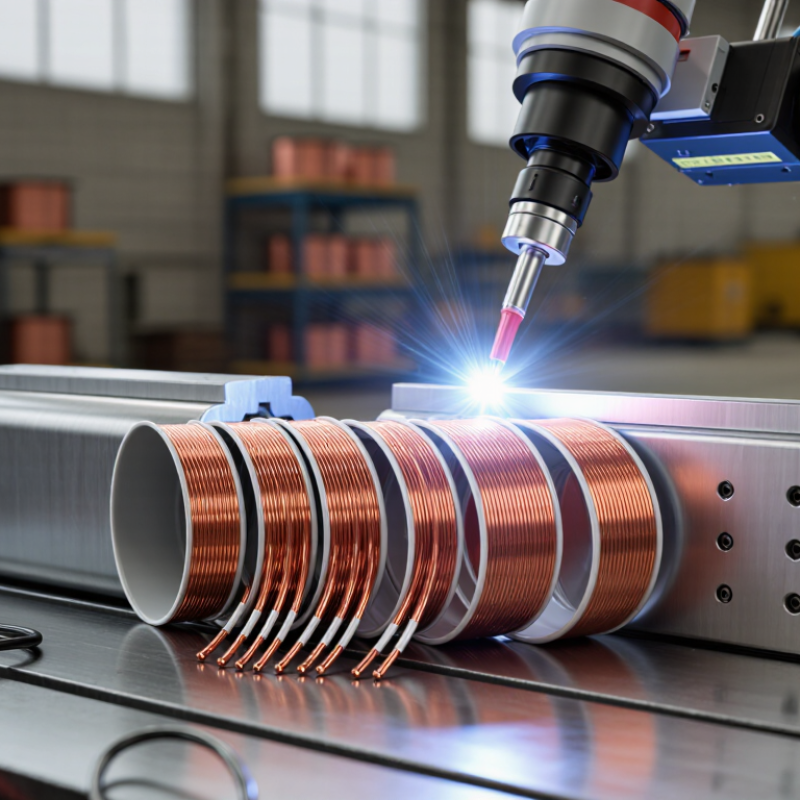
Direct weldable enamelled wire is copper wire coated with a thin insulating enamel designed to permit a welded electrical connection without routine mechanical stripping. During a controlled welding cycle, heat disrupts the coating at the joint, allowing metal-to-metal contact. The enamel still insulates the unwelded turns. That distinction matters in compact coils, where scraped insulation can leave copper debris or nick the conductor. Small details matter.
“Direct weldable” does not mean every wire works with every welding setup. Coating chemistry, wire diameter, electrode pressure, temperature, and contact time all affect the joint. IEC 60317 sets requirements for winding wires, while IEC 60851 describes test methods; neither removes the need to validate a specific wire-and-process combination. The International Energy Agency’s Global Critical Minerals Outlook 2024 projects copper demand rising from 26.7 million tonnes in 2023 to 31.3 million tonnes by 2035 under its Stated Policies Scenario. That broader demand context makes efficient conductor use worth attention, but it is not proof of any wire’s weld quality. I would inspect sample joints for resistance, pull strength, and insulation damage. Results can vary more than a tidy product description suggests.
Direct weldable enamelled wire is designed to join without stripping insulation from every conductor end. During a qualified welding cycle, heat and pressure disrupt the enamel only around the contact point. Copper can then bond directly, while coating farther along the wire remains in place. Less stripping can mean fewer loose enamel fragments and a smaller exposed-copper area. A real benefit. But not automatic.
Insulation still needs careful selection. IEC 60085 identifies thermal classes including 155 and 180; these values describe insulation’s thermal endurance classification, not a welding temperature. IEC 60317-0-1 sets requirements and test methods for enamelled round copper winding wire. Neither standard supplies one universal setting for every weldable coating. Wire diameter, coating chemistry, electrode condition, and weld duration all matter. A pale residue near the joint can signal incomplete coating removal; excessive heat may damage insulation beyond it. Test the actual wire and joint geometry, then inspect both bond strength and nearby coating. The process window can be narrow. That part is easy to underestimate.
Direct-weldable enamel is designed to let the coating be displaced or broken down during a suitable joining process, potentially combining insulation removal with welding. The chart shows typical process steps, not measured production-time data; actual requirements depend on the wire coating and welding method.
Materials and Manufacturing Features
Direct weldable enamelled wire combines a conductive metal core with an insulating enamel designed to permit electrical joining under specified welding conditions. Copper offers high conductivity; aluminium can reduce conductor mass, but its joining process requires careful control. The choice affects winding design, heat transfer, and weld consistency. Small details matter.
Enamel thickness and uniformity help protect turns where wires sit close together. Manufacturers control coating application, curing, and conductor dimensions, then test properties such as breakdown voltage and flexibility. IEC 60317 specifies requirements for particular winding-wire types, while IEC 60851 sets test methods. These standards offer a useful reference, but the exact wire grade must match the motor’s temperature, voltage, and manufacturing process. A coating that welds well in one setup may leave residue or produce a weak joint in another.
Demand for reliable motor components is growing alongside electrification. The International Energy Agency’s Global EV Outlook 2024 reports nearly 14 million electric-car sales in 2023, about 18% of global car sales. That figure signals expanding motor production, not a guarantee that one wire design suits every application. Trial welds and checks of joint resistance remain important. Even carefully controlled production has limits. The best material choice depends on actual operating conditions, and those are sometimes underestimated.
Electrical assembly depends on reliable connections, repeatable processes, and careful use of space. Direct weldable enamelled wire can simplify termination when its coating and conductor are matched to the welding method. It may remove a separate stripping step, reducing handling around fine wires and helping automated lines maintain consistent joints.
Small gains matter. The U.S. Department of Energy’s 2014 United States Industrial Electric Motor Systems Market Opportunities Assessment estimates that motor-driven systems use about 68% of electricity consumed in U.S. manufacturing. That figure is not a wire-performance claim; it shows why efficient, dependable motor assembly deserves attention.
For a technician, the benefit is practical: fewer exposed strands to position, and less insulation debris near a connection. A compact welded joint can also help where winding space is tight. But results depend on wire diameter, enamel chemistry, weld energy, and tooling condition. A process that works on one specification may damage another.
Test sample joints, inspect them under magnification, and verify electrical and mechanical performance before changing a production line. There is a trade-off. Welding equipment and process validation add effort, and direct welding is not automatically faster in every setup. The details can be fussy. That is worth measuring, rather than assuming.
Direct weldable enamelled wire is useful when a winding needs an electrical connection without a separate stripping step. During soldering, heat softens or removes the coating so the conductor can bond with the solder. This can simplify connections in compact motors, relay coils, small transformers, sensors, and other tightly wound components. Small details matter. A crowded coil, for example, may leave little room for extra lead preparation, while a delicate winding can be damaged by excessive heat.
Selection depends on the wire diameter, insulation temperature class, winding conditions, and the intended joining process. Check the recommended solder temperature and contact time against the actual production setup. A wire that solders reliably in a controlled test may behave differently on a fast production line. Also consider operating temperature, electrical load, mechanical vibration, and the insulation needed between adjacent turns. For a small coil that runs warm for long periods, thermal performance may matter more than a minor saving in assembly time. It is easy to focus only on solderability; that can be a mistake. Review technical data and test sample windings under realistic conditions before finalizing a specification.
It is conductive wire covered with insulating enamel. Under controlled welding, heat disrupts the coating at the joint and allows metal contact.
No. Wire diameter, coating chemistry, electrode pressure, temperature, and contact time all affect the joint. Not every setup.
No. Heat affects the joint area, while enamel on unwelded turns continues to provide insulation.
Welding can avoid routine mechanical stripping, which may leave copper debris or nick the conductor. Those small marks matter.
No. Copper provides high conductivity, while aluminium can reduce conductor mass. Aluminium joining needs careful process control.
Measure joint resistance and pull strength. Also inspect nearby insulation for damage. A neat-looking joint may still be weak.
No. Standards provide requirements or test methods, but the selected wire must still match the application and welding process.
Match it to operating temperature, voltage, winding design, and production conditions. I would not rely on a product description alone; actual results can vary.
Direct-Weldable Enamelled Wire is an insulated conductor designed so its coating can be joined by welding without first being fully stripped away. Its specialized insulation softens or breaks down under controlled heat, allowing an electrical connection to form while helping preserve an efficient assembly process. The wire’s performance depends on factors such as conductor material, enamel composition, coating thickness, and careful manufacturing that supports consistent insulation and weldability.
By reducing preparation steps, this wire can save assembly time, simplify connections, and support compact electrical designs. It is commonly used in applications such as motors, coils, transformers, and other electrical components where reliable joints and efficient production are important. When selecting a wire, consider its electrical and thermal requirements, conductor size, insulation properties, welding method, and operating environment. Matching these factors to the application helps ensure dependable connections and suitable long-term performance.