China’s High Insulation Enameled Wire market includes large manufacturers, specialized exporters, and technically focused regional suppliers. This guide introduces ten companies worth examining for demanding electrical applications. These may include traction motors, transformers, compressors, generators, and high-frequency coils.
Selection requires more than production volume. A reliable supplier should demonstrate stable enamel thickness, controlled curing, strong adhesion, and consistent dielectric strength. Thermal class matters. So do voltage endurance, flexibility, solderability, and resistance to refrigerants or solvents. Test reports should identify standards, sampling methods, and laboratory conditions. Factory audits can reveal details that brochures often miss, such as line cleanliness, storage discipline, and operator training.
Dr. W. Edwards Deming, a respected manufacturing quality authority, stated, “Quality comes not from inspection, but from the improvement of the production process.” That principle applies closely to High Insulation Enameled Wire. A final test cannot fully repair unstable coating conditions. Temperature curves, enamel viscosity, conductor preparation, and take-up tension must remain controlled every day.
This ranking should not be treated as permanent. Supplier capabilities change. Public information can also be incomplete. Some companies present impressive equipment but provide limited evidence of long-term field performance. Buyers should compare samples, certificates, production records, and technical responses before making a decision. The best supplier is not always the largest. It is the one that delivers repeatable insulation performance, clear communication, and practical support when specifications become difficult. Mistakes still happen, even in advanced factories. Honest corrective action may reveal more than polished marketing.
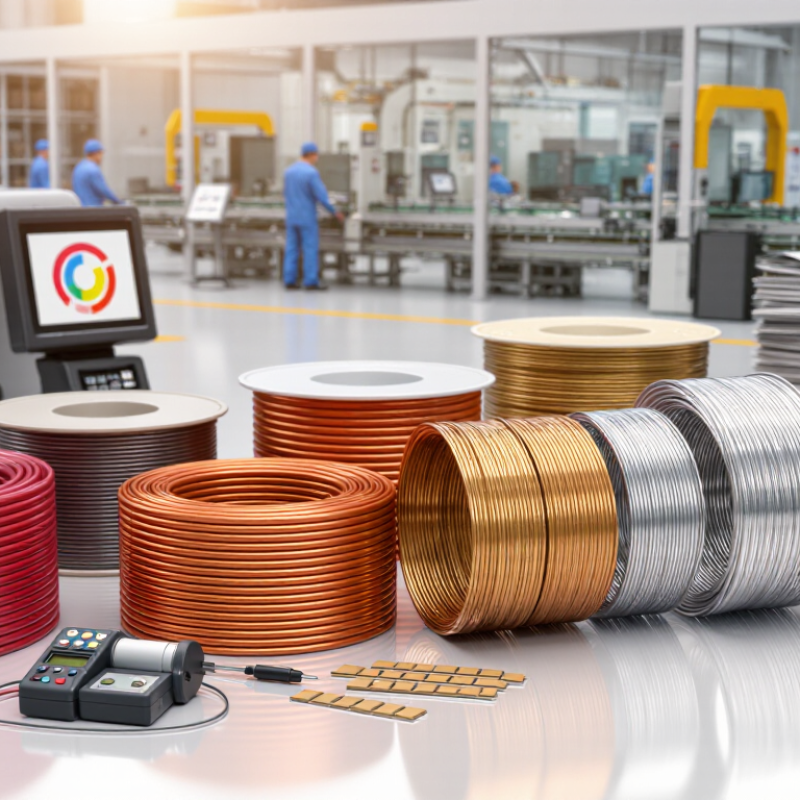
High-insulation enameled wire is magnet wire designed to resist electrical breakdown between adjacent turns, layers, and the iron core. Its insulation usually combines a base enamel with an added coating or stronger film system. The real performance depends on dielectric strength, pinhole resistance, thermal endurance, flexibility, and coating adhesion. It is not simply “thicker enamel.” A neat specification can hide a weak process.
IEC 60317 and NEMA MW 1000 classify enamelled wires through insulation systems, thermal classes, dimensions, and test methods. Engineers should check breakdown voltage, scrape resistance, elongation, and resistance to refrigerant or varnish exposure. In motor production, one damaged corner can create a turn-to-turn fault after repeated thermal cycling. The risk is easy to underestimate. The International Energy Agency reported nearly 14 million electric car sales in 2023, increasing demand for compact, efficient traction motors. These motors need tighter winding spaces and more reliable insulation. Market reports also forecast continued growth in electric motor and magnet-wire demand, although estimates vary by region and application. That disagreement deserves attention.
For buyers comparing suppliers in China, certificates are only a starting point. Request lot-level test records, conductor resistance data, thermal-aging results, and sample cross-sections. Inspect the wire after winding, not only before it. Surface appearance can mislead. A reliable supplier should explain coating chemistry, curing control, storage conditions, and failure analysis procedures. Supplier claims still require verification through independent testing.
Evaluating Chinese suppliers requires more than comparing prices. Check compliance with IEC 60317 and IEC 60851 testing methods. These standards cover insulation performance, electrical breakdown, dimensions, and mechanical quality. Ask for recent laboratory reports, not recycled certificates. A reliable supplier should provide batch numbers, copper purity records, coating thickness data, and temperature-class evidence.
Production capability matters because demand is becoming less predictable. The IEA Global EV Outlook 2024 reported over 14 million electric cars sold worldwide in 2023. This growth increases demand for compact motors, transformers, and high-insulation winding wire. Suppliers should therefore show stable output during peak orders. Review equipment calibration, curing-oven control, defect rates, and delivery records. Request samples from three separate batches. One sample proves little.
Quality systems also deserve careful checking. ISO 9001 certification can support process discipline, but it cannot replace product testing. Examine corrective-action records and traceability exercises. Can the supplier identify the operator, machine, and raw-material lot behind one reel? That answer reveals practical experience. I would also compare elongation, pinhole counts, dielectric breakdown voltage, and thermal aging results. A glossy factory tour is not enough. Sometimes, even a qualified supplier has inconsistent communication or incomplete technical English. That weakness should be recorded, not ignored. Price remains relevant, but unstable insulation quality can create expensive motor failures later.
China’s top 10 high-insulation enameled wire suppliers are judged by more than production volume. The strongest candidates maintain stable coating quality across copper sizes. Their technical teams discuss thermal class, dielectric strength, flexibility, and solvent resistance using specific test data.
That detail matters. A credible supplier should provide batch records, inspection reports, and traceable raw-material information. Factory experience appears in controlled curing ovens, clean winding areas, and calibrated electrical testers. Photos alone are not enough. Buyers should also check independent laboratory results when specifications are critical.
For a practical top-ten assessment, request samples and compare enamel thickness, pinholes, elongation, and breakdown voltage. Samples should survive repeated bending without cracking. Suppliers serving motors, transformers, and electrical equipment may offer different insulation systems and delivery capabilities. Ask about standard compliance, export documents, packaging, and responses to nonconforming material. Clear communication is part of reliability.
Some suppliers look impressive during a first audit, yet struggle with small-lot orders or engineering changes. That weakness is easy to miss. Review lead-time records, complaint handling, and corrective-action reports before assigning a ranking. The top position should reflect repeatable performance, not a polished showroom or a low quotation. Still, no list remains perfect. Copper prices shift, coating formulas evolve, and capacity can tighten unexpectedly.
China’s leading high-insulation enameled wire suppliers offer copper and aluminum conductors in round, rectangular, and stranded forms. Product ranges usually include polyesterimide, polyamide-imide, and polyurethane coatings. These insulation systems support different thermal classes, voltage demands, and winding methods. Some suppliers provide self-bonding wire for compact coils. Others focus on heavy-build insulation for stronger dielectric protection. Wire sizes may range from fine motor windings to thick transformer conductors. Specification checks should include conductor tolerance, coating thickness, pinhole control, flexibility, and heat-shock performance.
Technology choices depend on the working environment. Advanced drawing lines improve diameter consistency. Multi-layer enameling helps prevent weak insulation spots. Online spark testing can identify coating defects before delivery. Suppliers also use thermal aging tests, breakdown voltage tests, and winding simulations. Applications include electric vehicle motors, traction motors, transformers, compressors, generators, and high-frequency inductors. Rectangular wire can improve slot filling and reduce wasted space. Fine wire suits sensors and small magnetic components. However, actual performance still depends on winding tension, curing temperature, and storage conditions.
Tips: Request samples before bulk purchasing. Test the wire on your real winding equipment, not only in a laboratory. Confirm IEC, GB/T, or customer-specific requirements in writing. No supplier is perfect. A low price may hide inconsistent coating quality, while an impressive test report may not reflect production stability. Review batch records, inspect packaging, and compare results from several deliveries. Temperature data matters most when the motor runs continuously.
| Rank | Supplier Profile | Typical Product Range | High-Insulation Technology | Conductor Materials | Typical Insulation Classes | Common Size Range | Key Industry Applications | Quality and Compliance Focus |
|---|---|---|---|---|---|---|---|---|
| 1 | Supplier Profile 01 Large-scale manufacturer |
Round and rectangular enameled copper wire; self-bonding wire; inverter-duty magnet wire | Multi-layer polyester-imide and polyamide-imide coatings; corona-resistant insulation for variable-frequency motors | Round copper, rectangular copper, oxygen-free copper | Class 155, Class 180, Class 200, Class 220 | Approximately 0.10–6.00 mm round; custom rectangular profiles | Traction motors, industrial motors, generators, transformers, renewable-energy equipment | Dimensional consistency, dielectric breakdown, thermal aging, pinhole and flexibility testing |
| 2 | Supplier Profile 02 Specialty wire producer |
Fine magnet wire, litz wire, high-temperature enamelled wire, bonding wire | Thin-film insulation systems designed for compact windings and improved slot fill | Copper and silver-plated copper for selected high-frequency designs | Class 155, Class 180, Class 200 | Approximately 0.02–1.20 mm individual conductor diameter | High-frequency transformers, relays, sensors, actuators, precision motors | Diameter control, solderability, bond strength, thermal endurance and high-frequency performance |
| 3 | Supplier Profile 03 Automotive-focused supplier |
Heat-resistant round wire, rectangular wire, abrasion-resistant automotive magnet wire | High-temperature polyester-imide base coat with polyamide-imide top coat; enhanced chemical resistance | Copper and aluminum conductor options | Class 180, Class 200, Class 220 | Approximately 0.20–4.00 mm round; formed rectangular sections available | Electric vehicle motors, hybrid motors, e-compressors, pumps and automotive actuators | Resistance to coolant, transmission fluids, refrigerants, thermal shock and mechanical abrasion |
| 4 | Supplier Profile 04 Transformer-wire specialist |
Heavy-build enamelled wire, rectangular winding wire, paper-covered and film-covered conductor | High-build enamel systems and combined enamel-film insulation for high-voltage winding designs | Copper and aluminum | Class 155, Class 180, Class 200 | Approximately 0.50–8.00 mm round; broad rectangular dimensions | Distribution transformers, power transformers, reactors and industrial inductors | Breakdown voltage, enamel continuity, elongation, thermal aging and winding compatibility |
| 5 | Supplier Profile 05 Motor-winding supplier |
Round magnet wire, slot-liner-compatible wire, corona-resistant wire and self-bonding wire | Polyamide-imide topcoats and reinforced insulation for high-speed and inverter-fed motors | Copper, oxygen-free copper and aluminum | Class 180, Class 200, Class 220 | Approximately 0.15–5.00 mm round | Industrial motors, compressors, pumps, fans, servo motors and machine tools | Surge endurance, scrape resistance, windability, thermal shock and partial-discharge resistance |
| 6 | Supplier Profile 06 Appliance and compressor supplier |
Refrigeration-compressor wire, hermetic motor wire and high-temperature winding wire | Refrigerant-resistant insulation with enhanced thermal and chemical stability | Copper and aluminum | Class 155, Class 180, Class 200 | Approximately 0.20–3.50 mm round | Refrigerators, air-conditioning compressors, heat pumps, washing machines and household appliances | Refrigerant compatibility, oil resistance, dielectric strength, solderability and thermal life |
| 7 | Supplier Profile 07 Renewable-energy wire supplier |
Inverter motor wire, generator winding wire, rectangular wire and high-voltage magnet wire | Corona-resistant enamel systems and reinforced insulation for high switching-frequency applications | Copper and aluminum | Class 180, Class 200, Class 220 | Approximately 0.30–6.00 mm round; custom rectangular formats | Wind-turbine generators, solar inverters, energy-storage systems and hydroelectric equipment | Partial-discharge resistance, impulse endurance, thermal aging and dimensional stability |
| 8 | Supplier Profile 08 Fine-wire and electronics supplier |
Ultra-fine enamelled wire, self-bonding wire, micro-motor wire and high-frequency wire | Precision coating control, low-friction surfaces and compact insulation builds | Fine copper and tinned or plated copper options | Class 130, Class 155, Class 180 | Approximately 0.015–0.80 mm conductor diameter | Micro-motors, loudspeakers, relays, ignition coils, medical instruments and small sensors | Micrometer-level diameter control, surface uniformity, solderability and pinhole detection |
| 9 | Supplier Profile 09 Custom-profile manufacturer |
Rectangular enamelled wire, edge-rounded wire, transposed winding components and custom shapes | Precision die forming combined with multi-layer high-insulation coating systems | Copper, oxygen-free copper and aluminum | Class 155, Class 180, Class 200 | Custom rectangular dimensions; typical thickness approximately 1.00–5.00 mm | Large motors, generators, traction equipment, transformers and aerospace-oriented assemblies | Profile accuracy, corner-radius control, enamel coverage, bending performance and dielectric testing |
| 10 | Supplier Profile 10 Export-oriented supplier |
General-purpose magnet wire, heavy-build wire, bonding wire and application-specific enamelled wire | Polyurethane, polyester, polyester-imide and polyamide-imide insulation combinations | Copper and aluminum | Class 130, Class 155, Class 180, Class 200 | Approximately 0.05–5.00 mm round; selected rectangular sizes | Transformers, motors, pumps, fans, ballasts, power tools and electrical components | Traceability, batch testing, electrical resistance, dielectric breakdown and coating adhesion |
Note: Product ranges, temperature classes, dimensions and application suitability vary by supplier and specification. Final selection should be verified against the required IEC, NEMA, JIS, UL or customer-specific standard.
When comparing China’s top 10 high insulation enameled wire suppliers, price should not lead your decision. Start with your project’s operating conditions. Check conductor size, insulation thickness, thermal class, voltage stress, and winding speed. A motor winding may need different performance than a transformer coil. Small details matter.
Ask each supplier for recent test data, not only a polished brochure. Review dielectric breakdown, pinhole rate, adhesion, elongation, and resistance consistency. Confirm whether testing follows recognized IEC or ASTM methods. Request samples from a normal production batch. Then inspect the wire after bending, stripping, and repeated winding. It should remain smooth, without cracking or exposed copper. Request batch records and material traceability. Reliable suppliers can explain their process clearly.
Factory capability also deserves attention. Check drawing accuracy, enamel curing control, spool protection, and delivery records. A supplier may produce excellent samples but struggle with stable volume. That risk is easy to miss. Compare response time, technical support, minimum order quantity, and corrective-action procedures. A video audit helps, but it cannot replace physical verification. My own selection process would include a small trial order before annual contracts. It may feel slower. It usually reveals practical problems earlier.
It is magnet wire designed to resist electrical breakdown between adjacent turns, layers, and the iron core. It usually combines base enamel with an added coating or stronger film. It is not merely thicker enamel. Process quality matters.
Check dielectric breakdown voltage, pinhole resistance, thermal endurance, flexibility, and coating adhesion. Also examine scrape resistance and elongation. Resistance to varnish or refrigerant exposure may matter. One missing test can weaken the decision.
Compact motors leave less winding space. Repeated heating and cooling can expose small coating damage. A damaged corner may cause a turn-to-turn fault later. The defect may not appear during the first inspection.
Request recent laboratory reports and lot-level test records. Ask for batch numbers, conductor resistance, copper purity, coating thickness, and thermal-aging results. Old certificates are poor evidence. One sample proves little.
Request samples from at least three separate production batches. Compare breakdown voltage, elongation, pinhole counts, and surface condition. Inspect the wire after winding, not only before it. That step is often skipped.
Review curing-oven control, equipment calibration, defect rates, and delivery records. Ask how coating chemistry and storage conditions are controlled. A supplier should explain failure analysis clearly. A factory tour is not enough.
No. A quality-system certificate supports process discipline, but it cannot replace product testing. Check corrective-action records and traceability exercises. The supplier should identify the operator, machine, and raw-material lot behind one reel. That answer reveals practical experience.
Compare total risk, not only the quoted price. Unstable insulation can cause costly motor failures later. Record communication gaps and incomplete technical explanations. I would not ignore them. The cheapest reel may become the most expensive mistake.
This guide provides a practical overview of High Insulation Enameled Wire and its role in electrical and electronic applications that require reliable dielectric protection, thermal stability, and long-term performance. It explains the basic structure of insulated magnet wire, common insulation materials, and the key technical factors buyers should consider, including voltage resistance, temperature rating, coating uniformity, flexibility, adhesion, and dimensional consistency.
The article also presents a structured approach to evaluating China’s top ten supplier categories without focusing on brand names. It compares product ranges, manufacturing technologies, quality-control systems, certification capabilities, customization options, and application experience across motors, transformers, generators, automotive components, and precision electronics. Finally, it outlines how to select the right supplier by matching wire specifications with operating conditions, production volume, delivery requirements, testing standards, and technical support needs, helping purchasers make informed and project-specific decisions.
