China Top High Temperature Resistant Enameled Wire Supplier

Time:2026-10-10 Author:Isabella
0%

China’s role in the global electrical materials market continues to expand, especially in motors, transformers, generators, and electric vehicles. High-Temperature Resistant Enameled Wire is becoming essential where copper conductors face continuous heat, voltage stress, vibration, and limited cooling. Recent reports from Grand View Research, MarketsandMarkets, and Fortune Business Insights identify electrification and industrial automation as major demand drivers. Their market forecasts differ. That uncertainty deserves attention.

A reliable supplier must offer more than a high temperature label. Engineers should examine thermal class, coating chemistry, dielectric strength, flexibility, adhesion, and resistance to refrigerants or inverter pulses. IEC 60317 remains a key reference for enamelled wire requirements, while IEC 60034-18 supports insulation-system evaluation in rotating machines. In practical testing, a small sample is twisted, stretched, heated, and electrically stressed. The coating should remain continuous around the copper edge. Small defects can become large failures.

Professor Thomas A. Lipo, a widely recognized electric-machine researcher, has emphasized that thermal stress often limits motor design more than expected. His warning can be stated plainly: “Insulation life depends heavily on temperature.” This principle guides responsible sourcing in China. Experienced manufacturers should provide traceable batch records, test certificates, process controls, and clear warranty terms. However, supplier claims are not proof. Independent verification is still necessary. A lower price may conceal thinner enamel, inconsistent curing, or incomplete testing. The best purchasing decision combines factory experience, laboratory evidence, and application-specific engineering. It is not always the most convenient choice.
China Top High Temperature Resistant Enameled Wire Supplier

High-Temperature Resistant Enameled Wire: Definition and Core Properties

High-temperature resistant enameled wire is a copper or aluminum conductor covered with a thin insulating enamel film. It is designed to operate in demanding thermal conditions without rapid insulation breakdown. The temperature rating commonly reflects long-term heat endurance, not unlimited exposure. A wire marked for 200°C may still fail sooner under vibration, overload, moisture, or poor ventilation.

Its core properties include thermal aging resistance, strong dielectric performance, and stable insulation adhesion. Good enamel should resist cracking when the wire is bent during coil winding.

It should also tolerate abrasion, oil, refrigerants, and selected chemicals used in motors or transformers. In practical inspection, engineers check conductor size, coating uniformity, pinholes, elongation, and breakdown voltage.

Thermal-class testing and batch records provide stronger evidence than a simple product label. The rating is not the whole story.

Tips: Match the wire to the real winding temperature, not only the equipment nameplate. Ask for test data, applicable standards, and traceable batch information. Check whether solderability or stripping performance matters during assembly. A coating that survives heat may still be difficult to process. This detail is often overlooked. Supplier evaluation should include sample winding trials, dimensional checks, and repeated insulation tests. Small defects can become serious after thousands of operating hours. Carefully documented results support safer purchasing decisions.

Key Materials and Manufacturing Process of Enameled Wire

China Top High Temperature Resistant Enameled Wire Supplier

Key Materials and Manufacturing Process of Enameled Wire

High temperature enameled wire begins with a clean copper or aluminum conductor. Copper offers strong conductivity and mechanical stability during winding. Aluminum reduces weight, but it demands tighter control of surface preparation. The insulation usually combines polyesterimide, polyamide-imide, or polyimide coatings. Each material balances heat resistance, flexibility, abrasion strength, and cost. No coating choice is perfect.

Production starts with wire drawing, where the conductor reaches a controlled diameter. Annealing then restores flexibility and reduces internal stress. After cleaning, the wire passes through several coating dies. Thin enamel layers are applied evenly around the conductor. Curing ovens remove solvents and form a continuous insulating film. Temperature, line speed, and coating viscosity must remain closely matched. Small changes can create bubbles or weak spots.

Quality checks include conductor resistance, coating thickness, pinhole detection, breakdown voltage, elongation, and thermal aging. Experienced technicians also inspect winding behavior, because laboratory results cannot reveal every production problem. A stable wire should survive repeated bending and elevated temperatures without cracking. Still, even a well-controlled process may need adjustment for different coil designs. That point deserves regular review.

Performance Standards for High-Temperature Applications

China Top High Temperature Resistant Enameled Wire Supplier

Performance Standards for High-Temperature Applications

High-temperature enameled wire must remain stable during continuous heating, winding, and electrical loading. A reliable supplier evaluates more than the insulation’s temperature rating. The wire should meet applicable IEC 60317 or NEMA MW specifications, depending on the customer’s market and equipment design. Thermal classes commonly include 155°C, 180°C, 200°C, and 220°C. The rating alone is not enough.

Practical testing should cover dielectric breakdown, thermal aging, adhesion, flexibility, abrasion, and resistance to refrigerants or solvents when required. During inspection, technicians may wind wire around a mandrel, stretch the coating, and check for cracks under magnification. A breakdown test should show stable insulation strength, not an occasional high result. Small defects matter. They can grow during repeated heating cycles.

A qualified supplier should provide batch traceability, test records, conductor resistance data, and coating thickness measurements. Copper purity and dimensional consistency also affect motor efficiency and winding accuracy. Production ovens need controlled temperature zones, because uneven curing can create soft areas or brittle surfaces. In real applications, installation tension may be higher than laboratory conditions. This is often overlooked. Engineers should review the complete thermal system, including cooling, current density, winding space, and overload duration. No single certificate can replace application testing.

How to Evaluate a Reliable Enameled Wire Supplier in China

China Top High Temperature Resistant Enameled Wire Supplier

How to Evaluate a Reliable Enameled Wire Supplier in China

A reliable supplier should provide clear technical data, not vague claims about heat resistance. Check the thermal class, conductor material, insulation structure, dimensions, and applicable testing standards. Ask for recent test reports covering breakdown voltage, elongation, pinholes, flexibility, and solderability. The figures should match the exact wire specification, not a similar product.

Factory experience matters. Review production records, incoming copper inspection, enamel control, curing temperature, and online defect detection. A visit can reveal practical details, such as clean winding areas, calibrated instruments, and properly labeled sample coils. Request traceability from finished wire back to the production batch. Independent laboratory testing is also valuable for high-temperature applications. It reduces dependence on supplier-prepared documents.

Do not judge reliability from price alone. Compare sample performance after thermal aging, repeated winding, and exposure to oil or moisture when relevant. Ask how the supplier handles nonconforming material and customer complaints. Their response often shows more than a sales presentation. No evaluation is perfect. I have seen attractive reports fail to explain test conditions, which makes comparison difficult. Recheck critical values, clarify assumptions, and approve only after the wire performs consistently in your own process.

China Top High Temperature Resistant Enameled Wire Supplier - How to Evaluate a Reliable Enameled Wire Supplier in China

Evaluation Dimension Recommended Technical Benchmark
Thermal Class Select the insulation temperature class according to the application:
155 °C 180 °C 200 °C 220 °C
The selected class should be supported by the applicable technical standard and test data.
Product datasheet stating the thermal class, temperature index or equivalent classification; test reports for thermal ageing and breakdown performance; clear identification of the insulation system. Premature insulation ageing, cracking, loss of dielectric strength and reduced motor or transformer service life when the wire is operated above its verified thermal capability.
Applicable Standards The supplier should manufacture and test the wire against the standard specified in the purchase contract, such as IEC 60317, ASTM D1676 or another recognized equivalent standard. Standard number and revision shown on the datasheet, inspection plan and certificate of conformity; test methods should correspond to the ordered wire type and insulation coating. Inconsistent test methods, incompatible product specifications and difficulty comparing results between suppliers or production batches.
Conductor Material and Grade Use the specified conductor material, normally copper or aluminum, with the required electrical conductivity, mechanical properties and dimensional tolerance. Material certificate, conductor-resistance test results, dimensional inspection records and traceability from raw material to finished coil. Higher electrical losses, excessive temperature rise, poor winding performance or early conductor failure.
Diameter and Dimensional Tolerance The nominal bare-conductor diameter, finished-wire diameter and tolerance must match the drawing or applicable standard. Small diameter differences can affect slot fill and winding resistance. Calibration records for micrometers and diameter gauges; incoming and final inspection reports; sample measurements from several points along the production lot. Winding difficulty, insufficient insulation coverage, unsuitable slot fill, coil-size variation and electrical resistance outside the design value.
Electrical Resistance Resistance should comply with the specified conductor size, material, temperature reference and applicable standard. Results should be reported with the test temperature. Lot-specific resistance report, test instrument calibration certificate and stated temperature correction method where applicable. Uneven current distribution, overheating, reduced efficiency and rejection during motor, transformer or generator assembly.
Insulation Breakdown Voltage The minimum breakdown voltage should be defined for the insulation type, conductor diameter and test method. The requirement should be agreed before production. Routine dielectric breakdown test records, type-test reports and a description of the test voltage, ramp rate, electrode arrangement and sample condition. Turn-to-turn short circuits, winding failure during surge testing and reduced electrical safety margin.
Insulation Coverage and Surface Quality The enamel coating should be continuous, uniform and free from visible pinholes, blisters, cracks, bare spots, contamination and excessive surface roughness. Visual inspection standard, pinhole or continuity test records, surface photographs and defined acceptance criteria for scratches and coating defects. Localized insulation weakness, poor winding reliability, conductor exposure and damage during high-speed winding.
Mechanical Performance Evaluate elongation, flexibility, abrasion resistance, adherence and resistance to winding stress according to the selected wire standard and application. Type-test and routine-test data for elongation, scrape or abrasion resistance, flexibility and coating adherence; test conditions should be documented. Enamel cracking or flaking during drawing, winding, insertion, forming or vibration in service.
Chemical and Refrigerant Compatibility For hermetic motors, compressors or harsh industrial environments, verify compatibility with varnish, impregnation resin, refrigerant, lubricating oil, solvents and cleaning agents used in the final product. Compatibility test report using the customer’s actual chemicals, temperature and ageing conditions; written confirmation of the insulation system and coating composition. Swelling, softening, embrittlement, adhesion loss or dielectric degradation after chemical exposure.
Quality Management System A documented quality management system should control incoming materials, process parameters, inspection, nonconforming products, corrective actions and product traceability. Current quality-system certificate, audit report, process flow chart, control plan, nonconformance records and evidence of corrective-action effectiveness. Repeated batch variation, weak root-cause analysis, incomplete traceability and delayed resolution of quality problems.
Production and Process Control Key controls should include conductor cleaning, drawing, enamel application, curing temperature, line speed, coating thickness, cooling and take-up tension. Process parameters, equipment maintenance records, operator inspection records, control charts and documented change-control procedures. Uneven coating thickness, inconsistent electrical properties, surface defects and variation between production lots.
Environmental and Restricted-Substance Compliance Confirm compliance with the regulations and customer requirements applicable to the destination market, including restricted-substance and material-declaration requirements where relevant. Declaration of conformity, material declaration, restricted-substance test report from a competent laboratory and controlled formulation records. Import delays, customer rejection, environmental nonconformity and additional testing or replacement costs.
Sample Approval and Pilot Lot Approve samples before mass production and compare the sample with the final production lot for diameter, resistance, breakdown voltage, coating quality and winding performance. Signed technical specification, retained reference sample, first-article inspection report and pilot-lot approval record. Unapproved changes to materials or process settings may reach production and cause assembly or field failures.
Traceability and Documentation Each shipment should be traceable to the production date, lot number, conductor material, insulation type, inspection results and packaging unit. Coil labels, batch records, certificates of analysis, inspection reports and retention policy for quality documents. Difficult complaint investigation, ineffective recalls and inability to isolate affected production lots.
Packaging and Shipping Protection Packaging should protect the enamelled wire from moisture, dust, impact, deformation and excessive tension during storage and transportation. Packaging specification, loading photographs, moisture-protection method, storage instructions and inspection of reels or coils before dispatch. Damaged reels, tangled wire, surface contamination, corrosion risk and winding interruptions at the customer’s facility.
Technical Support and Complaint Handling The supplier should provide timely engineering support, clear product documentation and a documented corrective-action process for quality complaints. Response-time agreement, technical contact details, complaint workflow, corrective-action template and previous anonymized case records. Slow troubleshooting, repeated defects, extended production downtime and unclear responsibility for corrective actions.

Note: Final acceptance limits should be defined in the approved drawing, purchase specification and applicable standard for the exact conductor size, insulation system and end-use application.

Applications, Quality Control, and Supplier Selection Criteria

China Top High Temperature Resistant Enameled Wire Supplier

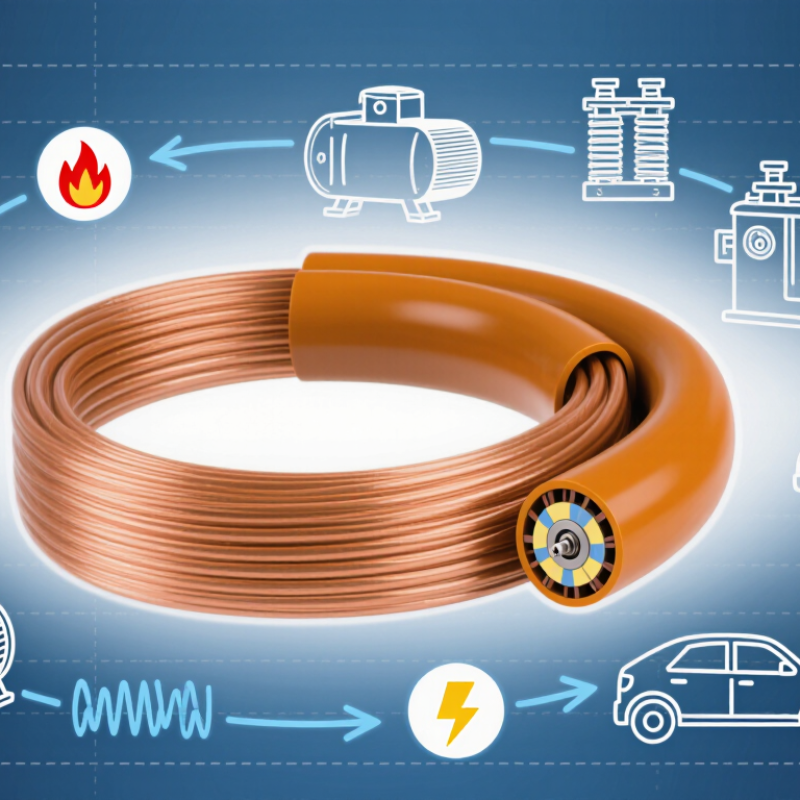
High temperature resistant enameled wire serves motors, transformers, generators, and compact appliances. It carries current while its insulation faces heat, vibration, varnish, and repeated thermal cycling. In a traction motor, wire may sit near hot steel and sharp slot edges. Small coating damage can become a serious failure.

A dependable supplier should explain the enamel system, conductor material, thermal class, dimensions, and applicable test standards. Ask for batch traceability, production records, and test reports linked to the shipped coil. Quality control should include conductor diameter, coating thickness, pinhole detection, breakdown voltage, elongation, and thermal aging. Bond strength also matters after winding. Request samples from more than one lot. One perfect sample proves little.

Factory experience is visible in details. Inspect storage conditions, oven temperature records, winding tension controls, and how operators protect coils from moisture. Confirm whether technical staff can discuss slot fill, solderability, bend resistance, and compatibility with impregnation varnish. A supplier may offer impressive heat ratings but provide weak documentation. That deserves careful review. I have seen specifications overlook winding speed and corner abrasion. Those omissions can change field performance. Compare response time, corrective-action records, minimum order terms, and replacement procedures before choosing. A lower price is not useful if inconsistent coating forces motor rewinding. Ask for realistic lead times, not optimistic promises.

FAQS

What materials are commonly used in high-temperature enameled wire?

The conductor is usually copper or aluminum. Copper offers strong conductivity and winding stability. Aluminum reduces weight but requires careful surface preparation. Insulation may use polyesterimide, polyamide-imide, or polyimide. No coating is perfect.

How is enameled wire manufactured?

The conductor is drawn to a controlled diameter. Annealing restores flexibility and reduces internal stress. After cleaning, several thin enamel layers are applied. Curing ovens remove solvents and create a continuous insulating film. Small process changes can cause bubbles.

Which production factors affect insulation quality?

Temperature, line speed, and enamel viscosity must remain balanced. Poor control may create weak spots or uneven coating. Clean surfaces also matter. A tiny defect can become serious during winding.

What quality tests should buyers request?

Request tests for resistance, coating thickness, pinholes, breakdown voltage, elongation, and thermal aging. Flexibility and solderability are also important. Test reports should match the exact wire specification. Similar-product data is not enough.

How can a buyer evaluate a supplier’s factory?

Inspect clean winding areas, calibrated instruments, storage conditions, and oven temperature records. Check whether batches are clearly labeled. Ask for traceability from the shipped coil to production records. Details reveal more than polished presentations.

Why should samples come from multiple production lots?

One perfect sample proves little. Multiple lots show whether coating and dimensions remain consistent. Compare samples after thermal aging and repeated winding. This approach may expose variation that standard documents miss.

What applications use high-temperature enameled wire?

It is used in motors, transformers, generators, and compact appliances. The wire may face heat, vibration, varnish, moisture, and repeated thermal cycling. In a motor slot, sharp edges can damage insulation. Small damage matters.

Should price determine supplier selection?

Price should not be the main decision. Inconsistent coating can force rewinding and create costly delays. Compare lead times, complaint handling, replacement procedures, and corrective actions. A lower price may hide process weaknesses. Recheck the assumptions.

Conclusion

High-Temperature Resistant Enameled Wire is an insulated conductor designed to maintain electrical and mechanical performance under elevated temperatures. Its reliability depends on the conductor material, enamel coating system, insulation thickness, thermal class, flexibility, dielectric strength, and resistance to abrasion, chemicals, and moisture. Production typically includes wire drawing, cleaning, annealing, precision coating, curing, cooling, and final inspection. Selecting suitable base materials and controlling every processing stage are essential for stable quality and long service life.

For high-temperature applications, performance should be evaluated against relevant thermal, electrical, mechanical, and environmental requirements. A reliable China-based supplier should demonstrate consistent raw-material control, modern manufacturing capability, traceable quality procedures, accurate testing equipment, and dependable delivery performance. High-Temperature Resistant Enameled Wire is widely used in motors, transformers, generators, automotive systems, industrial equipment, and other demanding electrical components. Careful comparison of specifications, certifications, customization support, quality control, technical service, and total supply reliability helps buyers select the most suitable supplier for their application.

Isabella

Isabella

Isabella is a dedicated marketing professional with a sharp focus on driving brand growth and engagement through strategic content creation. With an extensive background in digital marketing, she combines her passion for storytelling with her keen understanding of industry trends to deliver......